The Fine Art of Picnic Etiquette: How to Picnic Like a Pro

A Guide to Dining Outdoors - without Scandalising the Squirrels
Let's begin with a confession.
I have been on picnics where the food was extraordinary, the setting was breathtaking, and yet — something was off. A bit of thoughtlessness here, a forgotten bin bag there, music slightly too loud for the meadow it was playing in. The basket was beautiful. The mood was not.
And I've been on picnics with a slightly sad baguette and a supermarket bottle of rosé, on a slightly damp patch of Somerset hillside, with people who were completely, joyfully present — and it was one of the best afternoons of my life.
Picnic etiquette isn't about being formal. It's about being thoughtful. And thoughtfulness, it turns out, is what transforms a meal eaten outdoors into an actual occasion.
So. A few rules. Gently given. Warmly meant.
A Cheeky Bit of History First
Picnics have always had rules. Even when they tried not to.
In 18th-century Europe, the aristocracy turned outdoor dining into something of a theatrical event — silver cutlery, fine wine, the occasional servant hovering nearby with a linen napkin. By the Victorian era, picnics had all the formality of afternoon tea, just with more grass. A rather stern etiquette guide from the 1920s put it plainly: "One should not make the mistake of thinking that because he or she is 'roughing it' for a day, he or she can therefore leave behind his or her manners."
It's quite a sentence, isn't it? But strip away the starch and the sentiment is lovely: your manners are not a performance for indoors only. They travel with you. Into the field, onto the blanket, and yes — even to the sandwich situation.
We've swapped the lace tablecloths for gingham, thank goodness. But the spirit of good picnic manners? Still entirely worth keeping.
“One should not make the mistake of thinking that because he or she is ‘roughing it’ for a day, he or she can therefore leave behind his or her ‘manners’.”

William Kay Blacklock (1872-1924) - The Picnic
Choosing Your Spot
The where matters more than you think.
A beautiful location won't save a bad picnic, but a good one can absolutely elevate a simple one. Shade, somewhere to shelter from the wind, enough room for everyone to breathe, a view that earns at least one quiet moment of just looking — these things matter.
Be considerate of who else is sharing the space. Setting up directly in someone's sightline, or colonising the only shaded patch in a busy park, is one of those small unkindnesses that feels harmless but really isn't.
If you're in Somerset and looking for inspiration, I have a quietly growing list of favourite spots — river bends, orchard edges, hilltops with opinions — that I'm forever adding to. I'll write it up properly one day. For now: the OS map is your friend, and the rule of thumb is go slightly further than you think you need to, and you'll almost always find somewhere that feels like it was waiting for you.
Pack Thoughtfully. Not Excessively.
Or: the lesson everyone learns the hard way, on a hill, in the rain.
There is a very specific kind of suffering that comes from overpacking a picnic basket, realising halfway across a field, and having to make some very undignified choices about which cheese gets sacrificed. Pack what you'll actually use.
The non-negotiables: something waterproof to sit on, proper napkins (never fewer than you think — always more), something to drink out of, something to put your rubbish in, and enough food that nobody goes home quietly disappointed.
A note on the rubbish bag: it is the most unglamorous item in your basket and the most important one in it. Take everything home. Every last wrapper, every wine cork, every piece of foil. Leave the space exactly as you found it, or better.
This is not optional picnic etiquette. It's the whole point of it.

Photo by Fox Photos on Getty Images
Dress for Where You're Actually Going
Not for the Instagram version of where you're going.
There is a particular brand of picnic optimism that involves a floaty dress, bare feet, and the conviction that it will be warm enough. It is almost never warm enough. It is Britain.
Dress beautifully, absolutely — but dress for the reality of it. Layers. Something on your feet you won't regret on the walk back. A hat, depending on the season. Linen is always correct. Heels in a field are always a mistake, however convincing the flat section looked from the car park.
The Duchess's position on this: you can be wonderfully dressed and entirely practical at the same time. They are not mutually exclusive. They are, in fact, the point.
Mind Your Manners (and Your Music)
On being a considerate presence in a shared space.
Keep music low, or off entirely and let the countryside do what it does best. Offer to share a corkscrew if someone near you needs one — the picnic code of small generosities is a very lovely thing. Keep food sealed when you're not eating. Don't feed the ducks bread; it harms them. Pick up after your dog if you've brought one.
None of this is complicated. It's just consideration, applied outdoors.

Photo Credit: nellhills.com
The Food: Delicious, Portable, and Not Too Ambitious
The best picnic food requires almost no assembly and causes no drama.
Simple things, done well. Good bread. Proper cheese. Something sweet. Fruit that doesn't require a knife, or a knife if you're the sort of person who brings a proper one (I am). Sandwiches that travel well. Something homemade, if you feel like it, but nothing that requires refrigeration and then becomes a source of anxiety.
Presentation does matter — a wooden board, a pretty napkin, fresh herbs scattered somewhere — but it takes about forty seconds and costs nothing. The difference between a meal and a picnic is often just the effort of making it look like you thought about it.
Drinks: Keep It Simple, Keep It Cold
Or hot. This is Britain.
Chilled rosé, homemade lemonade, a thermos of tea, a bottle of something fizzy if the occasion warrants it — drinks set the tone more than almost anything else. Don't overpack heavy bottles. Do bring proper cups if you can, rather than those collapsible things that never feel quite right.
For groups: a big batch cocktail or a lovely punch is genuinely more fun than individual drinks and makes the whole thing feel a bit of an event. Pimm's in summer. Mulled cider in autumn. Hot chocolate with something tucked into it for a winter picnic when everyone has questioned every life choice that brought them to a cold hillside and is now inexplicably having a wonderful time.
The Weather Is Part of the Deal
And always has been.
Britain's weather is not a flaw to correct. It is a feature. Some of the best picnic memories involve an unexpected cloud, a slight panic, and then the sun arriving as if it had been planning the whole thing. Go prepared. Pack an extra layer. Bring a waterproof sheet if the ground is damp.
And if it rains properly — which sometimes it does — the car boot is an entirely honourable alternative. Tea in a flask with the hazard lights on and someone's playlist going through the speakers is, in fact, a picnic. Don't let anyone tell you otherwise.
The Bit That Actually Matters Most
You already know this, but here it is anyway.
The basket is not the point. The aesthetic is not the point. The carefully sourced charcuterie board is lovely, but it is not the point.
The point is the hour you spend fully present with people you chose to spend it with. It's the conversation that goes somewhere unexpected. The moment someone laughs at something and you all catch it at the same time. The brief, quiet bit where everyone just sits and looks at the view without needing to say anything about it.
An etiquette book from 1880 put it rather well, in its own earnest Victorian way: "The essence of a successful picnic lies in the spirit of camaraderie and mutual respect among participants."
Thoughtfulness. Care. A bit of grace. A willingness to be present in a slightly muddy field in the middle of a Wednesday and find it genuinely wonderful.
That's all good picnic etiquette ever was. Go and pack your basket.
Love Gemma xx
The Piknic Club
We’re reclaiming the picnic and turning outdoor living into something extraordinary.
The Piknic Club is where the blanket-spreading, basket-packing, joy-seeking community lives. Seasonal boxes, curated picks, and the kind of picnic inspiration that makes you want to drop everything and go outside immediately.
You may also enjoy . . .

Come and be nosey …
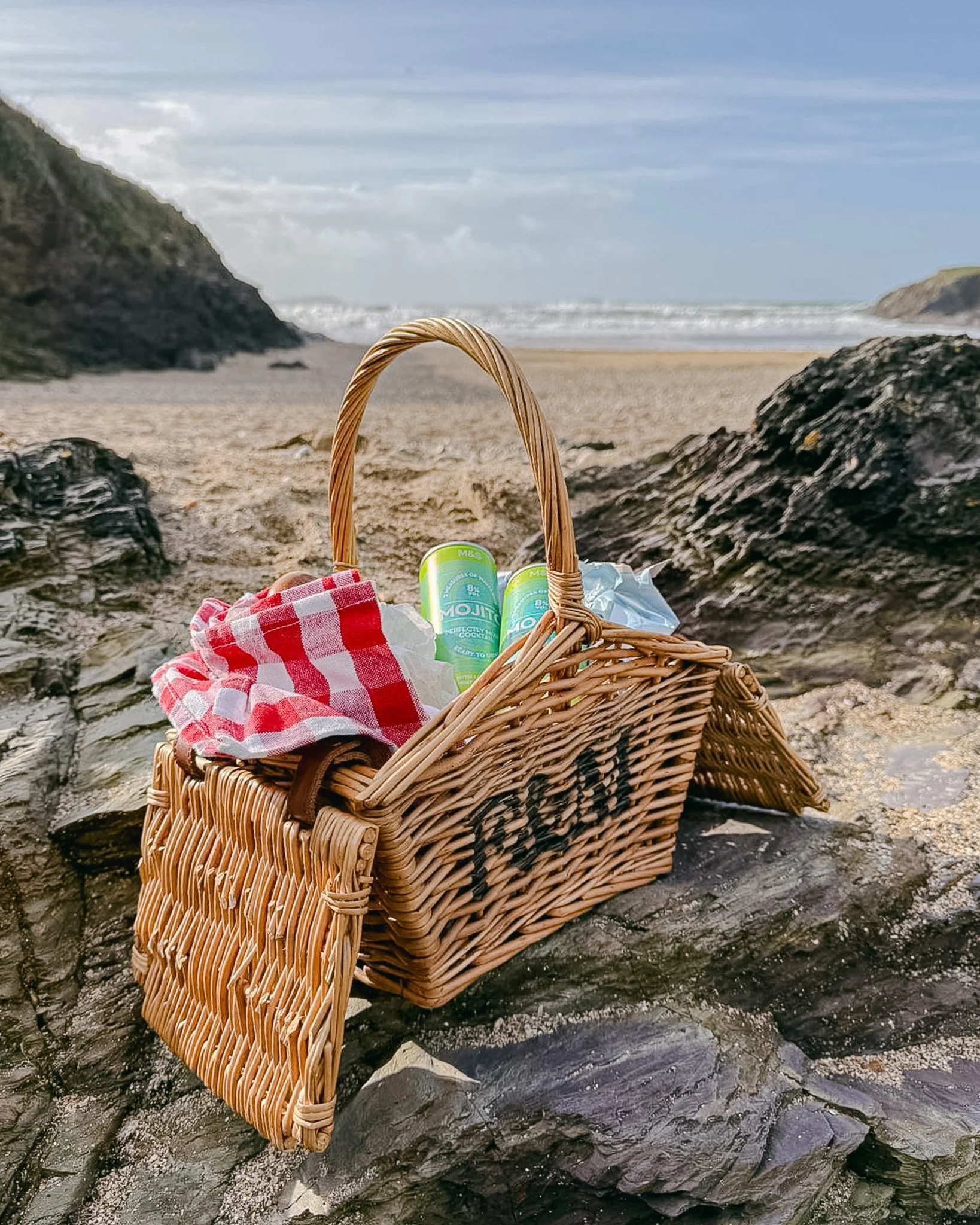
The blanket is always out over on Instagram. Behind the scenes Picnicscapes, Somerset life as it actually happens, and the occasional opinion about gingham.