Thermos Dreams: How Britain Learned to Keep Tea Warm Outdoors
The history of the thermos in Britain begins in 1892 at the Royal Institution in London, where Sir James Dewar developed the first vacuum-insulated flask. Within decades, the vacuum flask moved from laboratory tool to household essential, becoming central to British picnic culture and outdoor tea traditions.
Winter in Britain arrives with wet elbows and a sense of humour. Damp hedgerows. Village hall noticeboards curling at the corners. Muddy boots lined up by the door like well-behaved Labradors. It’s the season when the sun clocks off before you’ve found your scarf - and the kettle becomes a minor deity.
Enter the vacuum flask: Britain’s portable hearth.
A small miracle that turns a car boot into a kitchen, a hilltop into a tearoom, and a football touchline into a parish council of steaming cups. We don’t just pour tea — we pour care. That’s really what a flask is. Hospitality, with a handle.
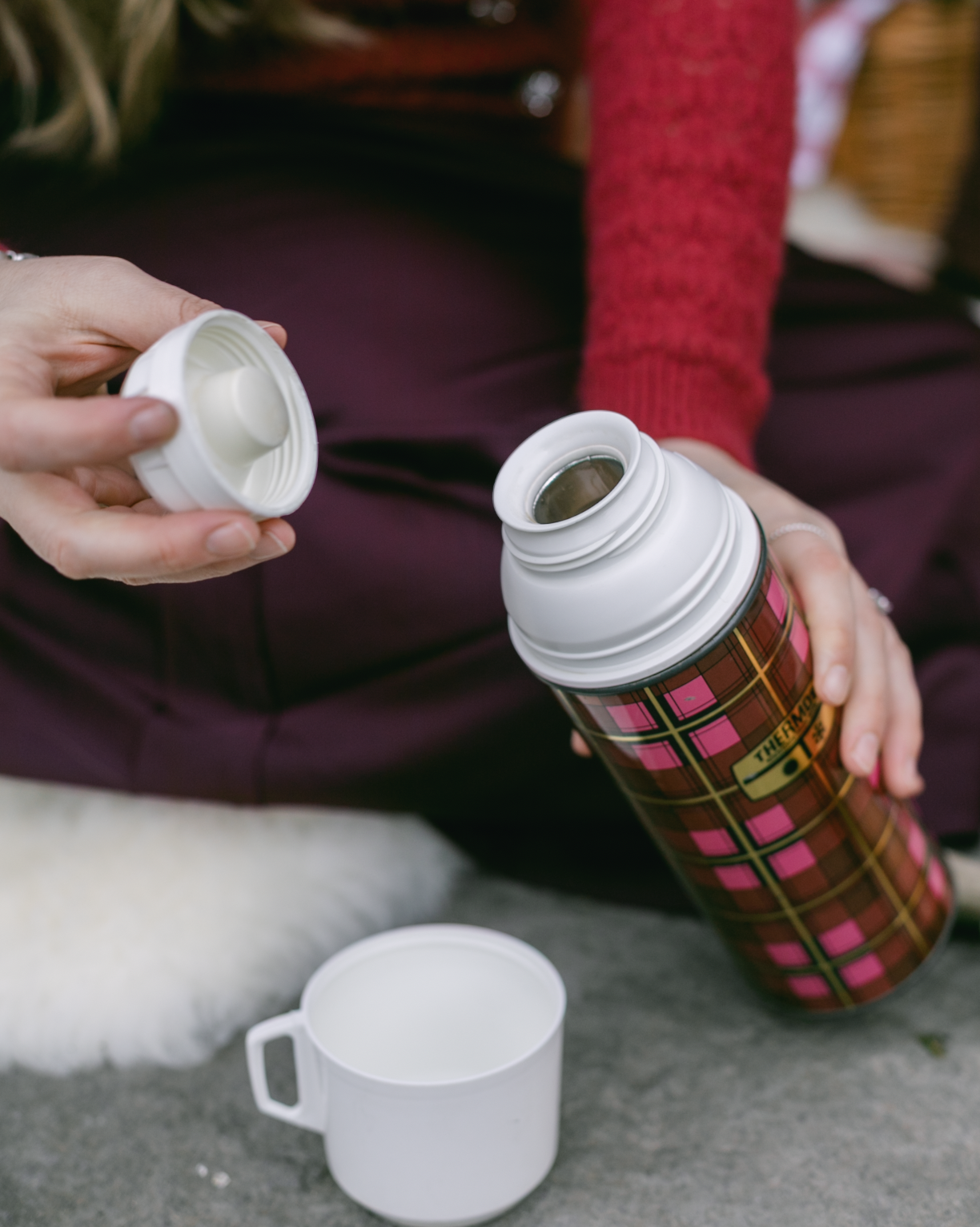
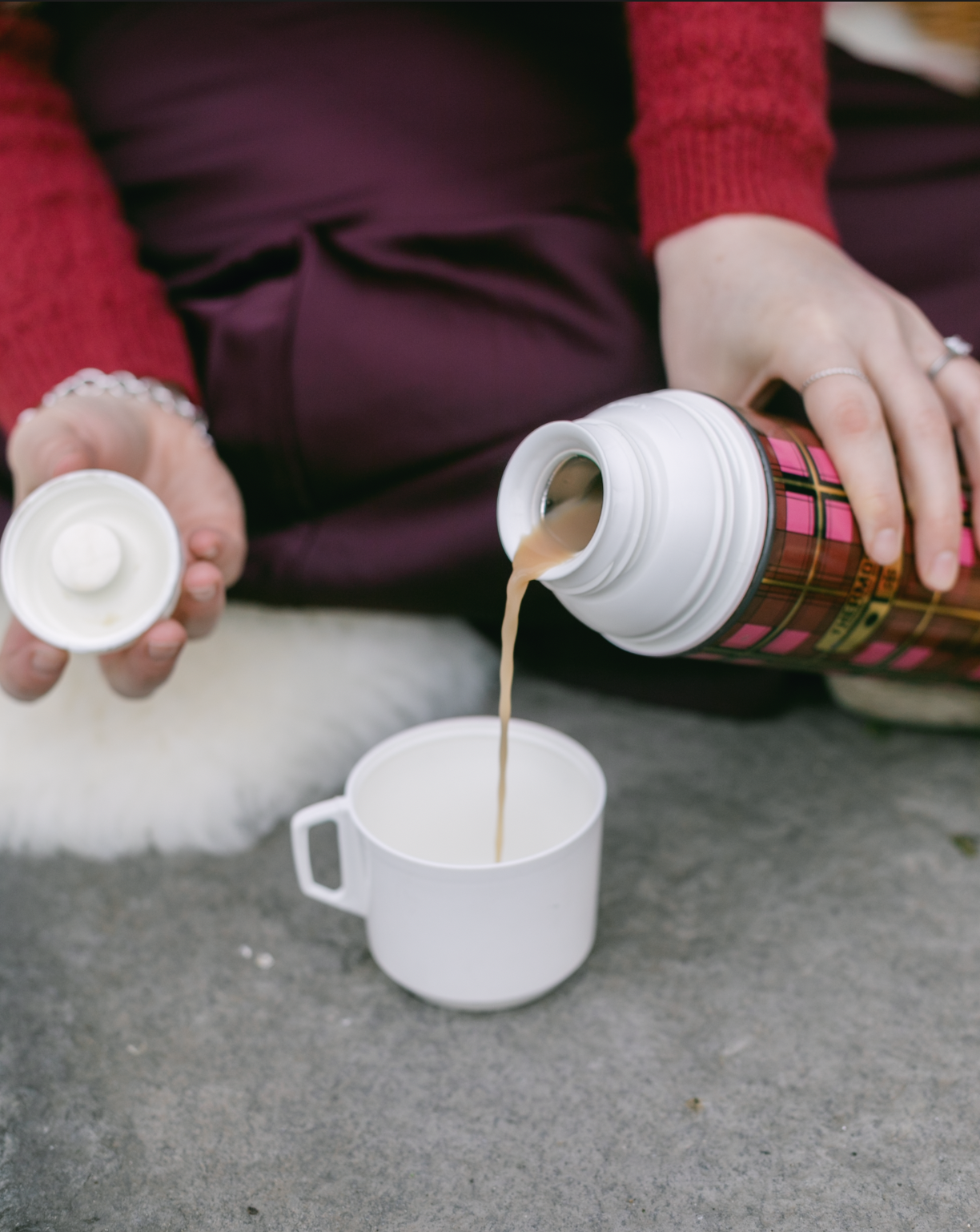
I grew up believing there was a correct way to pour from the car-picnic thermos. Two chocolate digestives. One cup, screwed on just so. A stopper loosened with ceremony, releasing that unmistakable sigh.
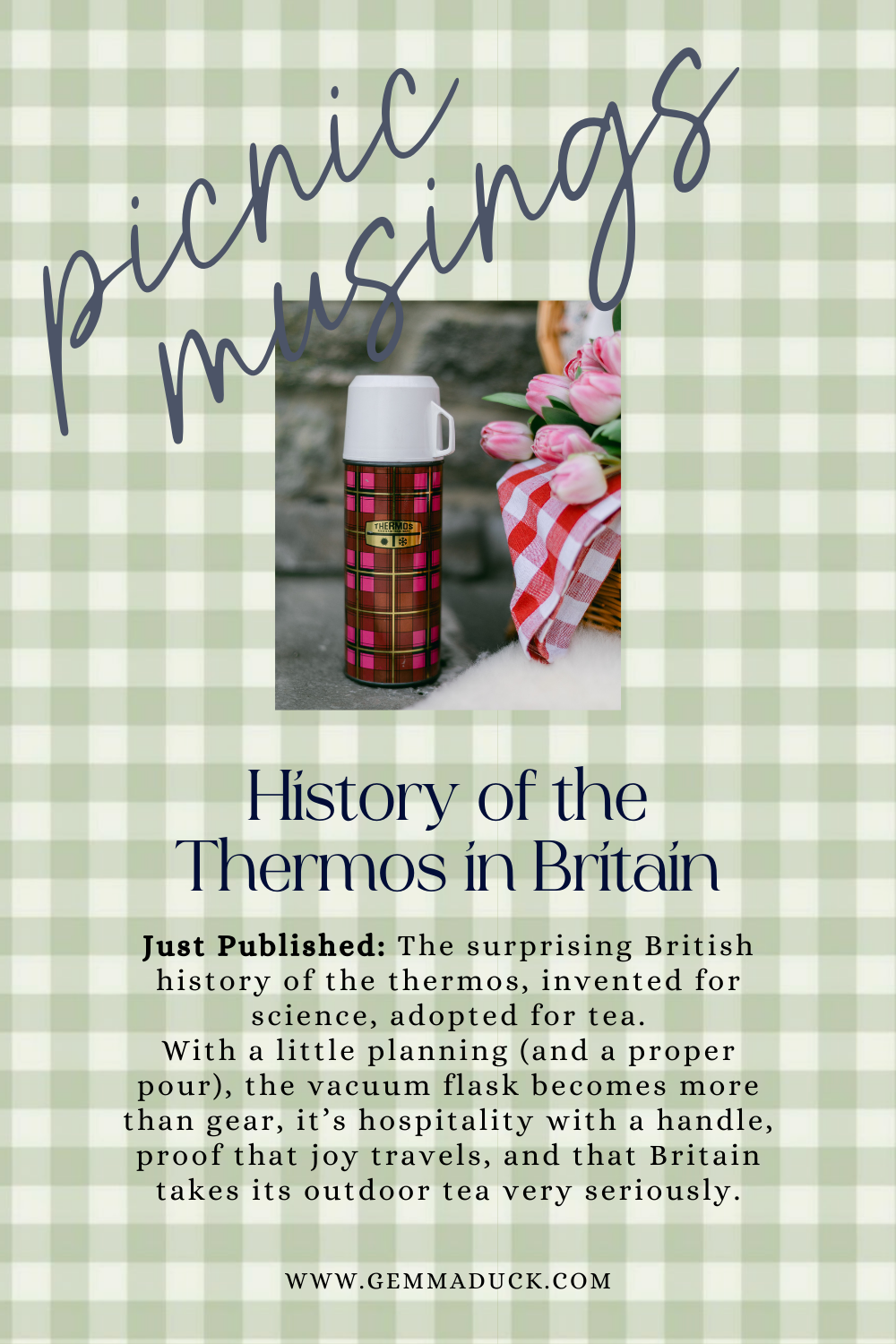
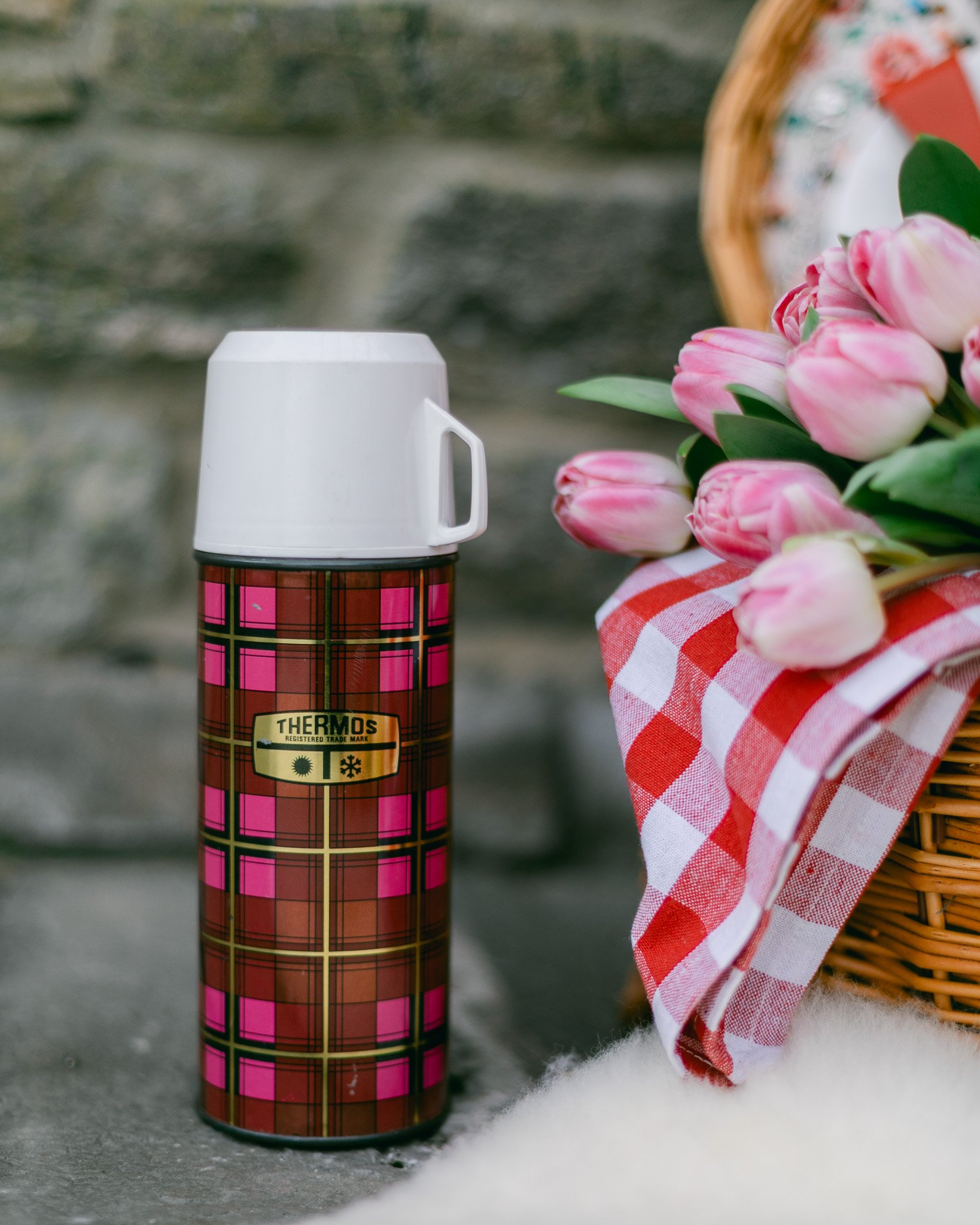
Thermos in tartan. Tea poured like it mattered. Joy, decanted.
Of course, the story starts in a laboratory - as good British legends often do. A Scottish scientist, a glass-within-a-glass, and a piece of practical poetry that learned how to keep warmth where warmth belongs. A century later, and here we are: flasks on fell walks, in school bags, beside pushchairs, at village matches and on the back step when the baby finally naps.
We take our tea seriously. Britain still drinks over 100 million cups of tea a day — so it’s no surprise we found a way to take it outside with us.
We just never take ourselves too seriously.
This is for the sideline parents, the Scout leaders, the ramblers, the chilly bridesmaids revived with emergency soup in a car park. A dissertation in wool socks: referenced, researched, properly British - and never boring.
Pull up a chair (folding, obviously). I’ve brought the tartan one.
A Brief Timeline: The Thermos in Britain
1892 — Laboratory beginnings
At the Royal Institution, Scottish physicist Sir James Dewar develops the Dewar flask while working with liquefied gases. Britain gains the principle; the world gains the idea.
1903–1904 — From lab to life
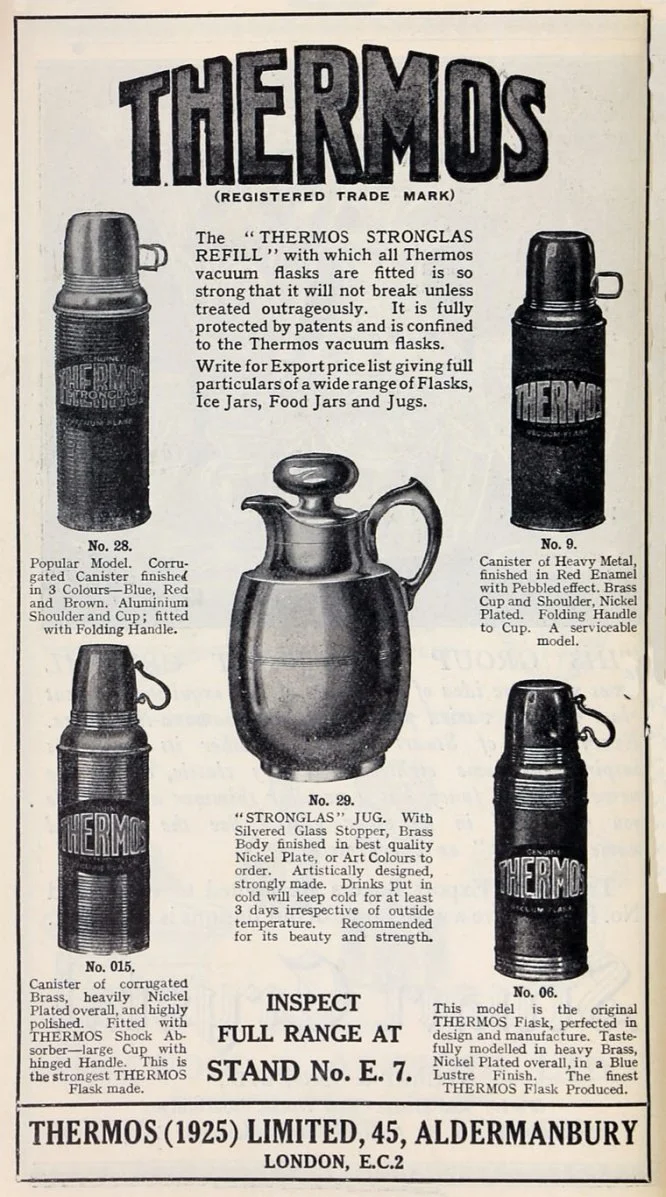
German glassblowers Reinhold Burger and Albert Aschenbrenner adapt Dewar’s concept for domestic use and register Thermos as a trademark.
1911 — Britain industrialises the flask
Thermos Limited in England produces the first machine-made glass vacuum fillers, making flasks affordable and reliable for everyday British households.
Interwar years - Tea goes outdoors
Cycling clubs, ramblers, railway travellers and the Scout movement quietly embed the flask into British outdoor life.
191932 — Leyton expands
A metal canister factory opens in Leyton, marking a post-Depression restart and diversification of British thermos manufacturing.
1930s–60s — British manufacture expands
Production in Leyton, East London, followed by the landmark glass plant in Thetford, Norfolk (1965), then one of Europe’s most advanced glass-blowing facilities.
The Thetford site, though technologically advanced, was not without hardship — a devastating fire in 1965 underscored both the scale and fragility of British glass manufacture at the time
1960s — Stainless steel arrives
More robust, less breakable, and destined to become the picnic-proof classic.
1971 — National recognition
Thermos Limited (UK) receives The Queen’s Award to Industry for export achievement.
2000 — End of UK glass production
The Thetford plant closes; manufacturing consolidates overseas, reflecting wider shifts in global production, though the flask’s British cultural grip remains unshakeable.
2010s–2020s — The refill renaissance
Reusable culture, post-2019 outdoor living, and the revival of heritage designs (hello tartan) bring the thermos firmly back into British life. When outdoor gathering became not just preferable but necessary in 2020, the flask returned to everyday life with renewed purpose.
2020s — Heritage revival
The tartan Model 18 is reborn as the Revival Flask, with renewed focus on heritage design, retail partnerships, and 120-year storytelling.
How It Works (the science, simply)
A vacuum flask is two walls with almost nothing in between.
The vacuum stops heat escaping by conduction and convection
A reflective inner surface reduces radiant heat loss
A narrow neck keeps warmth from rushing out
In Somerset terms: One bottle inside another. Air sucked out. Shiny on the inside. Tea stays hot.
Traditional glass-lined flasks hold heat beautifully (but deserve gentle handling).
Modern stainless-steel versions are sturdier, picnic-proof, and increasingly made from recycled steel.
War, Expeditions & Industry
Once heat could be reliably contained, the flask quickly proved its worth far beyond the picnic blanket.
Before it warmed parents on football sidelines, the flask proved itself in extremes.
Scientific expeditions used Dewar flasks for temperature-critical materials
Vacuum flasks were also promoted through early 20th-century exploration and aviation, appearing in brand literature associated with polar expeditions and long-distance travel — symbols of endurance rather than luxury.
Industrial Britain adopted the technology rapidly once mass production arrived
By mid-century, a flask was as normal as a lunch tin
By the time stainless steel took over in the late 20th century, the thermos was no longer an innovation — it was an expectation.
Hot tea. Anywhere. Always.
Sidelines & Summits - Culture, Rituals & Rules
This is where the thermos truly earns its place.
Hill & heath
A windy trig point. Enamel mugs. Flask wrapped in a scarf. Tea that tastes faintly of achievement.
Village sport
Half-time tea. Sideline soup. Bovril debates that could fracture a parish council.
Stadium realities
Modern safety rules often prohibit hard flasks in large venues (Wembley, we’re looking at you). Translation: bring the flask to the park - not the turnstiles.
Some venues, like Lord’s, now actively encourage refillable bottles instead - a modern echo of the flask’s original purpose.
Post-2019 Britain
Outdoor gatherings became our lifeline. The rule-of-six picnic stitched the thermos back into daily life. The habit stayed.
“The British genius isn’t just inventing the thing - it’s taking it outside. We made a lab flask, then packed it for the moor. Dewar’s clever double-walled vessel left the Royal Institution in 1892 and somehow ended up at village football, on the A303, and halfway up a windswept tor, pouring tea that tastes like home. ”

Design Icons & Collecting
By the mid-20th century, “thermos” had become so embedded in everyday language that a 1963 US court case (King-Seeley Thermos Co. v. Aladdin Industries) ruled it a generic term - proof that the object had outgrown the brand and entered cultural shorthand.
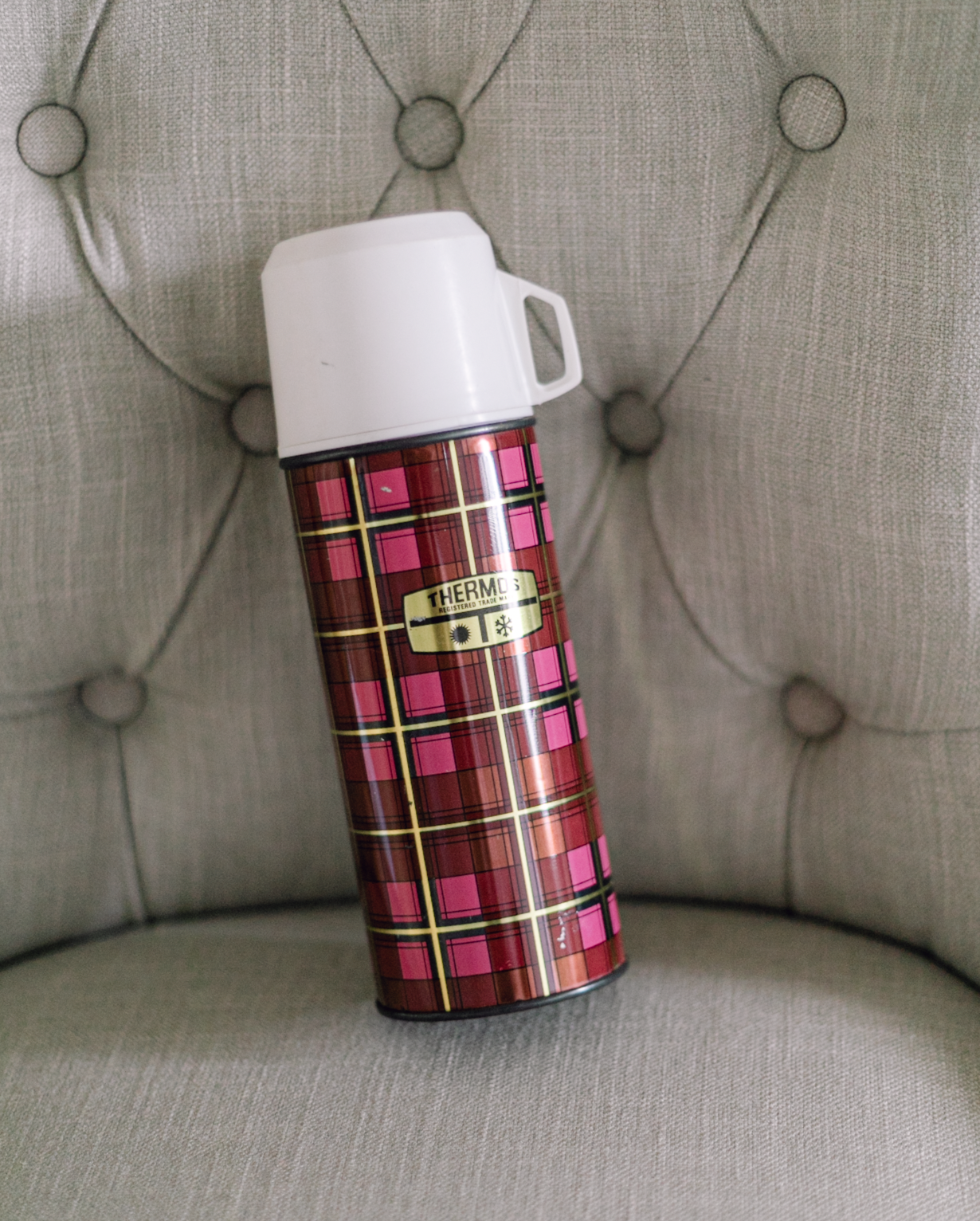
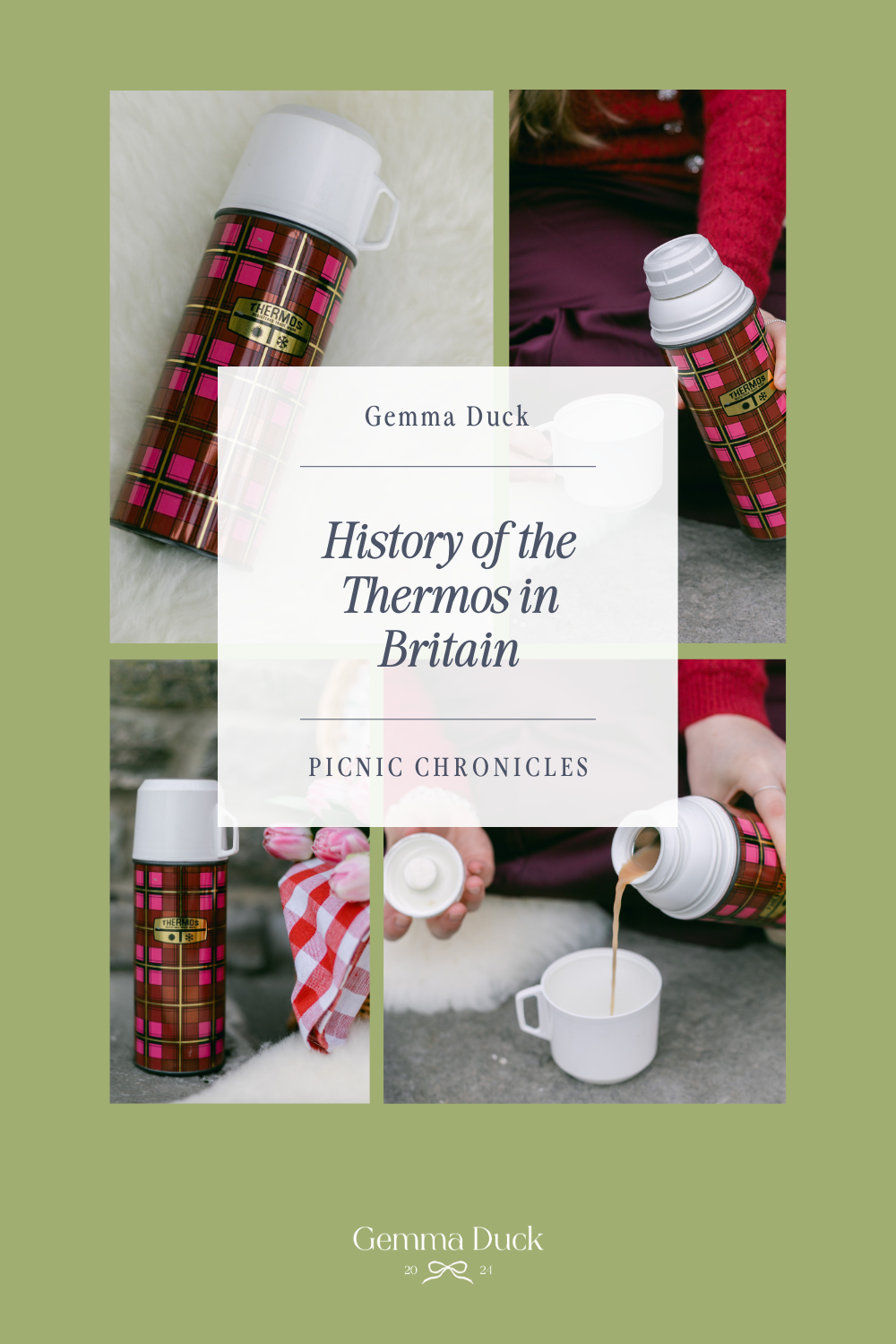
The Tartan Model 18
The cultural shorthand for British picnics. Handle-cup. Plaid wrap. Utter reassurance.
Now reborn as the Thermos Revival - stainless inside, nostalgia intact.
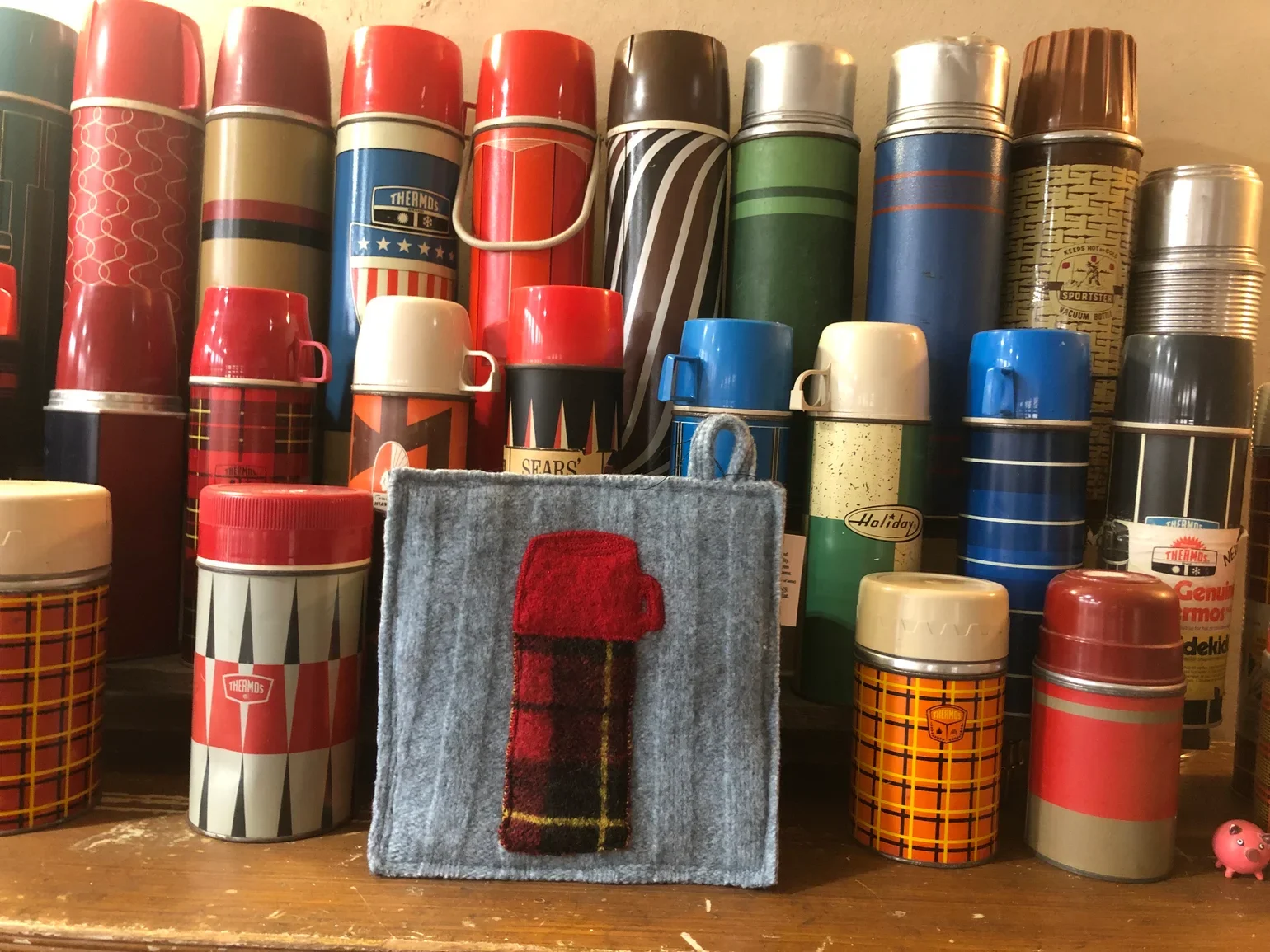
Other classics include compact hiking flasks, wide-mouth soup versions with nesting bowls, and wicker picnic cases where the flask sits like the guest of honour.
Collector’s notes
Check glass liners for rainbow “silvering” failure
Smell old stoppers (history lingers . . . )
Original cups and stoppers matter more than pristine tartan
Care, Craft & Safety
(The Duchess method)
Pre-warm with boiling water (2–3 minutes)
Brew tea slightly stronger than usual
Fill to the shoulder (less air = more heat)
Close promptly — and resist checking every five minutes
Clean with hot water and bicarbonate weekly.
Never store fizzy drinks.
Glass-lined flasks deserve calm crowds, not rugby scrums.
The thermos didn’t need reinventing — it just needed remembering.
Reusable culture, refill stations, and buy-once-use-for-years thinking have made the flask quietly radical again. A well-loved thermos is one of the most sustainable picnic tools you can own.
A thermos is simply proof that joy travels.
Ours just happens to taste of tea, with a hint of fresh air
With love, Gemma x
Stay a little longer . . . .