NEWEST
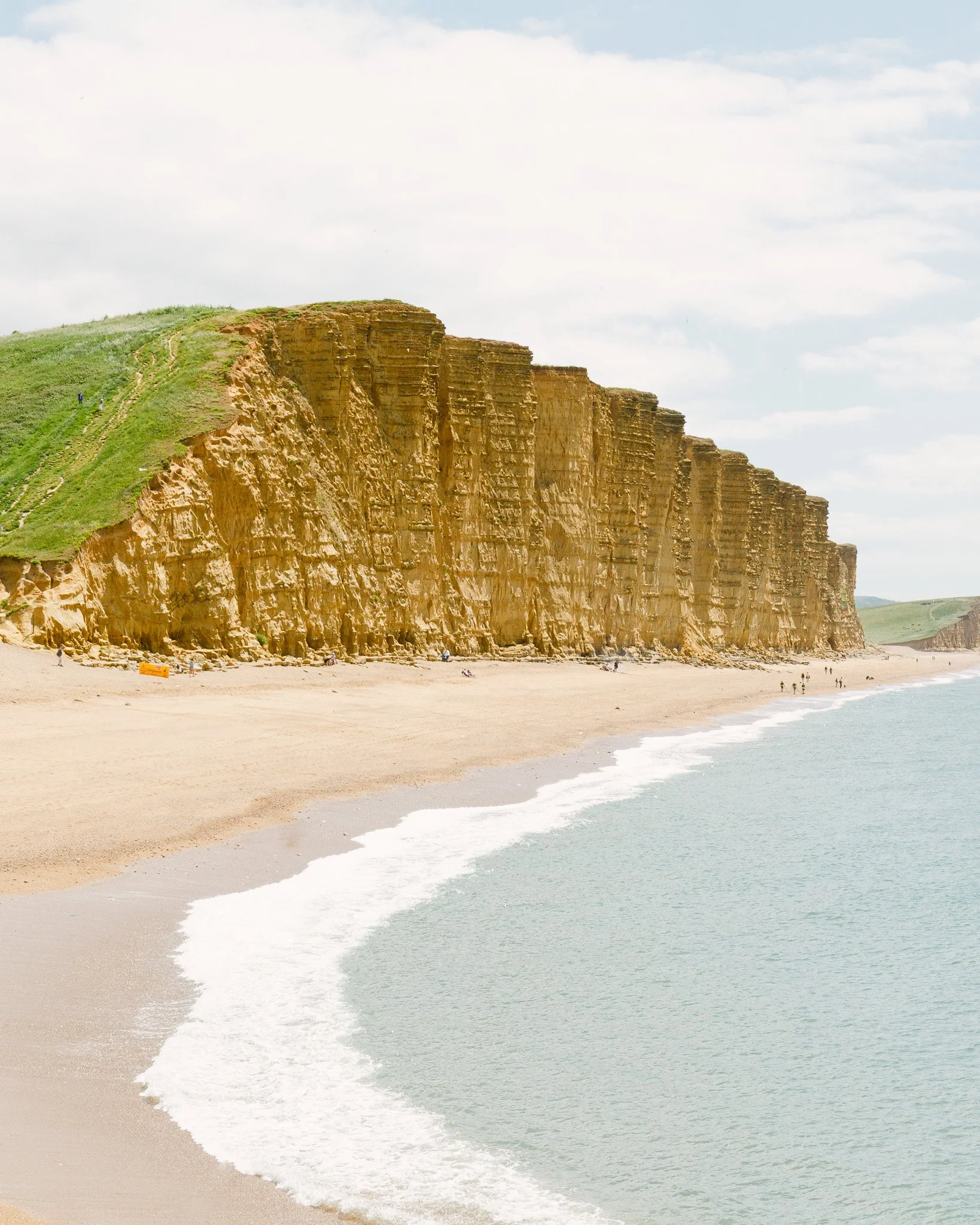
It was October 2002 and I was seventeen years old. A man I absolutely wasn't calling my boyfriend had driven me to the coast, West Bay, Dorset, the Jurassic Coast's golden cliffs rising at either end of a small harbour, and we ate warm doughnuts standing on the pier.
I have a confession.
When I started The Duchess of Picnics, my entire brand philosophy was built on four words:
No soggy sandwiches. Ever.
I wanted the perfect hamper. The linen napkins. The Fortnum's tin. The aesthetic so beautiful it belonged in a Nancy Meyers film — golden light, wicker, something in a vintage French mustard jar that nobody could quite identify but everyone wanted to eat.
I cringe slightly typing that. Not because it isn't still beautiful — it absolutely is, and I still love all of it — but because I'd made a fundamental mistake about what picnics are actually for.
There is a category of dish that I think about more than I probably should. The arrives looking like you didn't try category. The thing that comes out of the cool bag at the picnic and makes people put down whatever they were holding and say oh. The thing that photographs itself.
This trifle jar is that thing.
I developed it specifically for the Battle Proms — because if you're going to sit on the grounds of Highclere Castle as the sun goes down and an orchestra plays and a a Spitfire dances overhead, you need a pudding that is equal to the occasion. And a supermarket tiramisu in a plastic pot, however excellent, is not quite equal to Highclere Castle.
There is no country on earth that picnics quite like Britain.
We do it in the rain. We do it on a Thursday. We do it on a patch of sparse grass between a bandstand and a litter bin, and we make it feel like the most civilised afternoon imaginable.
But there is a spectrum to the British picnic, a glorious range that runs from the spontaneous (blanket from the boot, emergency cheese from the corner shop) to the genuinely spectacular. And this summer, I want to make sure you experience as much of that spectrum as possible.
Because the summer British picnic season is short, and it is precious, and it deserves to be used.
Pinicscapes
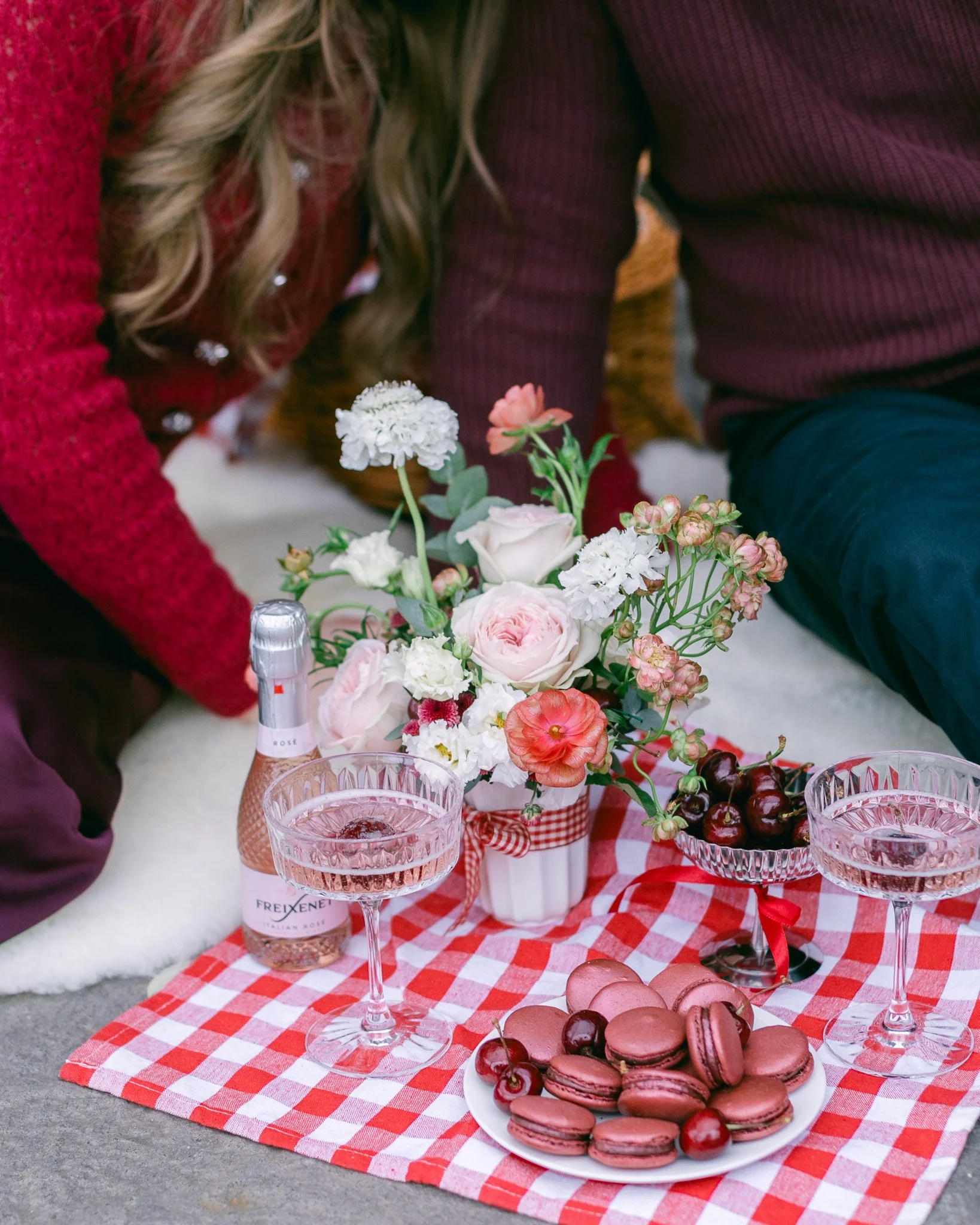
Mon chéri.
Two words that translate, quite simply, as my darling - but carry far more weight than that. They’re whispered rather than announced. Romantic without being syrupy. Affectionate, playful, intimate. The sort of phrase that feels handwritten in the corner of a letter, not printed on a banner.
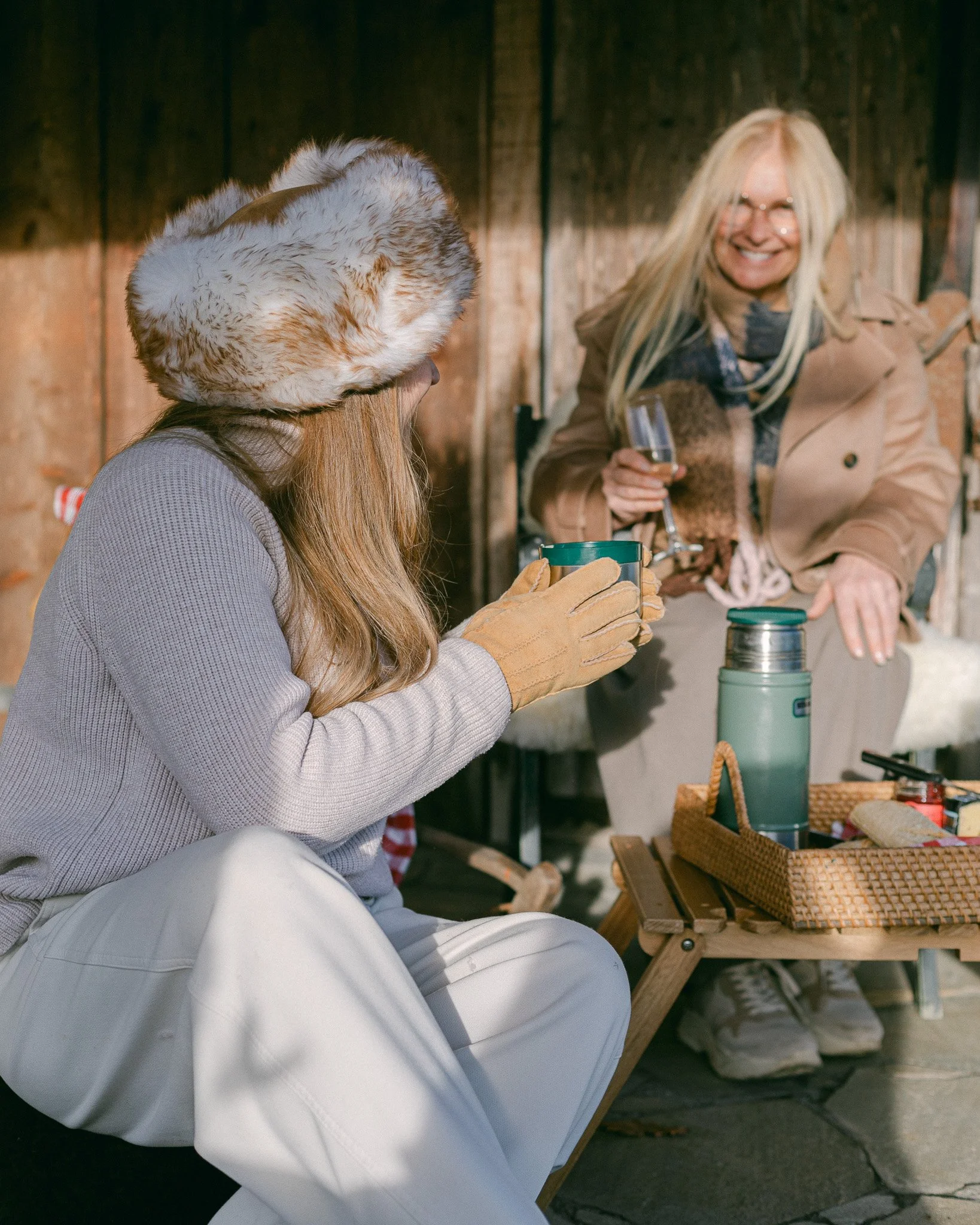
Winter picnics get an unfair reputation.
Too cold. Too damp. Best left until May.
But January picnics, done properly, are some of the most memorable of all.
They’re not about bare grass and frozen fingers. They’re about
THE JOYFUL ALMANAC
June walked in, looked around, and decided she owned the place.
And honestly? I’m not arguing.
This is the month everything clicks into place — the doors open and stay open, the garden becomes a room you actually live in, the evenings stretch so long and golden that going inside never quite feels necessary. Life is easier in June. Less coat, less hurry, less guilt about staying in the park a bit longer or lingering over a second glass because the light is still doing that thing and nobody wants to be the one who ends it.
May doesn't creep in. It erupts. One evening you're still closing the back door behind you, pulling on an extra layer, thinking soon — and the next you're standing in the garden at half past eight with a glass of something cold, the light still golden over the rooftops, the air warm enough to stay in, and you can't quite remember when it happened. When the shift came.
April doesn't knock.
It just arrives, all blossom and birdsong and the smell of freshly cut grass so intoxicating you stop mid-sentence, close your eyes, and completely forget what you were saying. Which is fine. Whatever it was can wait.
Some dates are invented. Others exist whether we’re here or not.
The first of January turns up because we agreed it should. Fireworks. Resolutions. Slightly aggressive gym memberships. But March? March doesn’t care about our planners. The sun crosses its invisible line in the sky. Day and night stand level for a brief, beautiful moment. The light shifts. The soil warms. The birds absolutely lose their composure.
The year is stirring, but not yet awake. The ground is softening underfoot; the hedgerows still hold their breath. Snowdrops gather in quiet drifts, crocuses dare a little colour, and the birds begin rehearsing for spring - not singing yet, just clearing their throats.
And still, February often feels like the longest walk.
The year yawns open; the gardens slumber. The apples dream of blossom, the hellebores bide their time, and even the robins sound gentler at the gate. I’m taking my cue from Somerset itself: less rush, more root. This is a month for candle-light lists, friendly soups, and joy that starts at home and ripples out. Tie a ribbon round January; call it hopeful.
THE HOUSE OF JOY
My daughter's birthday party had a guest list of roughly forty children, zero decorations, and absolutely no clearing up.
This was not a failure of planning. It was the plan.
When my three were small, I discovered something that has quietly shaped everything I've done around gathering since: the best parties happen when you stop hosting them. We rocked up to the local park with a cake, a handful of party bags, and a picnic for just our three. Everyone else brought their own. The children ran and climbed and did what children do in parks in June when the grass is warm and nobody is telling them to stay clean. We sang happy birthday around a picnic cloth on the ground. We ate cake in the sunshine. And then we went home.
My son Theo will make you wait.
Not out of rudeness. Out of necessity. Because if we pass anyone — anyone at all — on a public footpath, in a farm shop, at a village fête, in a car park, at a school gate, in a queue for literally anything — Theo needs to say hello. And not a polite, performative, let's-keep-walking hello. A proper one. An interested one. The kind that comes with follow-up questions.
It was the fifth day of the holiday.
Which matters, actually. Because the first four days I was still that version of me, the young mum version, the busy-brain version, the one quietly cataloguing everything that needed doing back home while pretending to be present at the table. Holding her tummy in slightly. Monitoring. Half-here, half-somewhere entirely more stressful.
But by day five, something had shifted. I'd started to exhale. I was properly in the conversations with my children, not half in them, not managing them, but in them. Laughing too loudly. Not caring who was watching. Not worrying about how I looked or whether I was taking up too much space.
Why your joy is the most generous thing you can offer the room - and what happens when you stop containing it.
Here’s a question that’s been living rent-free in my head: What if being joyful is the bravest thing we can do?
Because if you think about it, society doesn’t exactly cheer us on when we choose joy. In fact, we’ve been conditioned to think of it as immature, frivolous, selfish, even childish. Joy isn’t “serious.” It’s not an achievement. It doesn’t pay the bills.
There are seasons when nothing is technically wrong. And yet everything feels slightly unsteady. You're busy. You're functioning. The fridge is stocked. The diary is full. And still - something feels untethered.
There are days when nothing is actually wrong. And yet everything feels loud.
The kettle's on. The house is standing. The people you love are mostly fed and accounted for. And still - your mind is pacing the room like a dog that's missed its walk. Restless, circling, occasionally barking at things that haven't happened yet.
January has a particular smell about it. Damp coats. The faint ghost of Christmas candles. The very specific existential scent of a new planner you've filled in with optimistic colour-coding that will absolutely not survive contact with actual February.
THE DUCHESS DISPATCH
As the vibrant energy of summer fades and the crispness of autumn settles in, we’re reminded to take a step back, breathe deeply, and savour the slower pace that comes with the season. The shorter days and cooler air invite us to pause, reflect, and enjoy the simple pleasures that surround us. Honestly, I was always a summer girl and never really understood the love affair so many have with autumn.
ALL THINGS PICNIC
It was October 2002 and I was seventeen years old. A man I absolutely wasn't calling my boyfriend had driven me to the coast, West Bay, Dorset, the Jurassic Coast's golden cliffs rising at either end of a small harbour, and we ate warm doughnuts standing on the pier.
Here is a thing I have never told anyone.
For two years, I drove through Avebury Stone Circle every single morning on my way to dance college in Swindon. Past the standing stones. Through the village. Past the sheep. At 8am, in the rain, in a Vauxhall Corsa with a flask of tea propped against the gearstick.
I was eighteen. I thought I was in a hurry.
Here is the thing about the picnics you remember.
They're never the ones where everything went to plan. They're the ones where someone said something worth keeping. Where the children did something you're still telling people about three years later. Where the light went golden at exactly the right moment and nobody could quite bring themselves to leave, so you stayed until the sky told you it was time.
Here is a thing about the ancient Greeks that nobody tells you.
They weren't particularly bothered about the food.
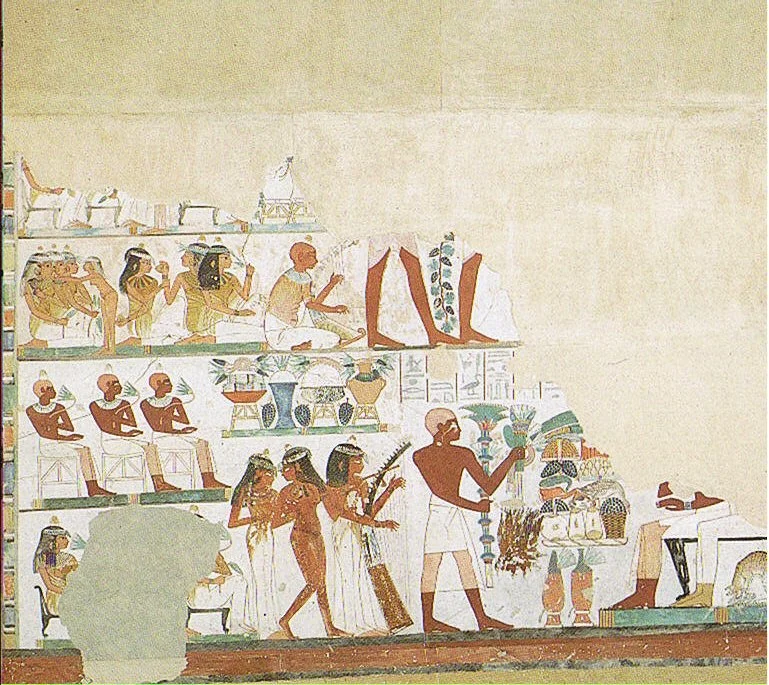
Not really. Not compared to the Romans, who built entire rooms facing the best garden view and developed a fish sauce so powerfully good it survived two thousand years and lives on quietly in your Worcestershire sauce. Not compared to the Egyptians, who packed food for the afterlife and hosted annual feasts beside the tombs of their dead.
There's a particular kind of summer afternoon that Somerset does better than anywhere else. It starts in the mid-afternoon — later than you intended, as always — when someone finally says right, let's go, and you pack the blanket and the children and something cold to drink and you leave.
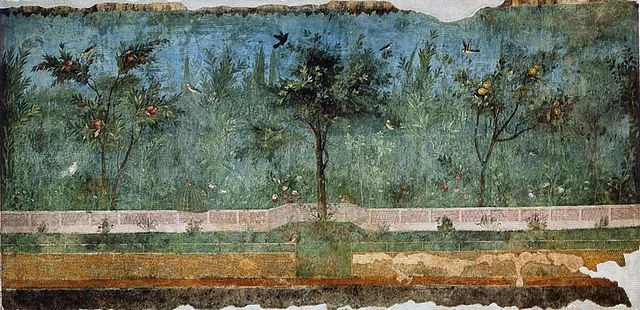
The Romans didn't just eat outside. They thought very hard about it. They had opinions about it. They wrote letters complaining about friends who didn't show up to it. They built entire architectural wings of their villas specifically for it, angled to face the garden, the sea, or the best view of the Apennine hills. They had rules about who sat where, which wine you mixed with how much water, and whether it was vulgar to eat lying down.
(It was not. Lying down was, in fact, mandatory. More on this shortly.)
You thought picnics started with Mrs Beeton and a wicker hamper, didn't you.
I did too. For a while.
Then I started pulling at the thread — really pulling — and found myself four thousand years back, standing on the west bank of the Nile, watching an entire city pack up food, cross a river by boat, and sit down to eat beside their dead.
Spring doesn't send a calendar invitation. It just shows up - usually on a Tuesday, while you're doing something entirely unrelated - and suddenly the air smells different, the light is doing something ridiculous through the kitchen window, and you're looking at the children and thinking: we need to go outside. Right now. Before it changes its mind.
Inspired by Maya Angelou’s legacy, "In the Moment" is my personal letter sharing the joyous simplicities that form our lives. It's a reflection of my journey towards living more in the present, a testament to the beauty that surrounds us if only we take the time to look and truly see. From the laughter-filled play of children to the serene dance of nature, every moment holds a treasure trove of serenity and joy, if only we're present to uncover it.