
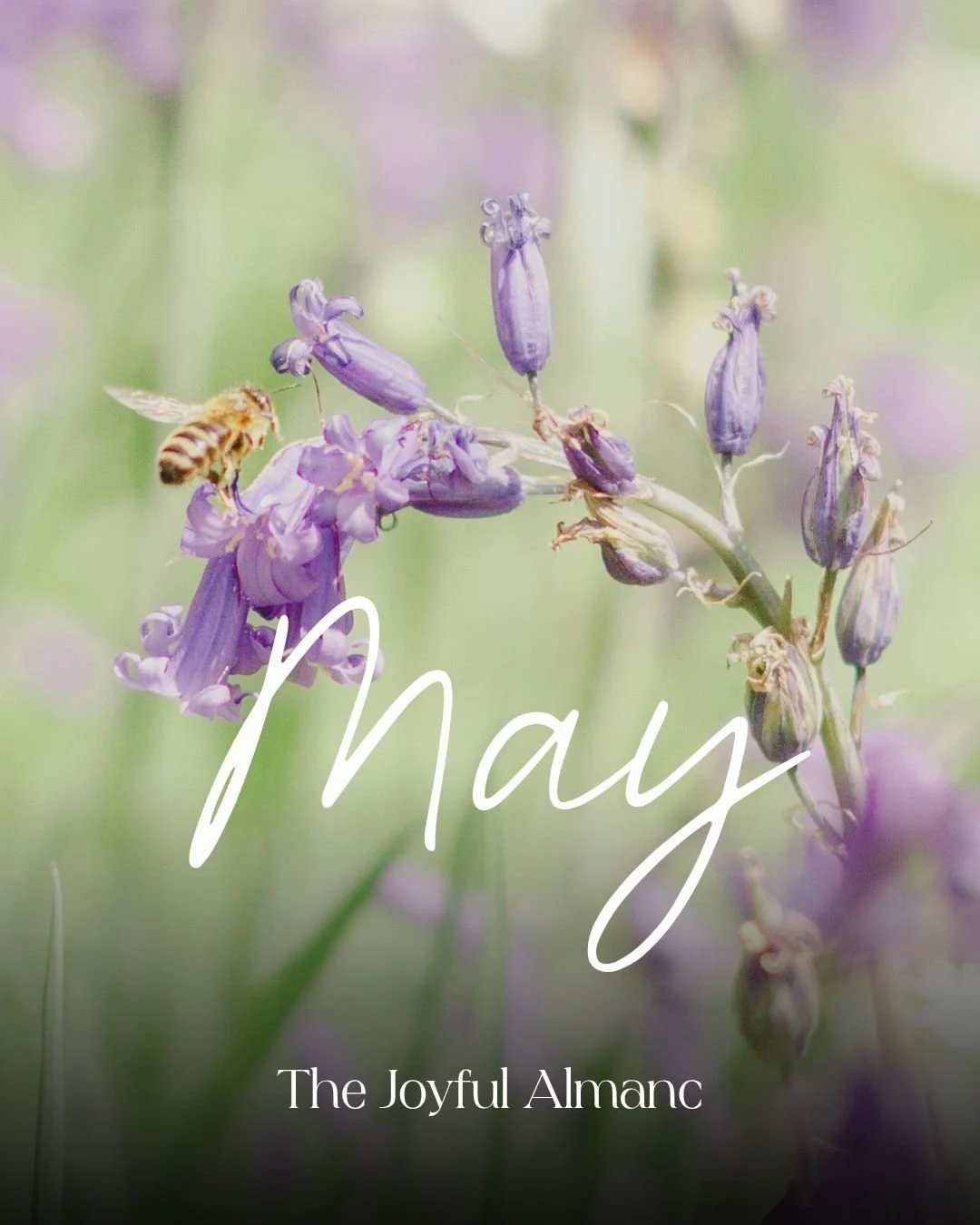
The Joyful Almanac - May
The Joyful Almanac - May
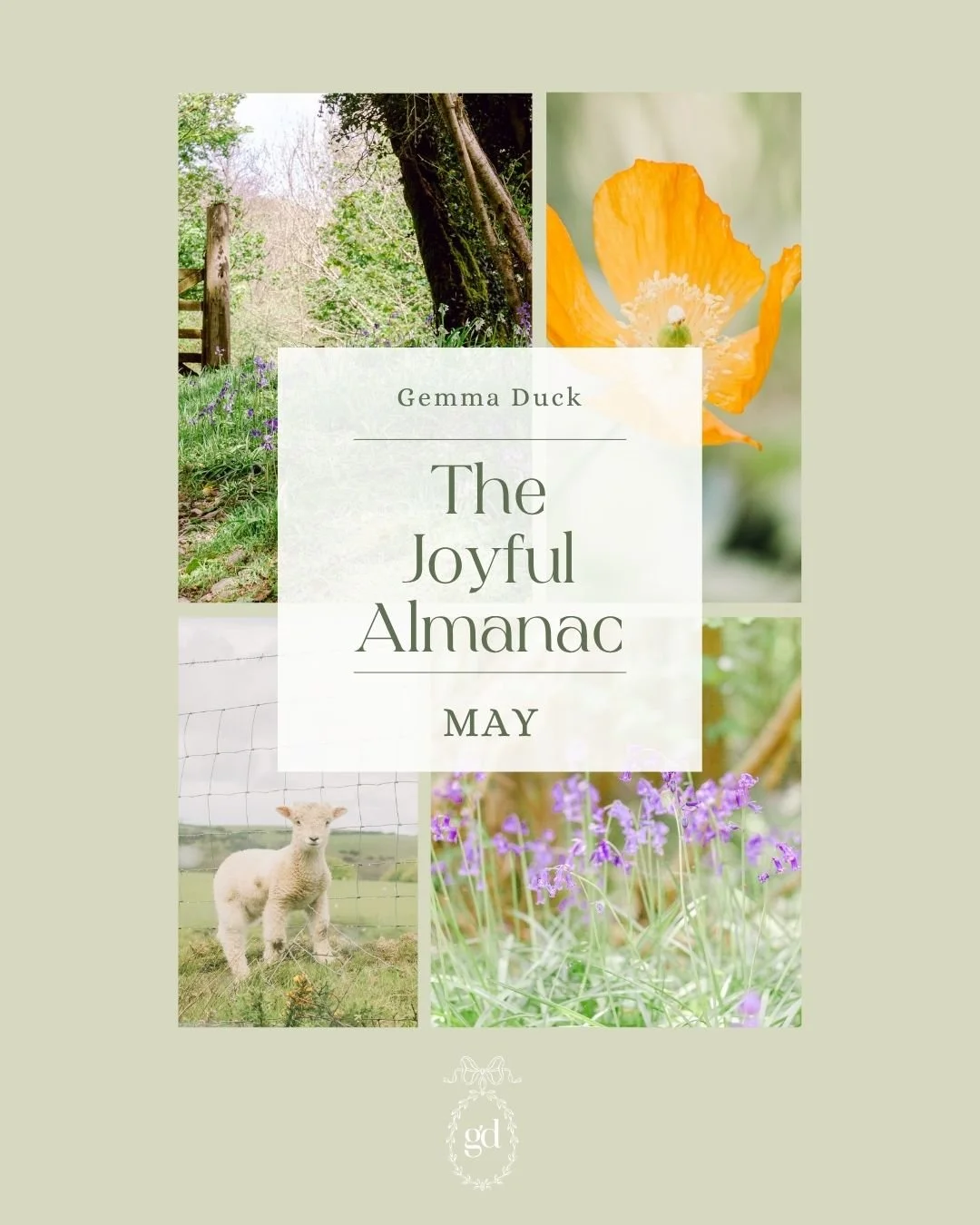
May doesn't creep in. It erupts. One evening you're still closing the back door behind you, pulling on an extra layer, thinking soon — and the next you're standing in the garden at half past eight with a glass of something cold, the light still golden over the rooftops, the air warm enough to stay outside, and you can't quite remember when it happened. When the shift came. Only that it did, and that everything feels different now, and that you are not going back inside until absolutely necessary.
This is what May does. It doesn't ask. It just opens — and takes you with it.
The garden that spent April being hopeful is suddenly, unmistakably, loudly alive. The great green wave is here — and it comes in two acts, if you're paying attention. First the lilac and the foxgloves and the blousy blossom. Then, just when you think the show is over, the second wave: elderflower, cow parsley, lily of the valley. Better than the first. Quieter, and better.
The tumble dryer has been made officially redundant. The washing goes on the line every single day and the sheets smell of something that cannot be bought.
Above it all — the sky has simply never been better. But more on that shortly.
May is the month the garden becomes a room you actually live in.
Come on. I'll show you around.
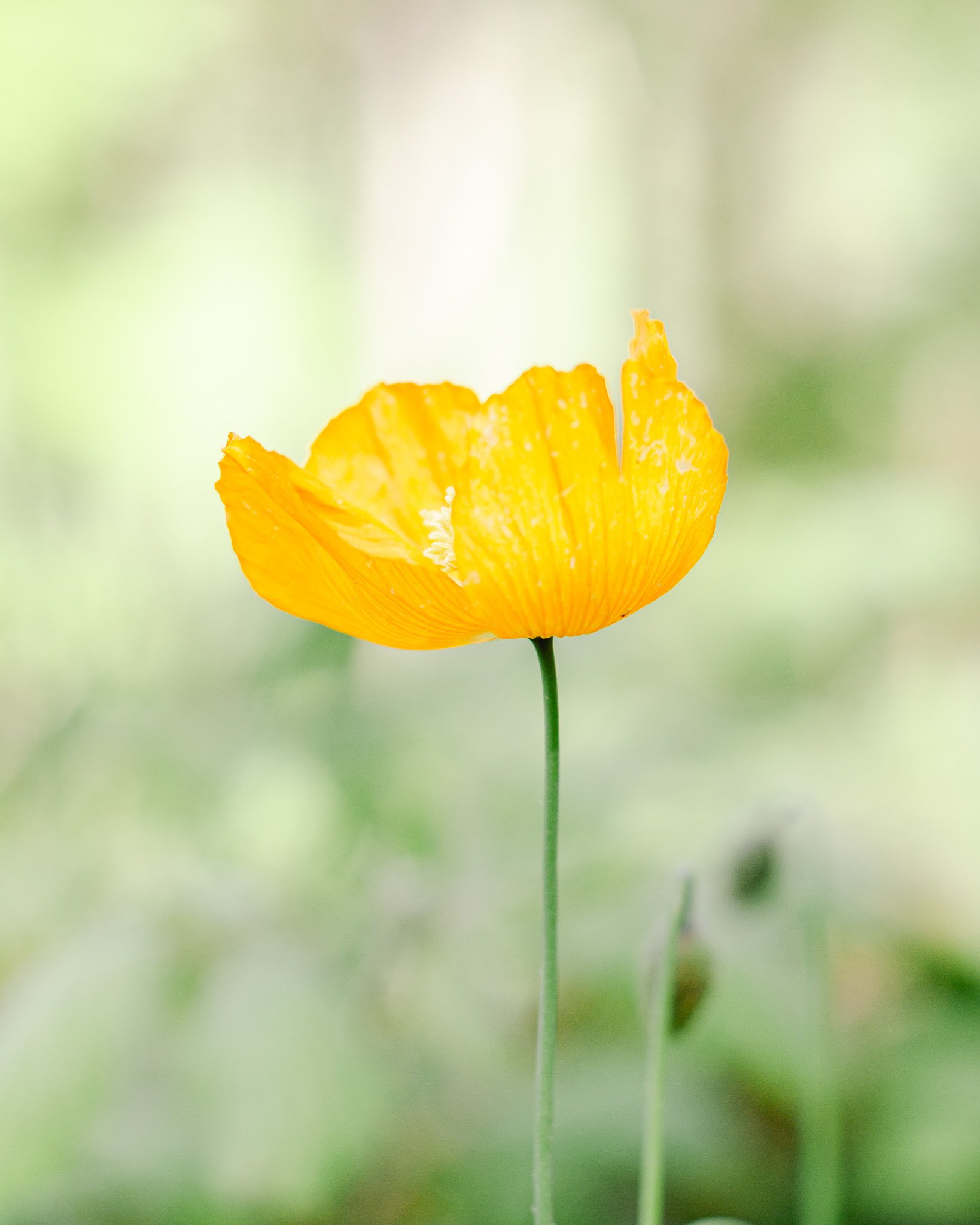
May Snapshot (dates worth a circle)
You don’t need to mark every date — think of these as gentle pins, not instructions. One or two is plenty.
1 May — May Day / Beltane: The ancient tradition of going out at dawn on May morning to welcome summer — dew still on everything, birds in full magnificent argument with the light. May Queens, maypoles, washing your face in morning dew for beauty and luck. The last London maypole came down in 1717. Step outside at dawn this year. The dew will do.
1 May — Full Flower Moon, 6:23pm BST: Named for the abundance of flowers across the hemisphere — and what a month to open with a full moon. See the full Moon Moment below.
3 May — International Dawn Chorus Day: Set an alarm. Just once. Open the window before the world wakes up and after the birds already have. It's free, it's extraordinary, and you will think about it for weeks.
3 - 9 May - Hedgehog Awareness Week: That snuffling in the borders at dusk is not your imagination. It's a hedgehog, and she has things to do. Check before you strim. Leave a gap in the fence. She'll be grateful.
4 May — Early May Bank Holiday: Picnic. Obviously. First of two. Get the basket and blanket ready.
5–6 May — Eta Aquarid Meteor Shower: Fragments of Halley's Comet, over the Bank Holiday weekend, lighting up the May sky. Take a blanket outside after dark, look up, and let the ancient sky do its thing.
9 - 17 May - The Great Garden Show — Newt's first ever: A new tradition beginning in Somerset. The best new traditions always start in May.
10 May — Rogation Sunday: The old tradition of walking your parish boundaries — knowing your place in the landscape, blessing the fields. Walk a footpath you love this weekend. In May, when everything is in blossom, that's your version. It's not a small thing.
13 May - World Cocktail Day: The elderflower is out. The evenings are long. The May Cup is waiting. See below.
16 May — New Moon: The quiet midpoint. The counterpoint to two full moons. Plant something in the dark and trust it.
20 May — World Bee Day: The bees are at full magnificent industry this month. Buy local honey. Put more flowers in. Leave a patch of garden a little wild. Consider it a thank you note.
21 May — International Tea Day: We are British. Make a proper pot. Take it outside. That's the whole day.
28 - 30 May - The Royal Bath and West Show — late May: A proper British institution and a family tradition. We pack a picnic — non-negotiable. Strawberries in paper bags, the cattle show, the cheese, the duck herding, the sheep shearing, the orchestra on the bandstand, Pimms in the sunshine, jumping and dressage. This is what the British countryside looks like when it's celebrating itself. Go. Take the children.
25 May — Spring Bank Holiday: Picnic. Again. Second of two. Different spot. Same enthusiasm.
29 May — Oak Apple Day: Charles II hid in an oak tree. Somerset villages still observe it. Wear an oak leaf. Tell someone why. Watch their face. Silliness is most of what makes a life good.
31 May — The Blue Moon: A second full moon in a single calendar month. Rare. Beautiful. The original once in a blue moon. May 2026 opens and closes with a full moon, which feels exactly right for a month this generous.
These are the gentle pins that hold May in place. Choose the ones that feel like yours. Let the others drift past like blossom on a warm lane — noticed, appreciated, released.
Flora & Feelings
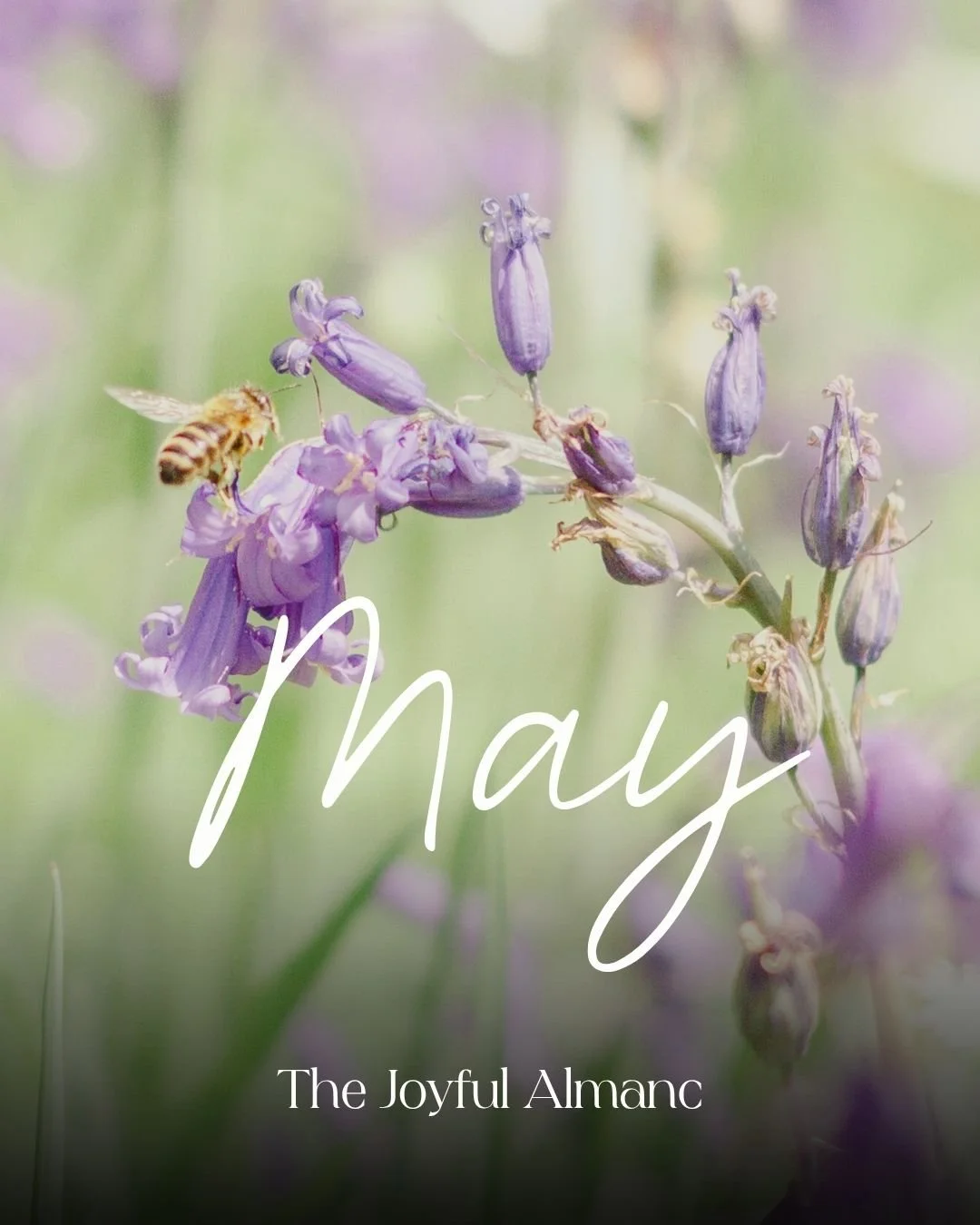
The Great Green Wave — in two acts
There is a corner of my garden where the wisteria meets the willow, and in May it does something so beautiful I have genuinely stopped mid-sentence to look at it.
The wisteria — planted from a small pot, only 4 years ago, when I had no real idea what I was committing to — already become something magnificent. It drapes and cascades in long purple racemes against the silver-green of the ageing willow, the two purples playing against each other in the morning light: one extravagant and perfumed, one ancient and trailing, and between them something that looks almost deliberately composed, like a painting someone made up.
Except we made it up. Slowly, season by season, without really noticing.
Both planted small. Both now this.
This is the quiet miracle of May — not the dramatic gesture but the long game. The faith you forgot you were practising. The garden asking for patience and then, in its own time, paying you back in purple so saturated it almost doesn't look real.
The First Wave
May's first wave comes in with confidence and no apology.
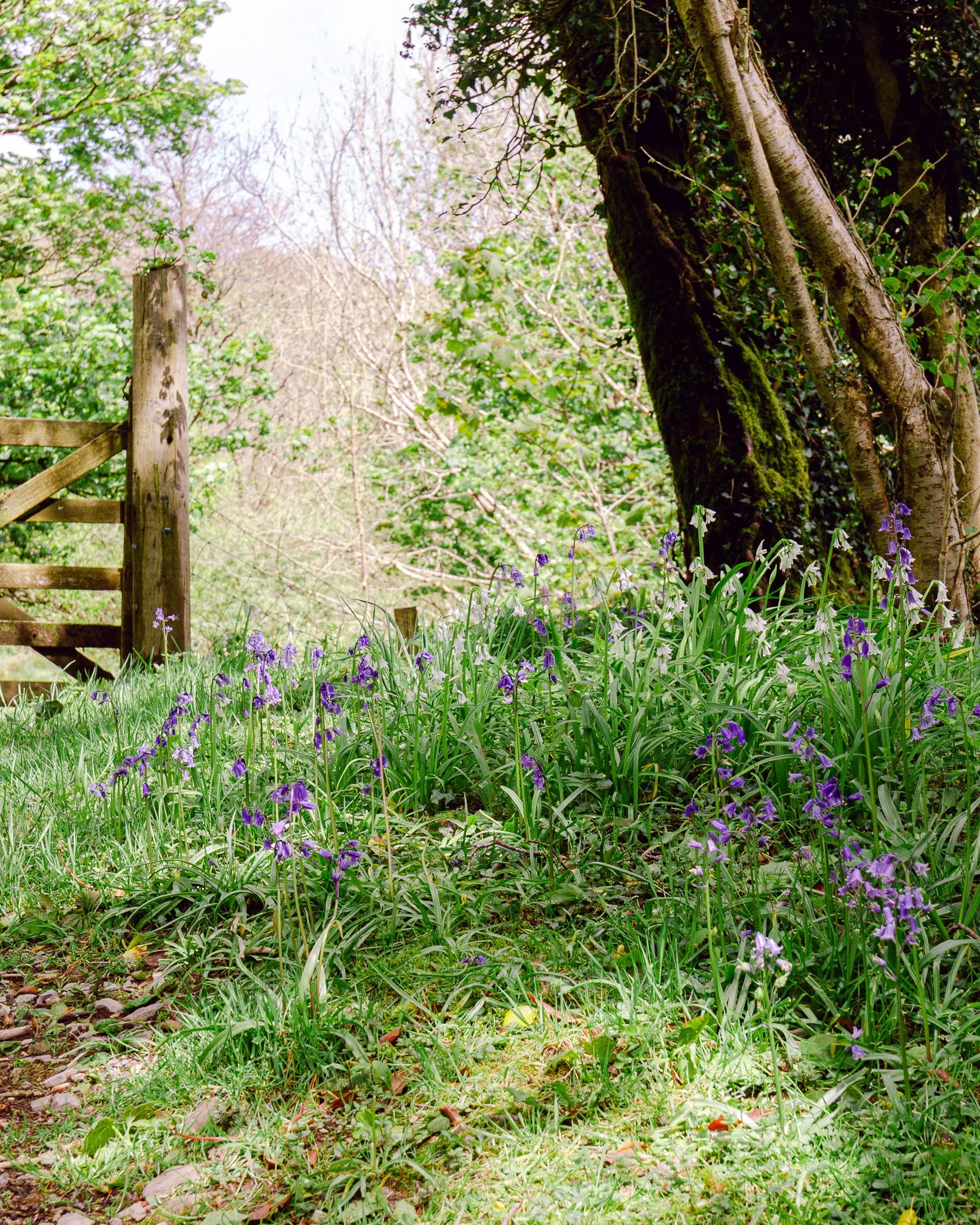
The lilac has taken its corner of the garden entirely — filling it in deep purple clusters, the scent catching you every time you step outside, sweet and powdery and somehow both nostalgic and entirely present at once. The kind of scent that stops you going wherever you were going. The foxgloves are peeping from shady spots, tall and slightly theatrical, always in the places you didn't plant them and somehow never in the places you did. The apple and pear and plum blossom — pale pink, barely-there white — is buzzing with pollinators who have absolutely no time for anyone and everything to do. The hawthorn frothing white along every hedgerow. The bluebells, just — just — still hanging on if you're lucky. The tulips standing stately in their terracotta pots for a few last dignified days before gracefully handing May over to everyone who comes next.
And the bees. Good grief, the bees. May is when the first bumblebee workers emerge — the queen's early brood, out for the first time, bumbling and brilliant and utterly purposeful through the blossom. Watch one work a flower. It has somewhere to be and it knows exactly where that is. In this, as in so much, the bees are correct.
The Second Wave
Just when you think the show might be winding down — it isn't.
The second wave is quieter than the first, and better. More knowing. It arrives without fanfare and turns out to be the thing you remember most.
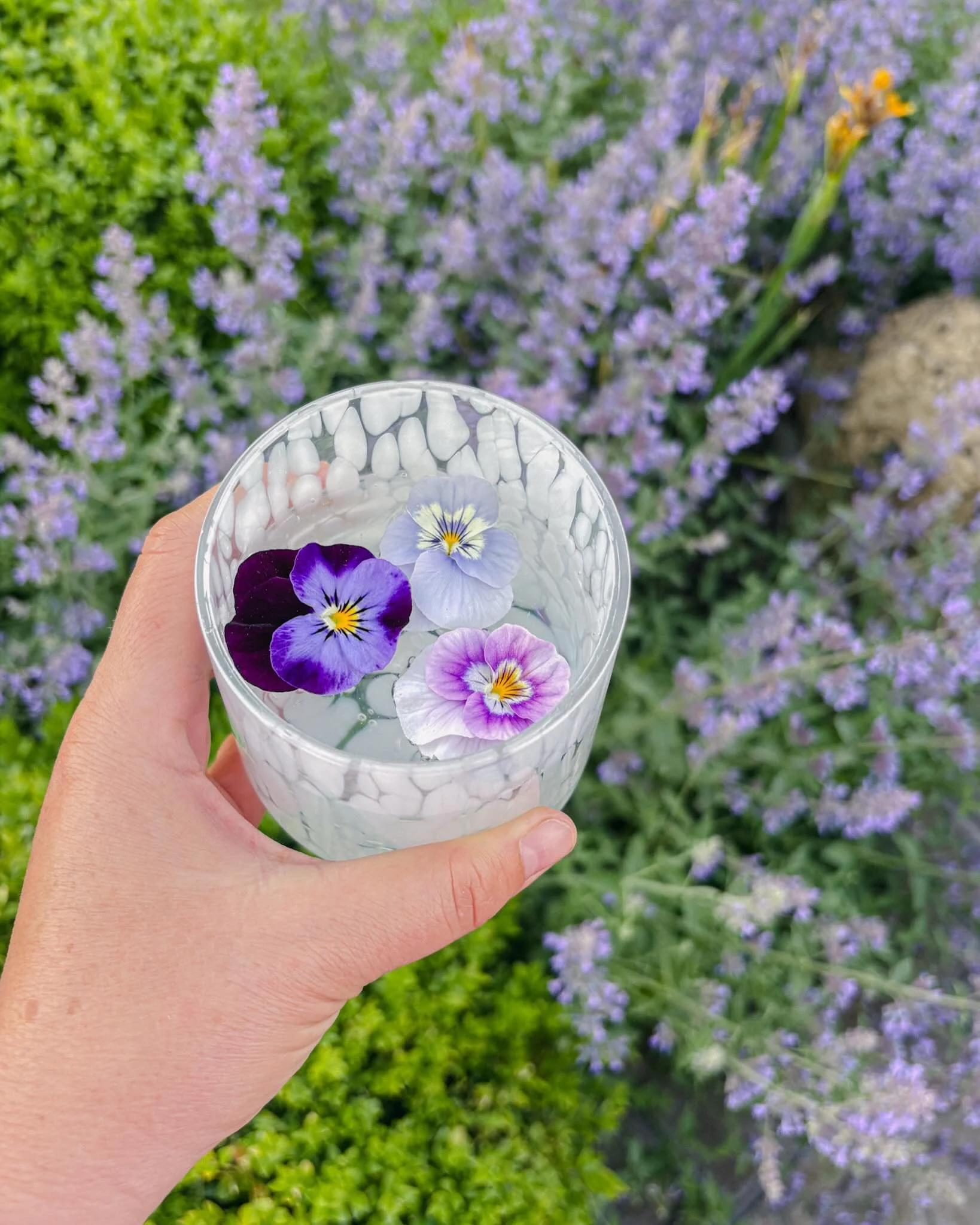
The elderflower opens in great creamy frothy clouds along every lane and hedgerow — abundant, generous, briefly perfect. You will smell it before you see it. That particular green-sweet scent, something between honey and fresh air, is the smell of the English countryside in May distilled into a single flowering moment. Pick some. Do something with it. Put it in a bottle, a glass, a cake, a jug of cold water — anything. May in elderflower form is a gift that lasts about three weeks and then is gone until next year, and next year feels very far away when you're standing in it.
The cow parsley follows — frothy, bridal, slightly reckless, turning every verge and lane into something from a dream. Hydrangea beginning its slow, spectacular reveal. Lily of the valley tucked in shaded corners, that extraordinary sweet powdery scent so concentrated it feels almost unreal. You lean down to find it — small white bells, impossibly delicate — and think: how does something this small smell this good?
The answer is May. May is how.
Walking in May
The public footpaths and country lanes of Somerset in May are among the most beautiful places on earth, and I am not remotely objective about this, and I don't need to be.
Walk a footpath now, in the second half of May, and the lanes narrow to almost nothing — elderflower verges pressing in on both sides until you're squeezing through a corridor of white blossom, emerging on the other side smelling better than when you went in. Walk beneath a hedgerow branch and it showers you in blossom — a small unrepeatable moment that you didn't plan and can't arrange and that is therefore perfect.
The scent changes every hundred metres. Wild garlic — that bossy, glorious smell — is fading now, the end of one small season inside a season. You catch the last of it in the shaded damp places, and there is something quietly tender about it, the way a beautiful thing fading makes you notice it more than you did when it was everywhere.
Then blossom. Then something warm and grassy and alive. Then elderflower, suddenly, from nowhere, overwhelming everything. Blossom catches in your hair on these walks. Don't brush it out.
The Sky
I want to talk about May's sky, because it is without question the best sky of the year and it deserves a moment.
The swifts arrive in May — screaming overhead, impossibly fast, impossibly elegant — and with them, the summer sky is complete. The swallows, who arrived in April and spent the month settling in, are now performing — diving and wheeling in the long golden evenings with what I can only describe as showmanship. The house martins are at full, furious, chattering industry — in and out of eaves, narrating everything, not stopping for anyone.
And then there are mornings — or evenings, or just moments in the middle of a Tuesday — when all three are in the sky together. I always stop when I see all three. Some things deserve to be stopped for, every single time, without apology.
The Garden, Daily
May is the month the garden becomes a room, and like any good room it has its rhythms, its characters, its daily small dramas.
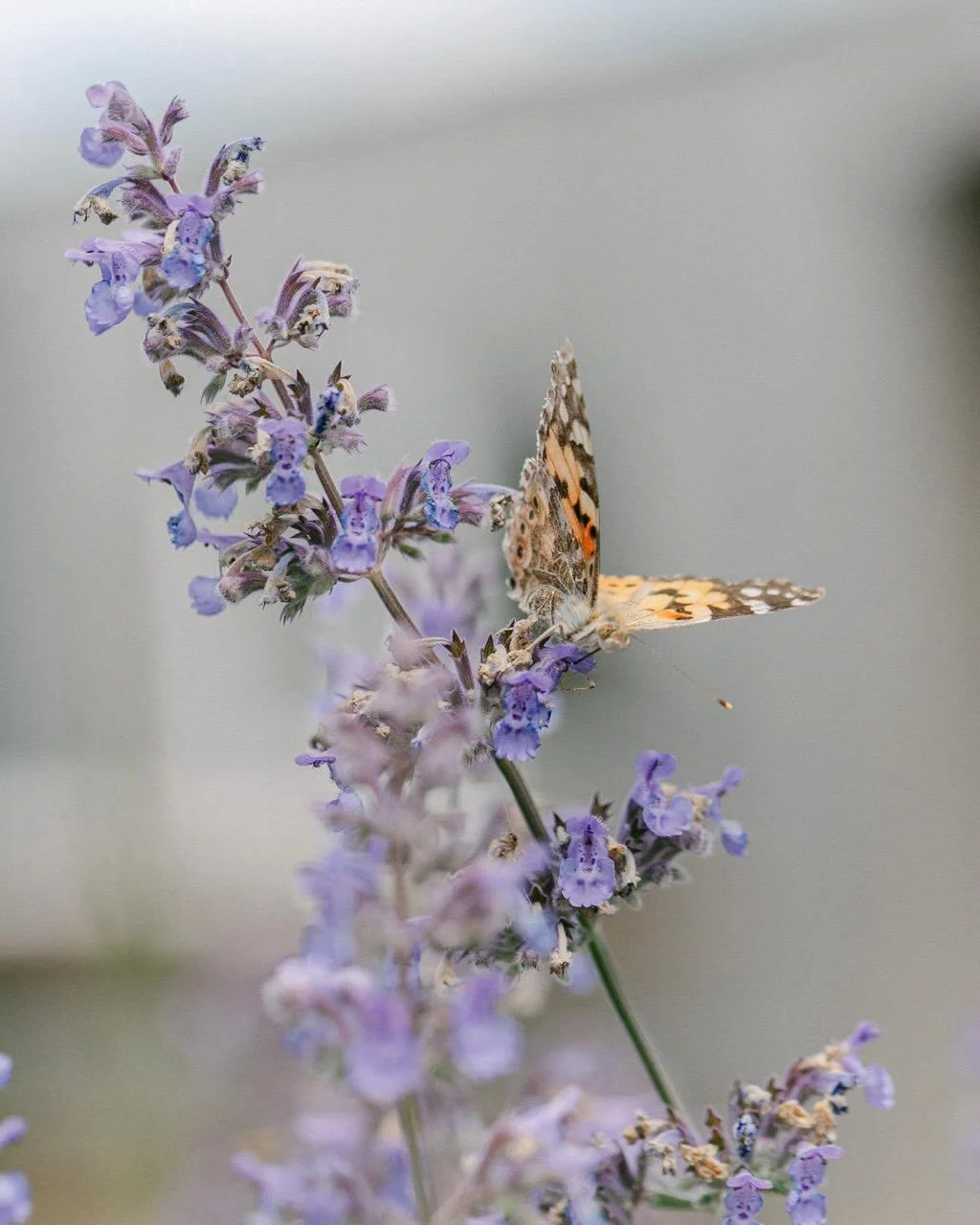
The catmint is erupting in the borders — great silver-blue clouds of it, the bees absolutely beside themselves with happiness. The rose buds are fattening with tremendous self-importance, not ready, not quite, but soon — you can feel the promise of them when you walk past and the scent just barely reaches you. The peonies are unfurling in their own extravagant time, which is to say: not your time, not on your schedule, in their own good season, and the only reasonable response is to practise patience and check on them daily with barely concealed excitement.
The dog rose is beginning at the hedgerow edges. The thyme and lavender are warming in the sun — brush your hand across them and the scent follows you back inside. The buddleia is leafing up, and the bees already know it's coming.
Early garden crops are beginning — the particular satisfaction of eating something you grew, in May sunshine, outside, cannot be manufactured or bought or replicated. It is one of the specific joys of this month and this month only.
The robin has been following me around the garden.
I know, I know — territorial behaviour, defending boundaries, using me to disturb the soil and flush out things worth eating. The science is very clear on this.
The robin follows me around the garden, and it feels like friendship, and that is the version I am keeping.
Weather Soul
Ne'er cast a clout till May is out.
Does "May" mean the month, or the hawthorn blossom — the May blossom, as it's sometimes called? Gardeners and grandmothers have debated this for centuries, and I love that we still haven't agreed, because it means we're still talking about hawthorn in the context of getting dressed in the morning, which is exactly the right way to live.
What is not in dispute: the evenings are long now. Long enough that you lose track of time outside. Long enough that supper happens at the garden table without a decision being made — you just drift out with plates and find yourself still there an hour later, the light still warm, the garden still going, nobody quite wanting to be the one who suggests going in.
This is the gift May gives us that no other month does.
Sunshine and showers still — May is not yet committed to full summer, and the rain when it comes is warm and fast and everything smells extraordinary in the hour after it. But the light. The long, golden, forgiving light of a May evening. That's the one. That's the thing.
Folklore Focus: May Queens, Maypoles & Morning Dew
Before calendars were printed and pinned to kitchen walls. Before phones told us the weather and apps told us the season. Before any of that — people read May.
They read it in the blossom and the birdsong and the length of the evening light. They read it in which tree leafed first, which bird returned, which flower opened on which morning. May was not a month you observed from indoors. May was a month you went out to meet.
And they went out early.
May Morning
The old English tradition of May Day was not a lie-in. It was the opposite. People rose before dawn on the first of May and went outside — to the fields, to the woods, to the dew-wet grass — to welcome summer in. Young women washed their faces in May morning dew, which was believed to bring beauty and clear skin. (Whether or not this works is between you and the dew. I choose to believe it does.)
May Queens were crowned — usually the most beautiful girl in the village, garlanded with flowers, carried through the streets in what must have been an extraordinary, slightly overwhelming honour. Maypoles were erected on village greens and danced around in the elaborate weaving patterns that still survive in a handful of villages today, the ribbons plaiting and unplaiting as the dancers move, the whole thing requiring more coordination than it looks and considerably more rehearsal than anyone admits.
The last maypole erected in London came down in 1717, which tells you something about what happens when cities get too busy for their own joy. In Somerset, something of May morning still stirs. Step outside on the first of May before anyone else is up. The dew is on everything. The birds are in full magnificent argument with the light. The air smells of blossom and wet grass and something older than either.
That is still May morning. It has always been May morning.
Morris Dancing
I want to say something in defence of Morris dancing, which has suffered considerably from its reputation.
It is joyful. It is ancient — genuinely ancient, traceable to the fifteenth century and possibly further. It is absurd in the best possible way: grown adults in white with bells on their ankles, waving handkerchiefs and sticks at each other with tremendous seriousness and evident pleasure, in village squares and pub car parks and on village greens on May mornings.
Somerset has some of the finest Morris sides in the country. If you encounter them this month — and in May, you might — stop and watch. Not ironically. Actually watch. There is something in the rhythm and the bells and the particular stomping joy of it that wakes something up in you that you didn't know was sleeping.
This is what community looked like before screens. It looked like this: people making something together, in public, for the pleasure of it and nothing else.
Flower Crowns
Before festivals made them fashionable, before anyone photographed them for Instagram, flower crowns were simply May. The tradition of weaving fresh flowers into garlands and crowns for May Day is ancient — the flowers picked at dawn, woven quickly before they wilted, worn for the day and then composted back into the earth.
Make one this May. With the children, or alone, or with someone you love. Cow parsley and lilac and the last of the bluebells, woven loosely with whatever you can find in the garden or on the footpath. Wear it for an hour. Feel, briefly, like someone who lives in a more beautiful century.
You do, actually. You just have to notice it.
Rogation: Knowing Your Place
Rogation Sunday — the fifth Sunday after Easter — was the day communities walked their parish boundaries. Not metaphorically. Actually walked them: every hedge, every ditch, every field edge, every lane. Blessing the crops. Marking the land. Knowing, physically and precisely, where they belonged in the world.
In an age before maps were common, this was practical. But it was also something more. There is a particular kind of rootedness that comes from knowing your landscape the way you know a face — every expression, every feature, every mood in different weather. That's what the Rogation walkers had. That's what footpath walking in Somerset gives back to us, in small doses, if we go often enough and slowly enough to actually notice what's there.
Walk a footpath you love this Rogation Sunday. Walk it slowly. Notice the hedgerow, the field edge, the view from the gate. This is your landscape. This is your place. That is not a small thing to know.
The Garden in May: What the Old Sayings Knew
Ne'er cast a clout till May is out — the most debated weather proverb in England. Does "May" mean the month, or the hawthorn — the May blossom, as it's traditionally called? Botanists argue for the hawthorn. Grandmothers argue for the month. Both are probably right: when the hawthorn is fully out, which happens in May, you can trust the warmth. Until then: keep a layer handy.
The hedgerow was a living almanac to people who knew how to read it. The hawthorn flowering meant frosts were likely done. The elder coming into flower meant summer was properly here. The dog rose opening in the hedgerow — those pale blush-pink petals that appear in late May and early June — meant the year had turned its warmest corner.
You can still read it. The hedgerow hasn't changed. We just stopped looking.
The Creatures of May
May is not only a human celebration. The whole world is at it.
The hedgehogs are in the midst of mating season — that strange snuffling and rustling in the borders at dusk, the occasional squeak of protest, the tiny drama playing out beneath your buddleia. The bumblebee workers — the queen's first brood, born in the warm weeks of late spring — are out for the first time, learning which flowers are worth their time, getting on with the fundamental work of keeping the world in blossom.
The birds are guarding nests with fierce territorial song. The robin that follows you around the garden is not, technically, following you — it's defending its territory, using you to disturb the soil and flush out things worth eating. This is the scientific explanation and it is correct.
The robin follows you around the garden, and it feels like friendship.
Both things are true. May is large enough to hold them both.
May was never just a month. It was a ceremony — practised outdoors, in community, with flowers in your hair and bells on your ankles and dew on your face, in a landscape you knew well enough to walk blindfolded.
We're still doing it. We've just forgotten to call it that.
You waited all winter for this. Go outside.
〰️
You waited all winter for this. Go outside. 〰️
Moon Moment: The Flower Moon & Blue Moon
Full Moon in Scorpio — The Flower Moon
(Friday 1 May 2026 at ~ 6.23pm BST)
May opens with a full moon. Not at the end of the month, quietly, after everything has happened. At the very beginning — the first evening, 6:23pm, the sun barely thinking about setting and the moon already rising — as if May decided to announce itself with something luminous and said: right then. Here we go.
The Flower Moon. Named, as with all the old moon names, for what the earth is doing beneath it. And in May, the earth is doing flowers. Everywhere, abundantly, almost competitively — the lilac and the apple blossom and the hawthorn and the cow parsley and the bluebells just hanging on — the whole hemisphere breaking into bloom simultaneously, as if it had been waiting all winter for exactly this permission.
Which, in a way, it had.
The Flower Moon Ritual: (for the open-hearted and the slightly chilly)
On the evening of Friday 1 May — or as close to it as life allows — take yourself outside at dusk.
The moon will be rising as the sun sets. If you're lucky, you'll catch both at once — the last of the golden light in the west and the full moon lifting in the east. This is one of the most beautiful things May offers and it happens every year and almost nobody stops to watch it.
Stop this year. Stand in your garden, or a field, or a lane, or a car park facing the right direction — none of that matters. What matters is: outside, at dusk, on the first evening of May.
Look up. Then do this: Write down — in a notebook, on your phone, on the back of an envelope — one person you've been meaning to reach out to. Not vaguely meaning to. Actually meaning to, but not quite doing. The friend you keep nearly texting. The neighbour you keep nearly inviting. The person whose company makes everything feel lighter and easier and more worth it, and whom you last saw in November and you're not quite sure how that happened.
Write their name. Then send the message. Tonight, before you go in. Not tomorrow. Tonight, while the moon is full and the May evening smells of blossom and everything feels possible, which it does, and which it is. The Flower Moon doesn't want you to nearly gather. It wants you to actually gather.
Connection is not a luxury. It is — genuinely, scientifically, humanly — the thing. And May, with its long evenings and its open gates and its beautiful, social, blossom-scented air, is the month that makes saying yes feel easy.
Use that. While it lasts.
Full Moon in Scorpio — The Blue Moon
(Sunday 31 May 2026)
May closes the way it opened. With a full moon.
Two full moons in a single calendar month — rare, beautiful, the original meaning of once in a blue moon before the phrase became shorthand for anything unlikely. This is where it came from: the occasional month generous enough to offer the moon twice. To bookend itself in light.
May 2026 does exactly that. The Flower Moon opens it on the 1st. The Blue Moon closes it on the 31st. And between those two luminous brackets — everything. The blossom and the bees and the elderflower and the long evenings and the gatherings and the bank holidays and the barefoot lawns and the swifts screaming overhead.
A whole May. Held between two full moons.
That feels right, for a month this full.
The Blue Moon will not be blue, any more than the Pink Moon was pink — the names are older than the colours, borrowed from folklore and feeling rather than optics. But there is something about a second full moon in a single month that does feel different. Quieter, maybe. More reflective. As if the first moon was for going out into the world and the second is for coming home to yourself.
Which makes it, I think, the perfect closing ceremony for May.
The Blue Moon Ritual (for the grateful and the slightly disbelieving it's already the end of May)
On the evening of Sunday 31 May, take something outside.
Something sparkling, if you have it. Something warm, if the evening calls for it. A glass of elderflower cordial you made yourself, or bought from the farm shop, or found at the back of the fridge and decided to finish — it doesn't matter. It just needs to be something you chose, something you're holding, something that makes the moment feel slightly ceremonial without any effort.
Go outside. Look up. Then do this — slowly, without forcing it:
Think about what this May gave you. Not what you meant to do, or planned to do, or nearly got around to doing. What actually happened. The morning the wisteria stopped you in your tracks. The walk where the blossom fell in your hair. The evening you stayed outside long past when you meant to come in. The person you texted. The gathering that happened. The small things that turned out not to be small at all.
Notice them. Name them, even just in your own head. Say: that happened, and it was good.
This is gratitude — not as a practice or a habit or a wellness exercise, but simply as the natural response to a month that gave you this much and asked only that you show up for it. Which you did.
May your Blue Moon find you outside, glass in hand, quietly, unreasonably glad.
The Joy Edit
Ritual - The Barefoot Lawn: First warm morning, leave your shoes at the door. Cold dew, daisies, the odd magnificent fat dandelion. Don't check your phone for the duration of the mug. Just let the garden and the birdsong and the bees getting on with things happen around you. It costs nothing and sets something in place the rest of the day will thank you for.
Gather — Plan the Summer Table: Not nearly plan it. Actually plan it. Choose a date, name the people, send the message. The garden doesn't need to be finished — it never is, and nobody who loves you will notice. What people remember is not the tablecloth. It's that you asked them.
Connection — Dawn Chorus: Set an alarm. Just once. Open the window before the world wakes up and after the birds already have. It's free, it takes twelve minutes, and you will think about it for weeks. Scientists studying micro-moments of awe consistently find this among the most potent available to a human being. It's outside your window. Gone by July.
Make — Elderflower Cordial: The elderflower will be out for approximately three weeks and will not wait. Pick some. The full recipe is on the blog. Pour over ice, add something sparkling, drink outside. This is not just a recipe. It's an act of paying attention to the season before it leaves.
Notice — The Second Wave: The first blossom comes and we gasp — as we should. But the second wave is quieter and better: elderflower, cow parsley, lily of the valley, the dog rose beginning at the hedgerow edges. It doesn't announce itself. Slow down this month, or you'll miss it. And then it will be June, and you'll think I meant to notice that — which is the saddest kind of almost.
Joy Reminder — stick this somewhere obvious: The season is not waiting for you to be ready. It's happening right now, outside the window, in the lane, in the garden. Go out to meet it.
Picnic, But Make It May:
Two Bank Holidays. Two Reasons.
May's picnic feels different from April's.
April's picnic was earned — the triumphant first, the reward for a long winter, the blanket finally unfolded after months of waiting. May's picnic is something else entirely. May's picnic is abundance. We live outside now. This is simply what we do, and we do it twice, because May gives us two bank holidays and we are not wasting either of them.
Pack the basket. Both times.
The Royal Bath and West Show
There is one picnic in May that deserves its own mention, because it has been a family tradition long enough that the children now expect it and would be genuinely bereft without it.
We pack a picnic — this is non-negotiable, this has always been non-negotiable — and we go to the Royal Bath and West Show. One of the oldest agricultural shows in the country, held in the fields of Somerset, smelling of countryside and something being fried and the particular organised joy of a great British show doing exactly what it was made to do.
Fresh strawberries in paper bags, eaten standing up, slightly too many. The cattle show — those magnificent, absurdly well-groomed animals being led around a ring by people who have clearly been preparing for this moment all year. The cheese. The sheep shearing — faster than you think possible, calmer than you'd expect. Duck herding, which if you have never seen it you simply must, because it is simultaneously the most skilled and the most joyful spectacle available in a Somerset field in late May.
The orchestra on the bandstand. Pimms in actual sunshine. The jumping and the dressage. The quiet pride of people who work the land and are celebrated for it, once a year, properly.
This is what the British countryside looks like when it's celebrating itself.
Go. Take the children. Pack the picnic. Buy the strawberries. Watch the ducks.
“The best picnic of the year is never the most perfect one. It’s the one where you stayed longer than you meant to, and nobody minded.”
The May formula:
The BBQ debate: it is never too early. Retrieve it. Assess it. Give it a spring clean and a first fire-up on the earliest reasonable evening and feel, completely correctly, like someone who has their priorities in the right order.
For the picnic basket itself — May has upgraded the options considerably since April. The asparagus is still going — wrap it in prosciutto if you're feeling extravagant, eat it cold with good butter if you're not. The first strawberries are appearing at the farm shop by the end of the month — treat them as the event they are. Elderflower in the drinks. A proper loaf. Godminster doing what Godminster does best. The good glasses, because May earned them.
What to pack:
Flask of tea. Always, still, even now.
Asparagus, cold, with something good alongside it
First strawberries if you can get them — just as they are, no improvement needed
A proper loaf, good butter, something local on top
Godminster cheddar, no negotiation
Something elderflower — cordial, fizz, or the May Cup from the recipe below
A blanket that has stopped pretending it needs to be waterproof
Sunglasses that are now simply on your face, where they belong
Etiquette (kindly enforced): Leave the field as you found it. Let the dog walkers through. Wave at everyone — May people wave back. And if it rains, which it might because ne'er cast a clout, pack up cheerfully and call it a success. You went. The basket was unpacked. The grass smelled extraordinary.
That is the whole thing. That is always the whole thing.
Cooking with the Seasons
This is the month the kitchen exhales. The window goes up during supper prep and stays up. The herbs are torn not measured. The garden is contributing for the first time — a handful of chives, a sprig of thyme still warm from the sun, the first tentative pickings of something you grew yourself. We are no longer cooking for warmth. We are cooking for pleasure, with something good on the radio and nowhere particular to be.
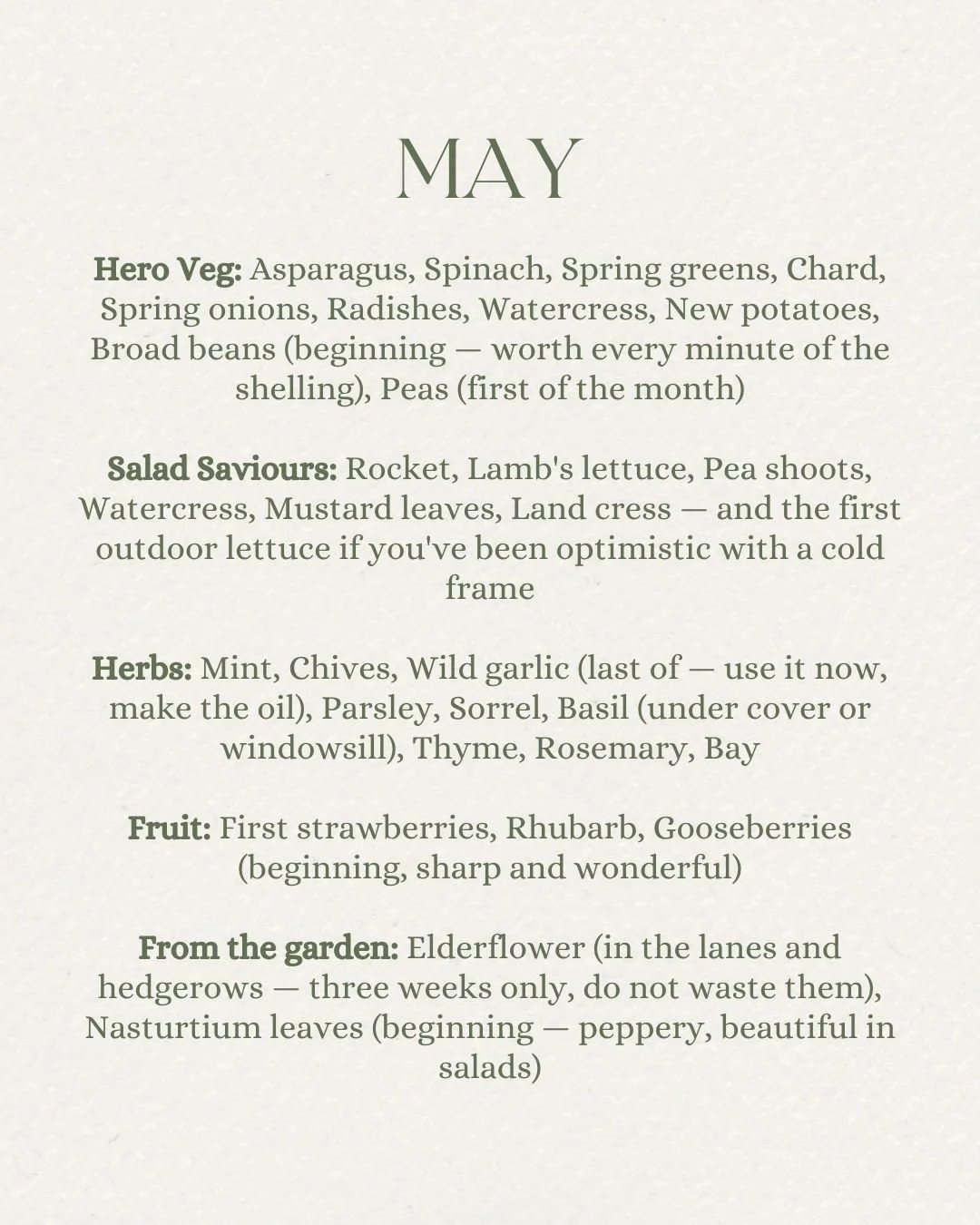
What to cook this month:
Asparagus — still, always, constantly: Buy it from the farm shop, cook it within hours, eat it with butter and lemon and absolutely nothing else. It needs no improvement. We are simply the fortunate people who get to eat it.
The First Strawberries: Appearing at the farm shop by the end of the month and to be treated as the genuine event they are. Not sliced into a fruit salad. Not hidden in a pavlova. In a paper bag, in the sunshine, eaten immediately. This is the only correct approach.
New Potatoes: Jersey Royals still, or your own first earlies if you've been paying attention since April. Boiled, buttered, eaten warm with sea salt and fresh mint from the pot that has been aggressively thriving since the temperature rose above fifteen degrees.
Broad Beans: Beginning now, tender and sweet and worth the shelling. With mint and feta in a salad, on toast with ricotta, or eaten raw straight from the pod if you can't wait, which you can't.
Wild Garlic Oil: Make it before the wild garlic disappears entirely — which it will, without warning, the way all the best seasonal things do. Blend with good olive oil, jar it, keep it in the fridge. May on a spoon.
Rhubarb — Last Call: The outdoor stalks are still gorgeous but won't wait much longer. Crumble, fool, compote with vanilla. Say goodbye graciously.
The May Cup: The elderflower is out. The evenings are long. This is May in a glass and it deserves its own moment — see below.
The May Cup In celebration of World Cocktail Day — and the elderflower, and the evening, and May itself
There is a drink that belongs to May and only to May, made from things growing right now in the lanes and hedgerows of Somerset.
Serves two — or one, twice: Elderflower cordial — homemade if you have it, farm shop if you don't. Wraxall sparkling, cold from the fridge. Fresh mint, bruised between your palms. A thin slice of cucumber. Ice. Optional: a squeeze of lemon, a sprig of elderflower blossom balanced on top if you want to feel magnificent.
To make: Pour a generous measure of elderflower cordial over ice. Add the mint and cucumber. Top slowly with cold sparkling wine. Stir once, gently, as if you have nowhere to be. Which, in May, you don't.
To drink: Outside. Somewhere the evening light is doing something worth looking at. This is May saying: sit down, look around, notice this. You're doing well. Here, have this.
Tiny Somerset swap: Asparagus from the farm shop the moment it appears — it won't wait. Local strawberries the instant they're available — the difference between a local strawberry in May sunshine and a supermarket one in February is not a small difference, it is a completely different experience. Godminster on the picnic board. Wraxall sparkling in the May Cup, because Somerset deserves to be in the glass as well as out the window.
Waste-not note: Asparagus ends → blitz into soup with a little cream. Strawberry tops → steep in cold water with mint for the best drinking water of the year. Elderflower heads → cordial, obviously, but also steep in warm sugar syrup for elderflower sugar to use in baking all summer. Broad bean pods → compost immediately and feel very virtuous.
This month you’ll find me …
May is the month I stop dreaming about the garden and start actually living in it.
The basket gets a proper May repack — elderflower cordial added, the good glasses checked, fresh napkins, a wedge of Godminster and something from the farm shop the moment the strawberries appear. I approach this with the kind of enthusiasm most people reserve for holiday packing, which tells you everything about where my priorities lie.
Watching the wisteria against the willow every single morning like it's the first time — because it still is, and I hope it always will be.
Walking footpaths slowly, getting showered in blossom, squeezing through elderflower verges, catching the last of the wild garlic fading. Not brushing the blossom out of my hair. Not even slightly.
Stepping barefoot onto the dewy lawn before coffee, which tells you something about where May sits in my heart.
Setting an alarm for the Dawn Chorus — actually getting up for it, just once — and thinking about it for weeks afterwards.
At the Royal Bath and West Show, picnic packed, strawberries in hand, watching the duck herding with the children and feeling completely, quietly, unreasonably proud to be British.
Making elderflower cordial with varying degrees of precision and tremendous satisfaction regardless.
Looking up, because the swifts are back and all three are in the sky together and it is without question the best sky of the year.
Powerwashing the patio at a time that is technically still slightly too early and absolutely one hundred percent necessary.
Watching the peonies unfurl in their own time and practising patience, very badly.
Inviting people over — actually doing it, not nearly doing it — because May makes saying yes feel easy, and easy is the point.
Retrieving the BBQ, assessing it for winter damage, giving it a spring clean and a first fire-up on the earliest reasonable evening, feeling completely correct about this decision.
Closing May on the 31st outside under the Blue Moon with something sparkling, thinking about everything this month gave us, feeling quietly, enormously, unreasonably lucky.
May. The month the garden becomes a room you actually live in.
May your elderflower be abundant, your peonies spectacular, and your evenings long enough that supper outside becomes the only reasonable option.
With love, Gemma x
Stay a while …
Come and be nosey …
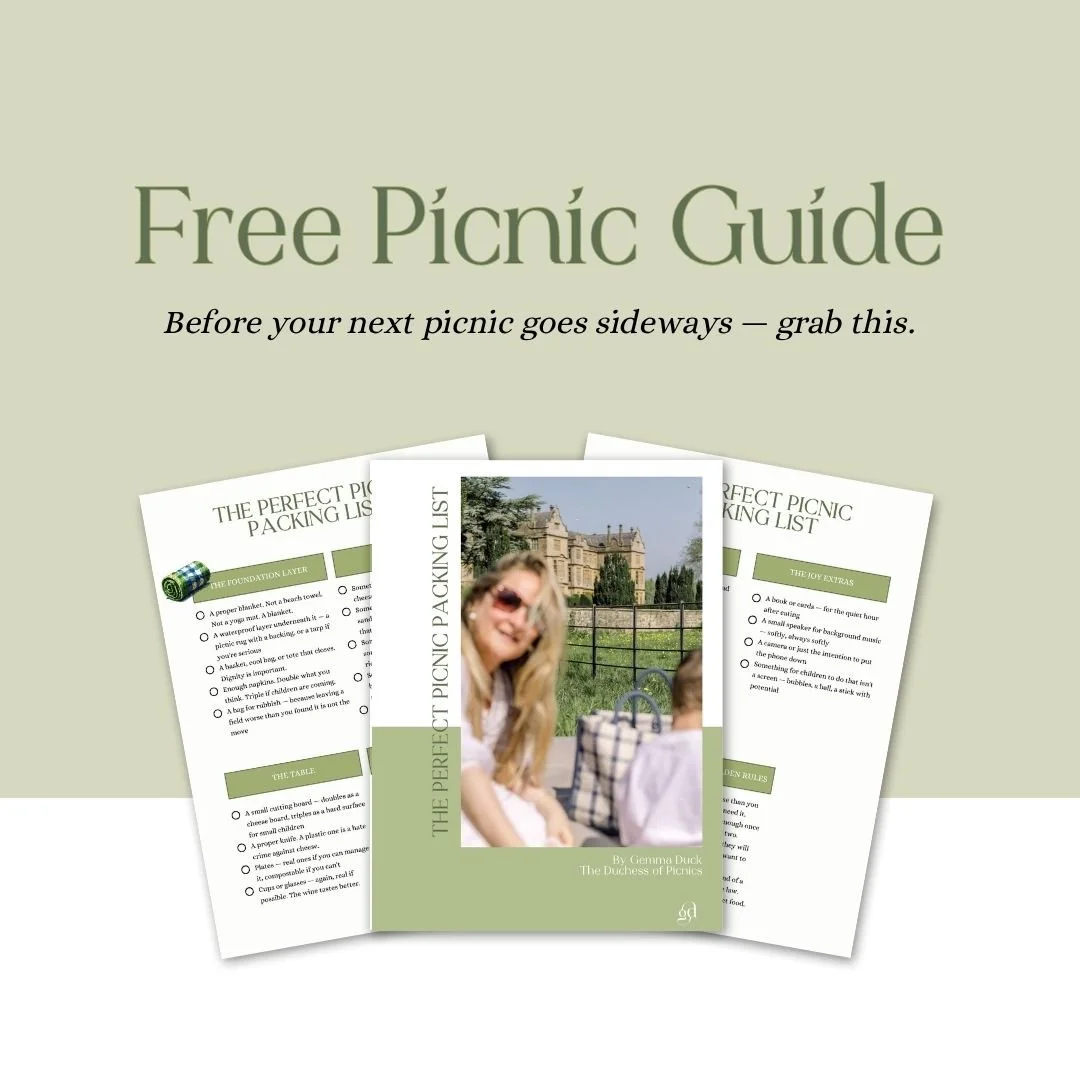
The blanket is always out over on Instagram. Behind the scenes Picnicscapes, Somerset life as it actually happens, and the occasional opinion about gingham.
The Piknic Club
Life is too short for boring picnics.
The Piknic Club is where the blanket-spreading, basket-packing, joy-seeking community lives. Seasonal boxes, curated picks, and the kind of picnic inspiration that makes you want to drop everything and go outside immediately.