The Thermos Flask: How a Christmas Experiment Became Britain's Most Beloved Picnic Object
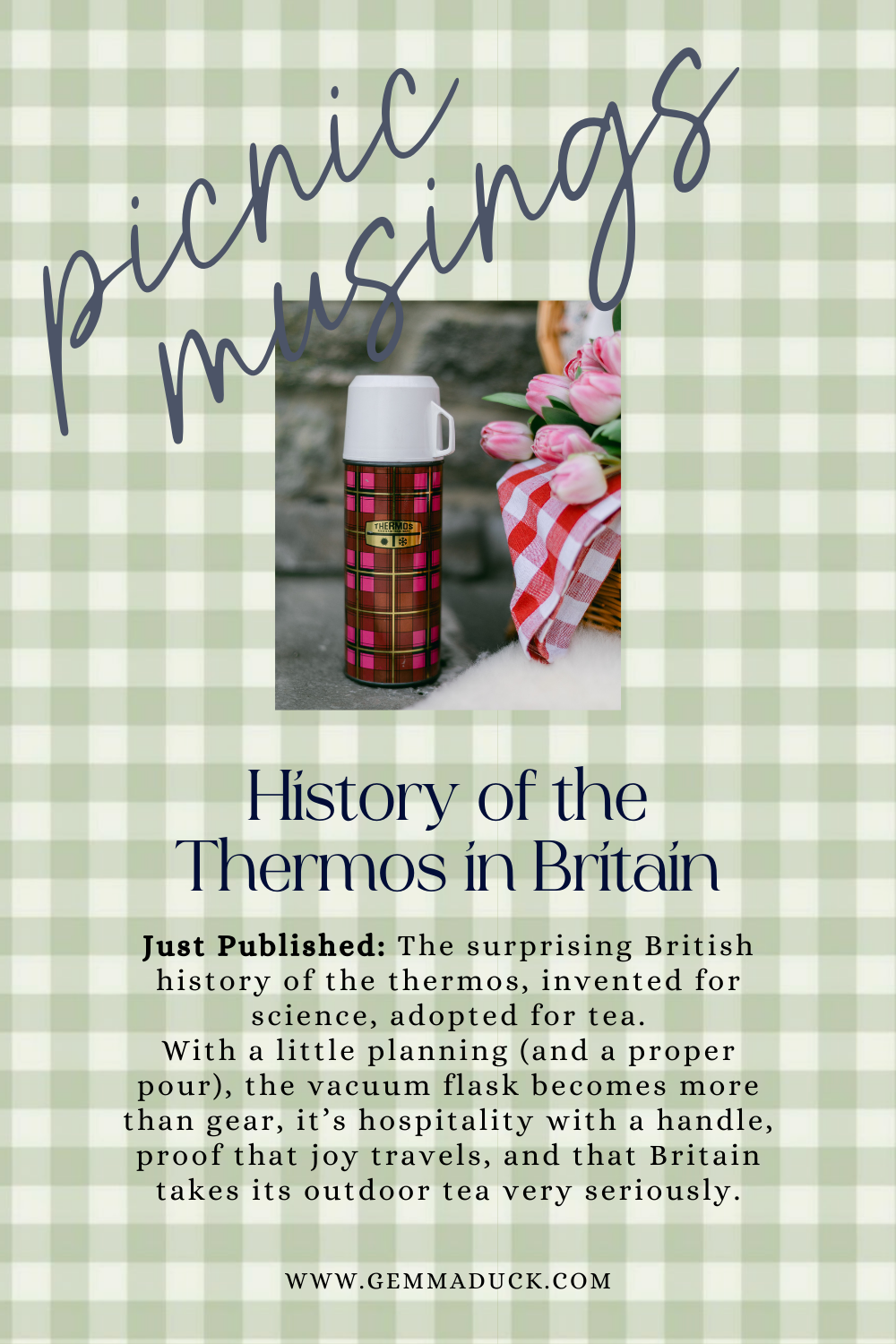
Part of The Picnic Icons Series — the histories behind the objects, drinks, and dishes that make the British outdoor feast what it is.
The history of the thermos in Britain begins in 1892 at the Royal Institution in London, where Sir James Dewar developed the first vacuum-insulated flask. Within decades, the vacuum flask moved from laboratory tool to household essential, becoming central to British picnic culture and outdoor tea traditions.
I want to tell you about a specific kind of sound.
It's the sound of a thermos being unscrewed in a cold car. The slight resistance of the stopper. The soft, pressurised sigh as it opens. The smell that follows — warm, faintly metallic, unmistakably tea — rising into the air of a freezing November morning.
If you have ever been a child on a long journey, or a parent at a football touchline, or a walker on a hill who has been cold for longer than expected — you know this sound. You know the relief it carries. Something warm is coming. Someone thought ahead.
The thermos flask is, when you examine it honestly, a minor miracle. It is a vessel designed to make time stand still — to hold a moment of warmth from the kitchen and release it, intact, hours later in a field, at a summit, beside a pitch, or in the boot of a car on the hard shoulder of the A303 where you have been sitting for forty minutes and the situation calls for tea.
It began, as the most brilliantly useful things often do, in a laboratory. On Christmas Day.
The Man Who Didn't Patent It: James Dewar and the Invention of 1892
Sir James Dewar was born in Kincardine-on-Forth, Scotland, in 1842 — the youngest of six children, son of a vintner. As a child he contracted rheumatic fever, and during two long years of recovery, he taught himself to make violins. He later claimed that this was where his extraordinary manual dexterity — the hands that would make him one of the finest experimental scientists in Britain — came from.
By the 1870s, Dewar held two professorships simultaneously: Jacksonian Professor of Natural Philosophy at Cambridge, and Fullerian Professor of Chemistry at the Royal Institution in London. Both posts. At the same time. For over forty years. The man was constitutionally incapable of doing only one thing.
At the Royal Institution, Dewar was deep in the science of cryogenics — the study of matter at extremely low temperatures. He needed to store liquid gases: oxygen, hydrogen, substances that existed only at temperatures so cold they would evaporate almost instantly in normal conditions. To work with them, he needed a container that could keep the cold in.
Around 1892, Dewar had the idea. Two glass vessels, one inside the other, with the air between them pumped out to create a near-perfect vacuum. A vacuum conducts neither heat nor cold — it has nothing through which energy can move. With a silvered inner surface to reflect radiant heat, you had a container of remarkable insulating power. It kept things cold. Very, very cold.
On Christmas Day 1892, Dewar exhibited his new flask at the Royal Institution for the first time. His fellow scientist Heike Kamerlingh Onnes called it "a magnificent invention, which may be called the most important appliance for operating at extremely low temperatures."
Dewar didn't give it a name. He didn't register a patent. He had, in his estimation, invented a scientific instrument, not a product, and the idea of commercialising it for profit apparently never seriously occurred to him.
This decision — the decision not to patent — would cost him everything and give the world the thermos.
The Two Glassblowers and the Naming Competition
Reinhold Burger was a German scientific glassblower who had worked making equipment for Dewar at the Royal Institution. He understood the vacuum flask from the inside, in the most literal sense — he had made the glass for it.
In 1903, Burger and his business partner Albert Aschenbrenner filed a patent for a domesticated version of Dewar's invention. They had done the crucial thing Dewar never did: added a protective metal casing around the fragile glass, making the vessel practical for everyday use. The patent was registered. The product was real. Dewar sued to claim his intellectual property rights. He lost.
In 1904, Burger and Aschenbrenner needed a name. They did something that, a hundred and twenty years later, still seems remarkably contemporary: they held a public naming competition. A resident of Munich submitted the winning entry — Thermos, from the Greek word thermē, meaning heat. Thermos GmbH was formed.
The word was simple, memorable, and — crucially — universally pronounceable. It crossed borders and languages with ease, which perhaps explains why, within a decade, the Thermos had travelled from a Berlin factory to every corner of the globe.
In 1907, Thermos GmbH sold the trademark rights to three independent companies: The American Thermos Bottle Company, Canadian Thermos Bottle Co. Ltd., and Thermos Limited in the United Kingdom. Three companies, three continents, one name. Each would develop the flask independently. The British company would, in time, become one of the most significant manufacturers in Europe.
Dewar — nominated for the Nobel Prize eight times but never awarded it, in part because of a long-running feud with Alfred Nobel over the patent for cordite — died in London in March 1923, aged eighty. A Dewar flask sits in the museum of the Royal Institution to this day. The object that bears his name is known to roughly every human on earth. He never received a penny for it.
Britain Industrialises the Flask
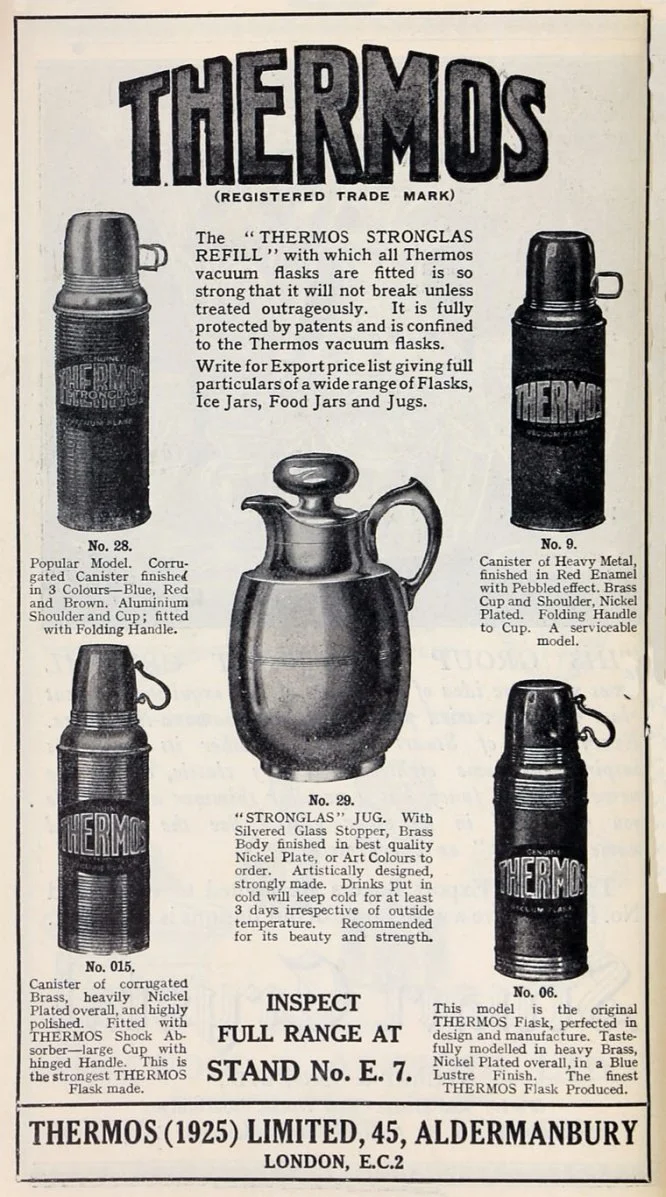
Thermos Limited in England got to work immediately. In 1911, the British company achieved something that changed everything: they invented the first machine-made glass filler. Up to this point, every vacuum flask had been hand-blown by skilled artisan glassblowers — expensive, slow, and impossible to scale. The mechanisation of the glass-blowing process was a decisive industrial breakthrough. Thermos Limited became a world leader in glass vacuum technology almost overnight.
The British manufacturing story is worth following. By the 1920s, Thermos Limited had two London sites: offices in the City at Aldermanbury, and a factory in Leyton, East London, where the flask was actually made. In 1931, the Great Depression brought the company to its knees — production nearly ceased, and for a period the firm operated as an assembler of imported parts rather than a manufacturer. Recovery came in 1932 with the opening of a new metal canister factory back in Leyton.
By 1961, the Leyton factory had served its time. The firm moved to Brentwood in Essex. Then in 1965, a glass manufacturing plant was built in Thetford, Norfolk — described at the time as the most modern and advanced glass-blowing facility in Europe. In July 1965, a devastating fire gutted the factory's stores, destroying 750,000 units. Reconstruction took nineteen weeks. Full production resumed. They simply got on with it.
The Thetford glass plant would operate until August 2000, when the furnaces were finally shut down — the victim of cheaper imported goods from India, Pakistan, and China making British-manufactured flasks economically unviable. The Brentwood assembly site had moved to join the Thetford site in 1996, and the combined factory closed gradually through 2000. After nearly a century of British manufacture, production moved overseas.
In 1971, at the height of British manufacturing confidence, Thermos Limited was awarded The Queen's Award to Industry for export achievement — by that point exporting over 50% of their production to more than 100 countries worldwide. The flask that had been invented in a London laboratory, patented in Germany, and named by a Munich resident had, by 1971, become one of Britain's most successful manufacturing exports.
A Brief Timeline: The Thermos in Britain
1892 — At the Royal Institution on Christmas Day, Scottish physicist Sir James Dewar exhibits his vacuum flask for the first time. He doesn't patent it. The world gains the idea; Dewar gains nothing.
1903–1904 — German glassblowers Reinhold Burger and Albert Aschenbrenner patent a domesticated version with a protective metal casing. A public naming competition produces the winning entry: Thermos, from the Greek thermē, meaning heat.
1907 — Thermos GmbH sells the trademark rights to three independent companies. Thermos Limited UK is founded. Britain gets its own flask.
1911 — Thermos Limited produces the first machine-made glass filler — a decisive industrial breakthrough. Britain becomes the world leader in glass vacuum technology.
1925–1932 — The Leyton, East London factory is Thermos Limited's British home. The Depression nearly closes the company; a new metal canister factory in Leyton reopens in 1932.
Interwar years — Cycling clubs, ramblers, railway travellers, and the Scout movement quietly embed the flask into British outdoor life. The tartan Model 18 becomes an icon.
1961–1965 — The Leyton factory closes; the firm moves to Brentwood. In 1965, a new glass plant opens in Thetford, Norfolk — the most advanced glass-blowing facility in Europe. A fire in July 1965 destroys 750,000 units. Reconstruction takes nineteen weeks.
1971 — Thermos Limited receives The Queen's Award to Industry for exporting over 50% of production to more than 100 countries.
1978 — Thermos introduces the world's first stainless steel vacuum bottle. The picnic-proof classic is born.
2000 — The Thetford plant closes. UK glass production ends after nearly a century. Manufacturing moves overseas. The flask's British cultural grip remains unshakeable.
2020 — Outdoor gathering becomes both necessity and lifeline. The thermos returns to daily British life. The habit stays.
The Age of Expeditions: Thermos on the Ice
Once Thermos GmbH had sold its trademark rights to the three independent companies in 1907, they marketed the flask aggressively through a specific and genius strategy: expedition association. The thermos appeared in brand literature and advertising connected with the great polar expeditions and long-distance adventures of the Edwardian era — Lieutenant Shackleton, Commander Peary, Colonel Roosevelt, the Wright Brothers, Count Zeppelin. Temperature-critical scientific materials, aviation fuel stability tests, polar nutrition — all required something that could maintain temperature in extreme conditions.
The thermos became the flask of endurance. The flask of people doing difficult things in the cold. This was brilliant positioning: if it works for Shackleton on the ice, it will work for you on the North Circular.
By the 1920s and 1930s, the association was complete. The interwar era — cycling clubs, rambling societies, the Scout movement, railway travellers, outdoor education — quietly embedded the flask into British outdoor life with a thoroughness that no marketing campaign could have manufactured. It was simply there, part of what you took when you went out. The wicker picnic set had its flask. The Scout's pack had its flask. The cyclist's saddlebag had its flask.
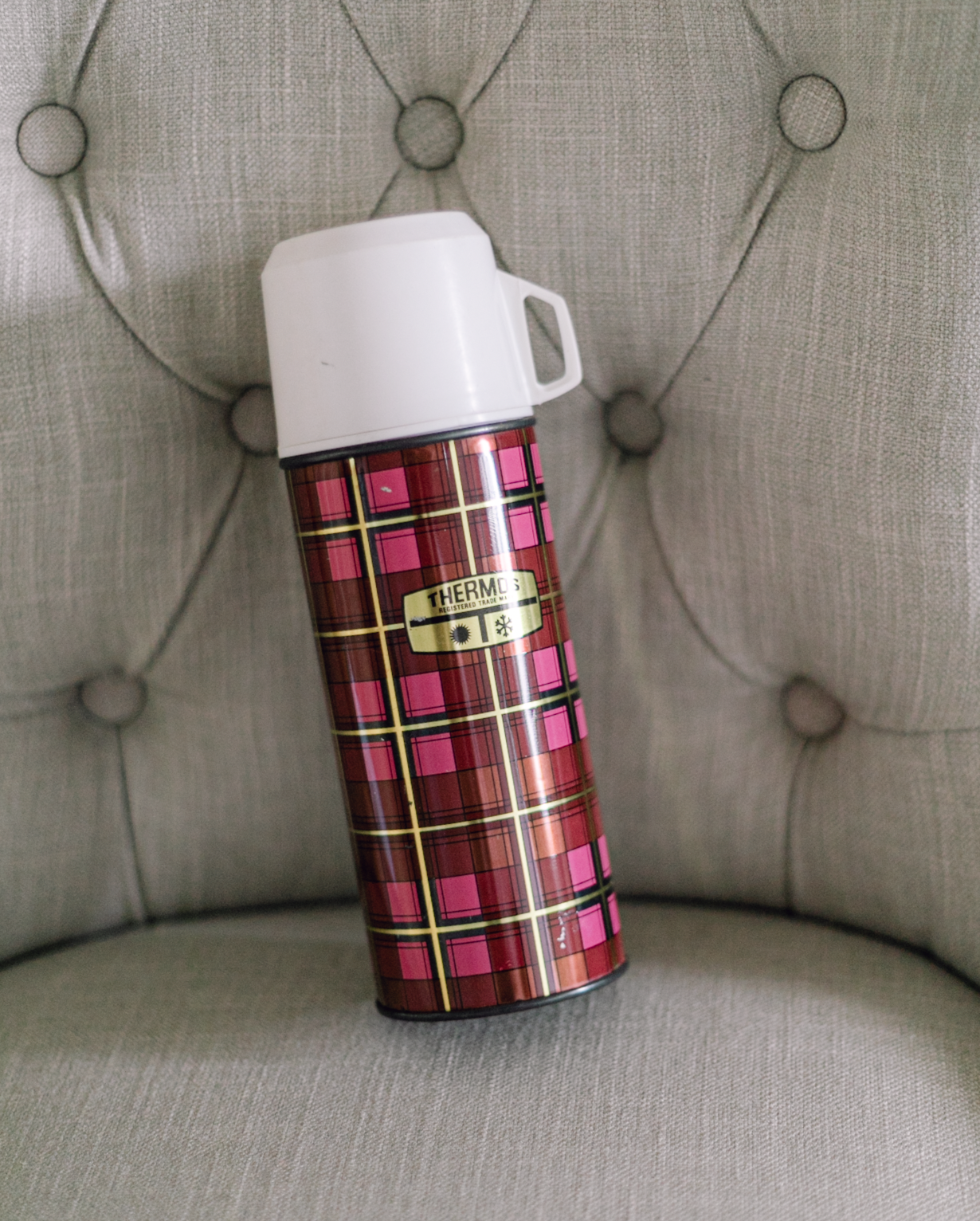
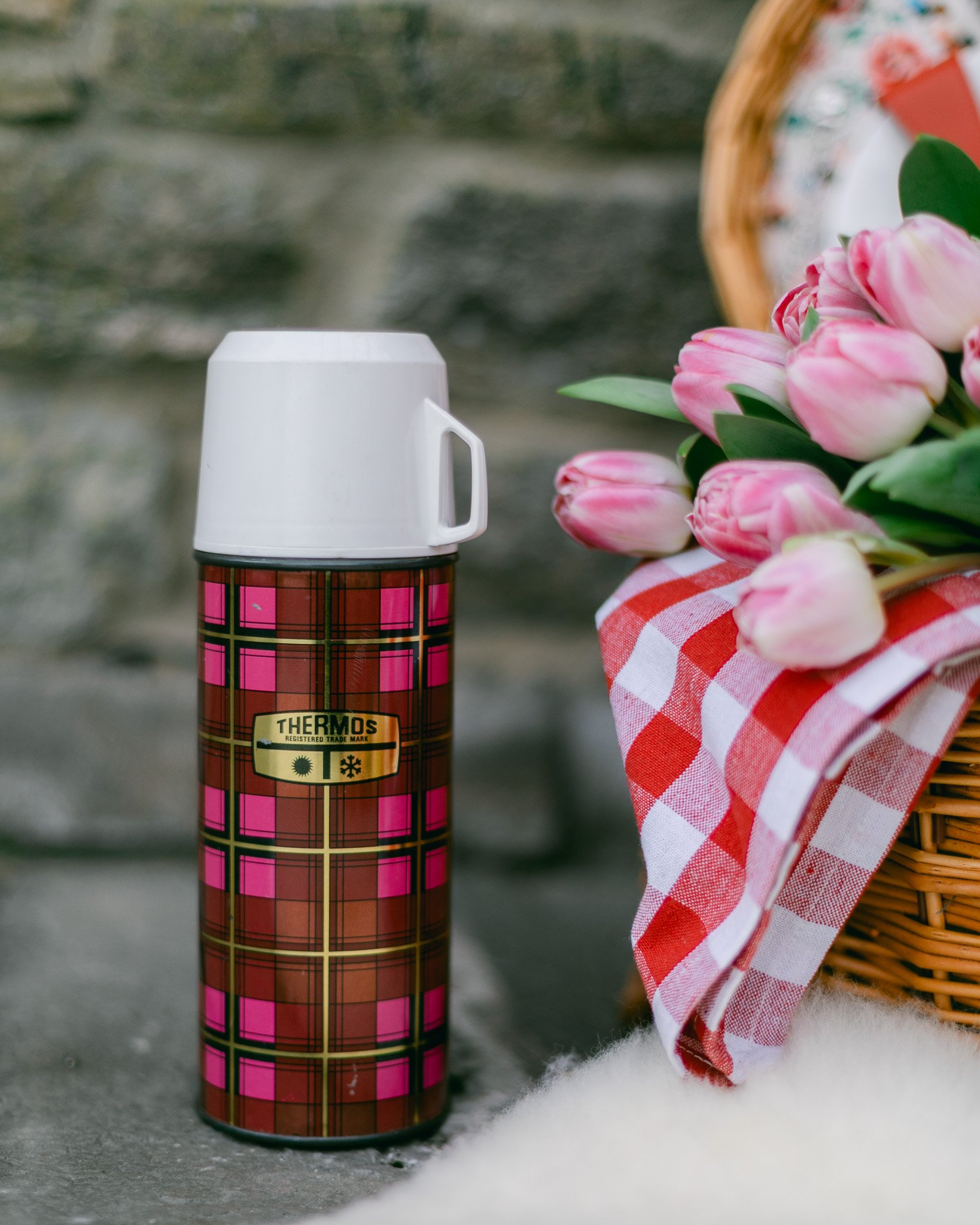
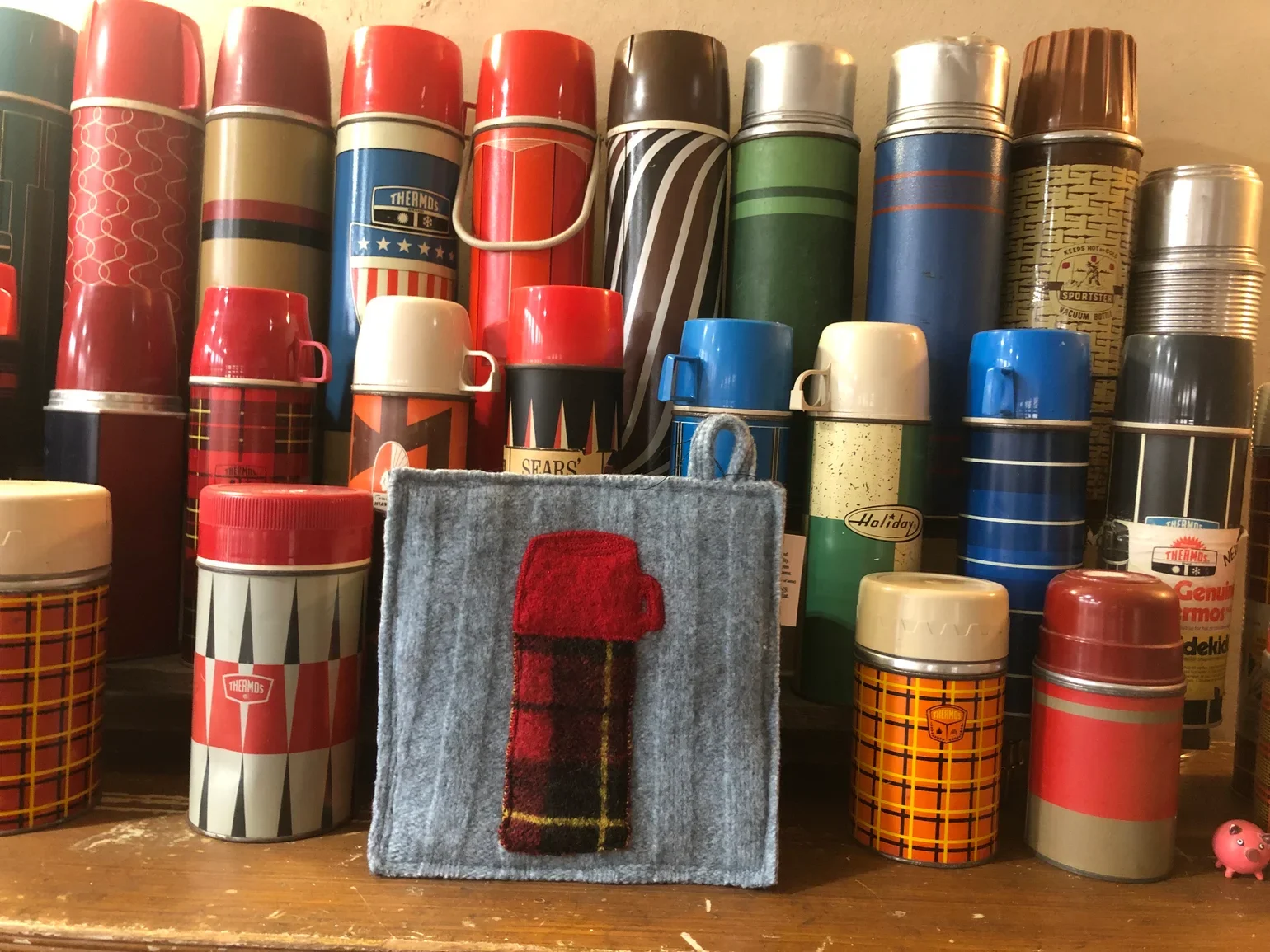
This was the era of the tartan flask. The Model 18 — a wide-handled, fabric-wrapped flask that became the defining image of the British thermos — dates from the interwar period and represents the moment when the flask became not just useful but iconic. Tartan because it evokes the Highlands; the Great Outdoors; the Scotland that invented the thing in the first place, even if it was Germany that commercialised it and Britain that industrialised it. It is heritage wrapped in practicality, which is the most British thing possible.
The Name Becomes the Thing: The 1963 Court Case
In 1963, in the United States Court of Appeals for the Second Circuit, a case was heard that settled, definitively, how thoroughly the thermos had escaped its own brand.
King-Seeley Thermos Co. v. Aladdin Industries came down to this: could the word "thermos" still be a trademark? Or had it become, through sheer ubiquity, a generic English noun?
The court ruled that by 1963, the public understood "thermos" to mean any vacuum-insulated container — not specifically one made by the King-Seeley Thermos Company. The word had generecised. It had outgrown the brand and entered the language. The ruling was specific and fair: Aladdin could use "thermos" as a common noun (lowercase), but must always precede it with their own brand name. King-Seeley retained the right to capitalise "Thermos" as their trademark.
The ruling is cited in intellectual property law to this day, alongside Aspirin and Escalator, as a canonical example of trademark genericide — the fate of brand names so successful that they become the word for the thing itself.
The thermos had, in other words, done what James Dewar's invention deserved to do from the start: it had become a universal noun. It belonged to everyone. It had entered the English language.
Dewar would have been furious. And, perhaps, quietly pleased.
“The British genius isn’t just inventing the thing - it’s taking it outside. We made a lab flask, then packed it for the moor. Dewar’s clever double-walled vessel left the Royal Institution in 1892 and somehow ended up at village football, on the A303, and halfway up a windswept tor, pouring tea that tastes like home. ”
The British Rituals: A Field Guide
The thermos arrived in Britain as a scientific marvel. It stayed as a ritual object.
There are protocols around a British thermos, observed with varying degrees of formality but understood by virtually everyone.
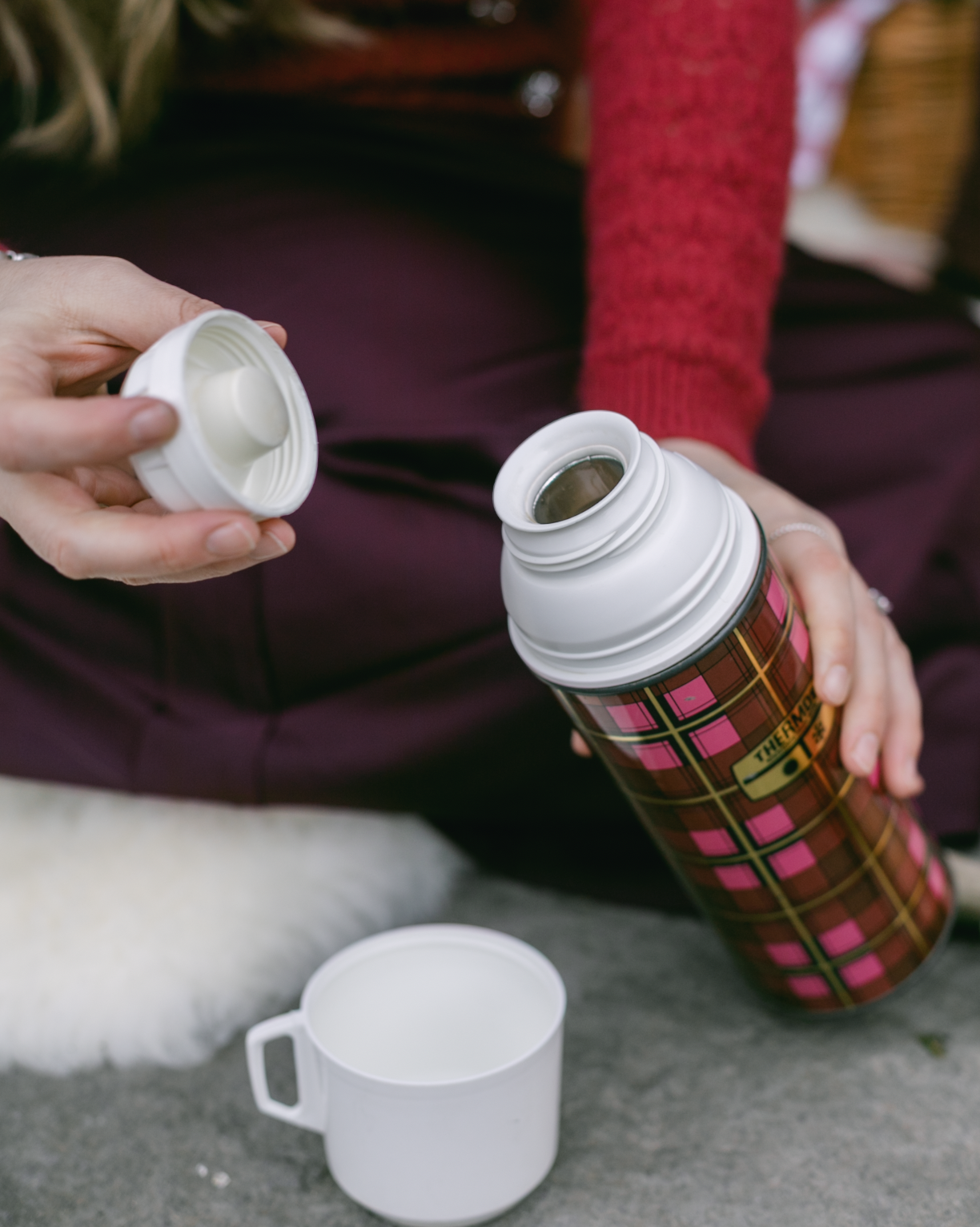
Pre-warming: You pour boiling water into the flask first, swirl it, and empty it before adding the tea. This is not optional. Skipping the pre-warm is the thermos equivalent of putting the milk in first — technically fine, practically unacceptable.
The ratio: Tea for a thermos is brewed slightly stronger than normal. It will mellow during the journey and the wait. Under-brew and you arrive with something that tastes of regret.
The fill: Fill to the shoulder, not the brim. Less air means better heat retention.
The screwing: The stopper is screwed firmly but not aggressively. Over-tightening strips the thread and strands you on a hillside with a cold flask and a philosophical problem.
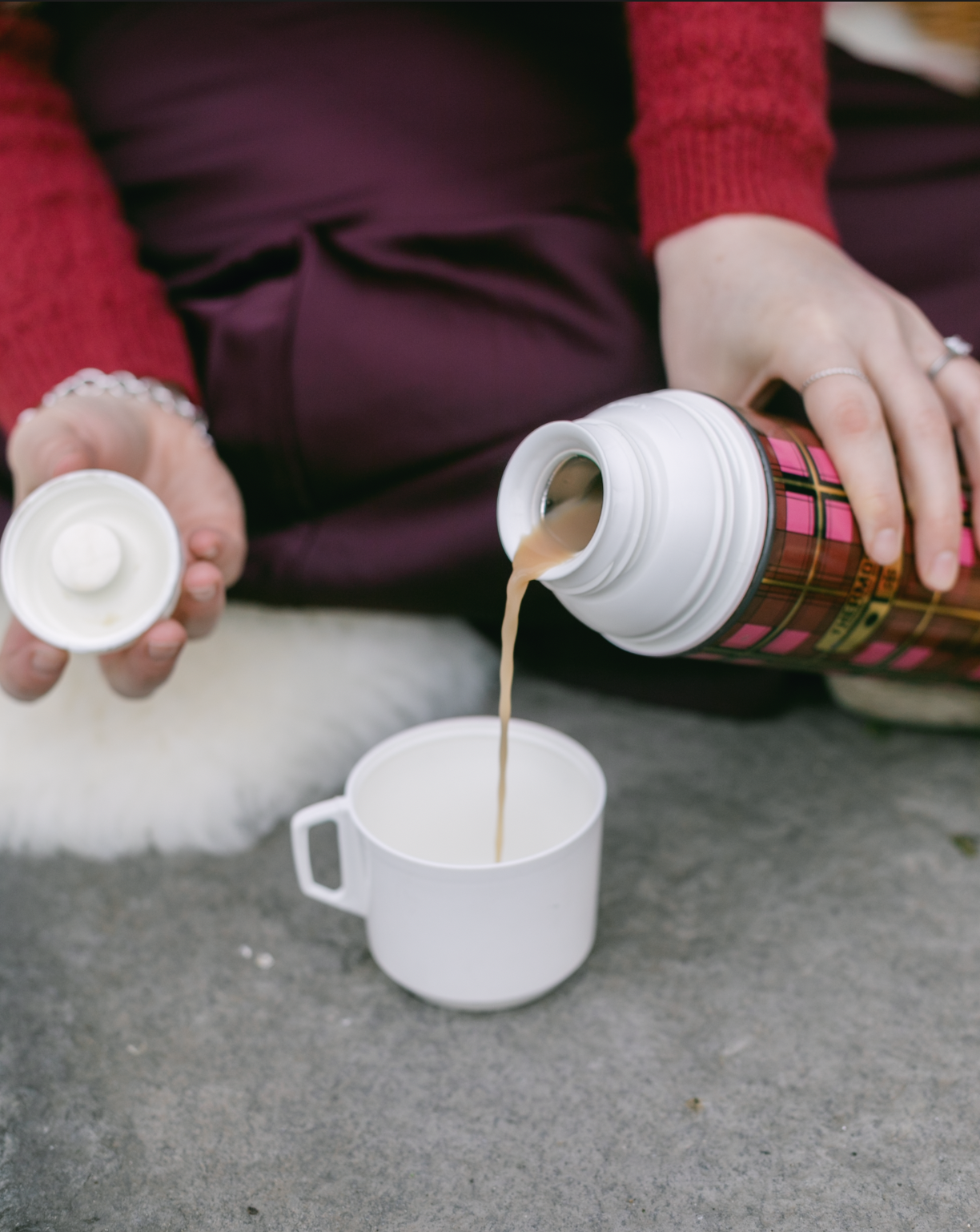
The pour: The first cup, from a shared thermos, goes to whoever looks coldest. This is unwritten law.
The stopper: Never lose the stopper. Never. A thermos without its stopper is a very expensive jug.
Cleaning: Hot water and a teaspoon of bicarbonate of soda, weekly if it's in regular use. Never store fizzy drinks in a vacuum flask — the carbonation builds pressure and is unkind to both the liner and the stopper seal.
The smell test: If you're buying a vintage thermos, the inside should smell faintly of clean steel or glass. If it smells of anything else, put it down and walk away with dignity.

What Lives in the Culture
The British thermos has appeared in so much of our cultural life that its absences are more noticeable than its presences.
The flask is in the rucksack at every Scout camp from every era of British children's literature. Enid Blyton's Famous Five travel with food that includes "hot drinks in flasks" with the same reliability that they travel with hard-boiled eggs and ginger beer — it is simply part of what a proper outdoor adventure requires. Generations of British children learned, from Blyton, that a flask was essential kit. Not optional. Essential. The fact that we still believe this, fifty years later, is arguably her most lasting contribution to the national psyche.
In adult fiction, the thermos becomes shorthand for a particular kind of quiet British competence. In John le Carré's spy novels — Tinker Tailor Soldier Spy, The Spy Who Came in from the Cold, the whole cold grey world of the Circus — the flask appears as part of the texture of the surveillance team in a cold car, the safe house kitchen, the handler on a park bench in February. It is the object of people doing difficult, unglamorous, necessary things in the cold, without complaint. In le Carré's world, a flask is not romantic. It is the opposite of romantic. It is professional, it is British, and it is what keeps you going until the job is done.
P.G. Wodehouse, whose outdoor summer parties require long iced drinks rather than hot ones, is notably flask-free — but the spirit is the same. The Wodehouse character who produces the right refreshment at the right moment from an improbable location is performing the same magic as the person who opens a thermos on a hillside. I thought of this. I prepared. You are welcome.
And then there are the sideline parents, the Scout leaders, the chilly bridesmaids revived by emergency soup in a car park, the St John Ambulance volunteer at the village fête, the mountain rescue team member. Nobody writes novels about them. But they are all carrying a flask, and the flask is always the right thing to have brought.
In 1978, Thermos Limited introduced the world's first stainless steel vacuum bottle — a development that would eventually supersede the glass-lined flask entirely, producing a vessel that could go in a dishwasher, survive a rock face, and travel to places where glass had no business being. The stainless flask is more durable, more versatile, and cheaper to manufacture. The glass-lined version is better, aesthetically, and holds heat infinitesimally better when new. Both have their defenders. The argument continues, often over tea from both types, simultaneously.
The thermos, in other words, is not just a cultural object. It is a character type. The person who remembered. The one who planned. In Britain, we don't make a fuss about this. We just quietly hand someone a cup.
The Pandemic and the Return
In 2020, the thermos came back.
It had never entirely left — but the outdoor gathering restrictions of the COVID pandemic, and then the habit of meeting outside that those restrictions forged, returned the flask to daily British life with a suddenness that felt like reunion. Rule-of-six picnics in October. Christmas visits in garden chairs. New Year's Eve on someone's back step with a flask between you because it was the only way to see someone you loved.
The thermos was there for all of it. It had always been for exactly this: the situation where you need warmth outside, and you need it to last.
The refill revolution that gathered pace in the 2020s — reusable culture, buy-once-buy-well thinking, the increasing evidence that a good vacuum flask is simply more sustainable than disposable cups — gave the thermos a new relevance without changing its fundamental purpose. The heritage designs came back. The tartan Model 18 was revived. And the flask that began in a Royal Institution laboratory found its way, once again, into a hundred thousand car boots, rucksacks, and hamper lids.
The Somerset Thermos
I was raised in a family where a flask was as essential as keys and money for any journey over twenty minutes. My mother's thermos was a wide-handled, tartan-wrapped thing of the older school — glass-lined, slightly battered at the base from years of being wedged between seat cushions — and it made tea that tasted faintly of every journey we had ever taken in it.
Spilled soup from a layby on the A303. Hot chocolate at a school sports day. Tea at the top of a Mendip walk, when the wind was making us all pretend we were warmer than we were. Tea beside a Somerset river, poured out while someone argued about whether the fish were biting, in the unconcerned way of people who haven't caught anything for an hour and have stopped caring.
The flask, in my family, was love expressed as logistics. Someone had thought ahead. Someone had made something warm and carried it. The gift of the thermos is not the tea. It's the evidence of consideration.
That is what I want to carry at every picnic I ever make. The feeling that someone thought about this. That someone prepared. That you were expected, and warmth was ready for you.
That's James Dewar's legacy too, I think — even if he never saw a penny of it.

How It Works — The Science, Briefly
For those who want to understand the miracle before they pour it:
A vacuum flask is two walls with almost nothing in between. The vacuum stops heat escaping by conduction and convection — heat cannot travel through nothing. A reflective inner surface (silver, or more recently stainless steel with a high-polish finish) reduces radiant heat loss. A narrow neck minimises heat loss from the opening.
In Somerset terms: one bottle inside another. Air sucked out between them. Shiny on the inside. Tea stays hot.
Traditional glass-lined flasks hold heat beautifully and are worth treating gently. Modern stainless steel versions are sturdier, picnic-proof, dishwasher-safe, and increasingly made from recycled steel. Both are remarkable. Both are doing something that the laws of thermodynamics would, without their clever design, simply prevent.
The thermos didn’t need reinventing — it just needed remembering.
Reusable culture, refill stations, and buy-once-use-for-years thinking have made the flask quietly radical again. A well-loved thermos is one of the most sustainable picnic tools you can own.
A thermos is simply proof that joy travels.
Ours just happens to taste of tea, with a hint of fresh air
With love (and a pre-warmed flask), Gemma xx
Sources:
Royal Institution of Great Britain. "James Dewar's Vacuum Flask." rigb.org. (First exhibition Christmas Day 1892; Nobel nominations; Dewar biography.)
Royal Institution of Great Britain. "James Dewar (1842–1923)." rigb.org.
Britannica. "Sir James Dewar." britannica.com.
Linda Hall Library. "Scientist of the Day — James Dewar." lindahall.org.
American Physical Society. "January 19, 1894: James Dewar Produces Solid Air." aps.org. (Dewar's court loss over patent; Kamerlingh Onnes quote.)
Wikipedia. "James Dewar"; "Vacuum flask"; "Thermos LLC."
Thermos Brand Official History. thermos.com/pages/history. (Burger and Aschenbrenner 1903; naming competition 1904; Thermos GmbH; Walker 1906; Thermos Limited UK 1907.)
Thermos UK Official Heritage. magento.thermos.co.uk/heritage and thermos.co.uk. (1911 machine-made glass filler; Leyton and Brentwood factories; Thetford plant; 1971 Queen's Award; 1996 site move.)
EverybodyWiki. "Thermos (Europe)." (Leyton factory closing 1961; Brentwood 1961–1996; Thetford 1965–2000; detailed UK manufacturing timeline.)
Norfolk Heritage Explorer. "Thermos Factory, Thetford." heritage.norfolk.gov.uk. (1965 fire; 750,000 units destroyed; 19-week reconstruction; silvering plant 1978; full closure 2000.)
Grace's Guide to British Industrial History. "Thermos." gracesguide.co.uk.
Justia US Law. King-Seeley Thermos Co. v. Aladdin Industries, Inc., 321 F.2d 577 (2nd Cir. 1963).
V&A Museum Collection. Thermos Ltd objects. collections.vam.ac.uk.
Stay a little longer . . . .