Joy Lives in Ritual, Not Routine
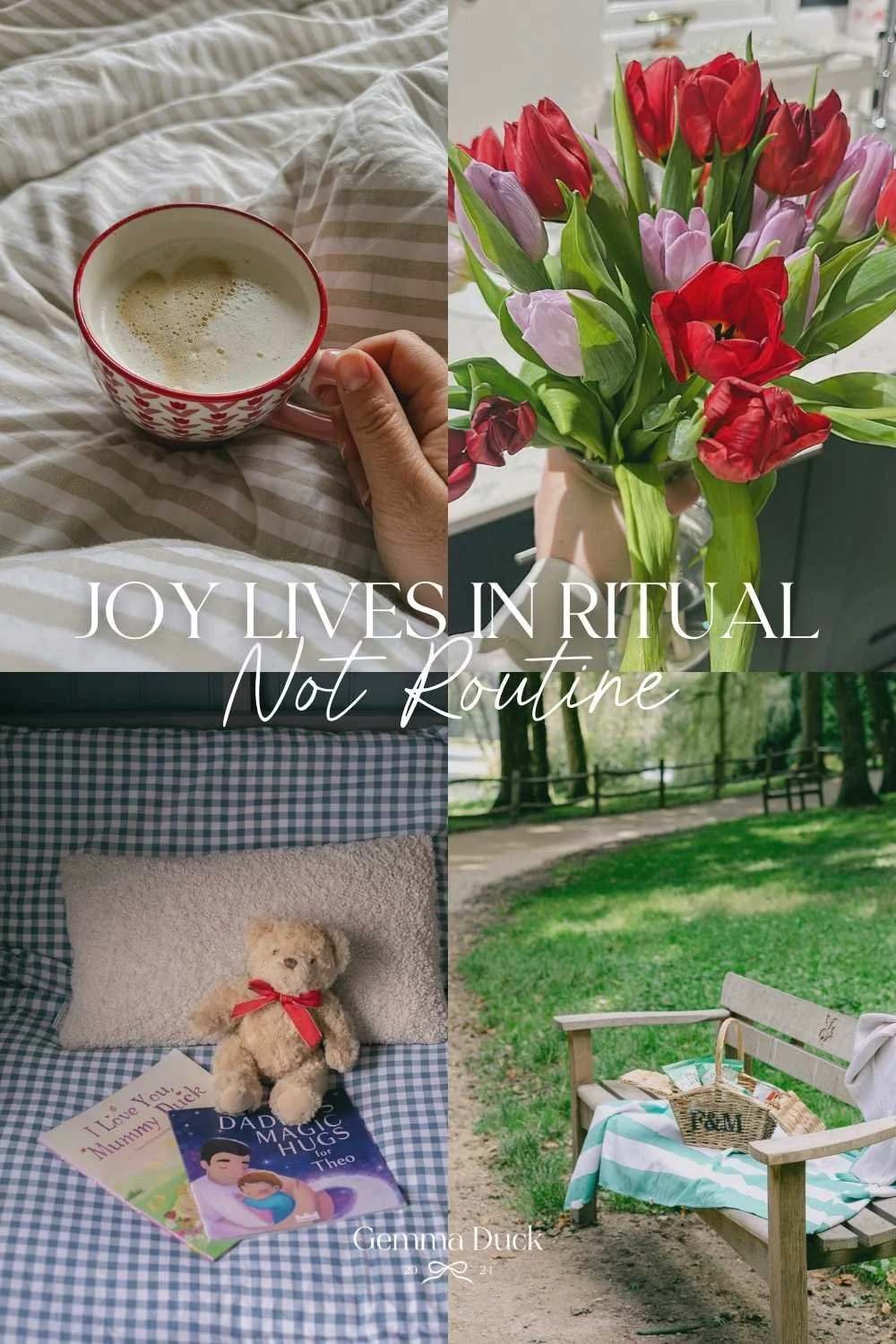
Why tiny, intentional rhythms quietly change how life feels, and what the science actually says about it.
There are seasons when nothing is technically wrong. And yet everything feels slightly unsteady. You're busy. You're functioning. The fridge is stocked. The diary is full. And still — something feels untethered.
For years, I thought what I needed in those moments was something new. A new plan. A new adventure. A new version of myself. Social media will do that to you. Everyone seemed to be selling up, moving somewhere wild, reinventing themselves every six months. My brain loved it. "Try that. Go there. If it's new, it's exciting."
At one point, I genuinely tried to convince my very sensible husband that we should sell everything and become nomadic. He did not agree. And then — the world stopped. Welcome to the COVID era.
The Quiet Shift I Didn’t See Coming
When everything outside felt uncertain, what had once seemed ordinary suddenly felt like security. We had a home. A garden. A place to create normality. And without really planning it, rituals began.
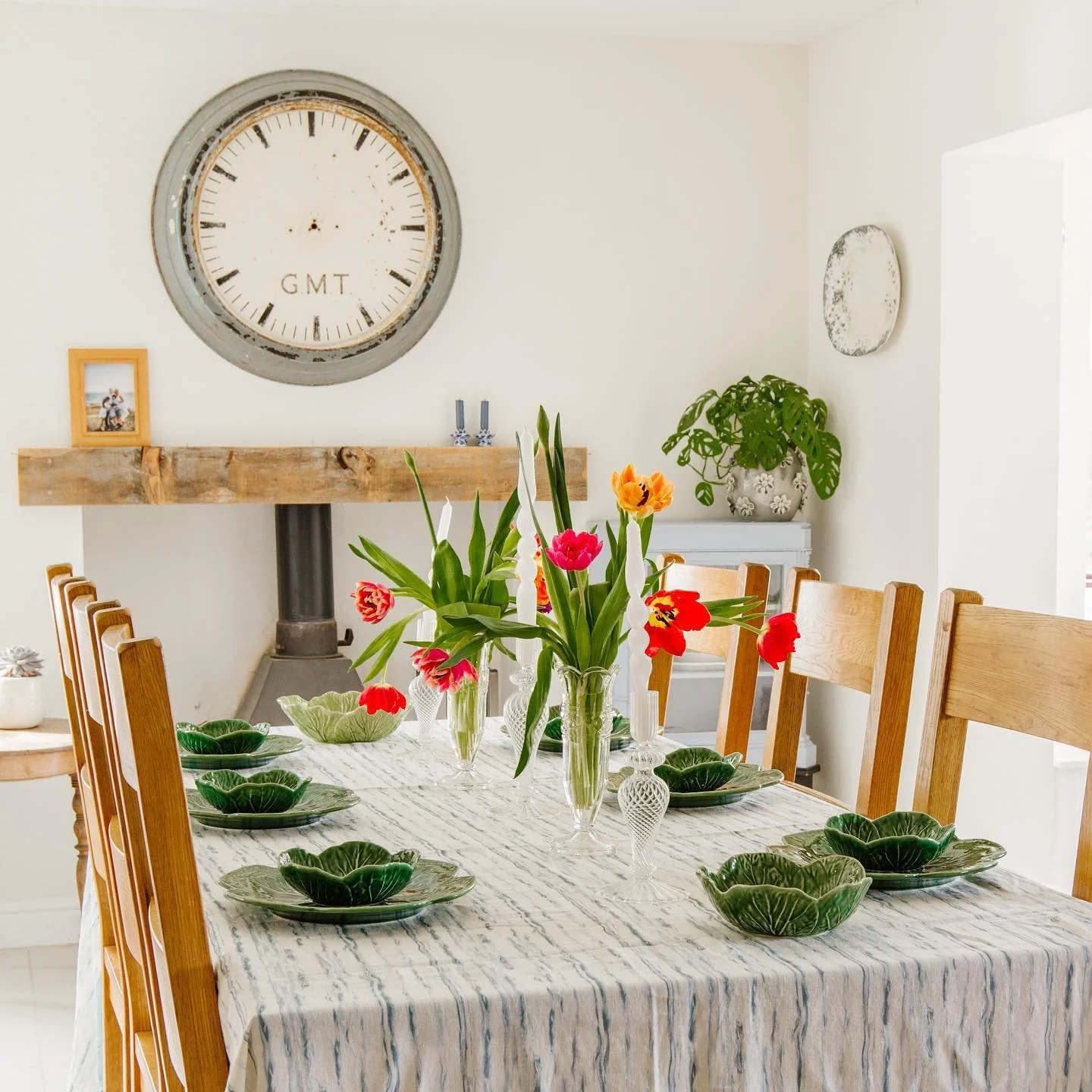
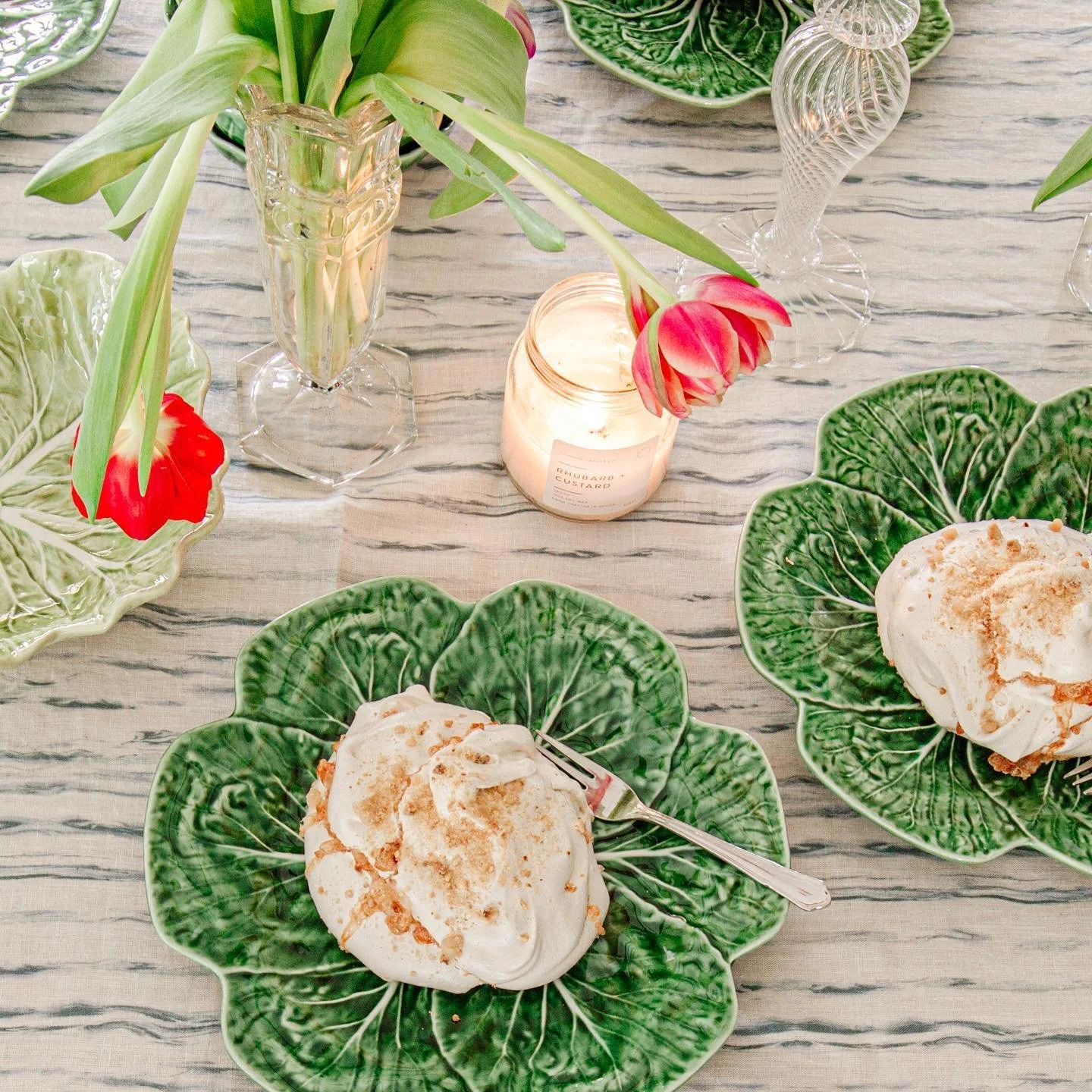
Friday night became pizza night. Sweetie Friday was sacred. Tuesday was bedding-wash day. Saturday mornings were shared house cleaning. Sunday meant a roast or a barbecue and getting hands in the garden. We introduced midweek sport challenges on the lawn. And even dinner changed — after hours of home-schooling around the same table, we began setting it properly in the evenings. Candles. Cloth. Something to signal: this is different now. This time belongs to us.
That small shift created safety. Not because the world was calm — it absolutely wasn't. But because the rhythm was. And what I learned in that season, the season nobody planned for, is something no algorithm has ever managed to teach me:
“Novelty is exciting. But familiarity is regulating. Excitement feels like freedom. Regulation feels like safety.”
It turned out I didn't want escape. I wanted steadiness. I thought I needed a passport. What I actually needed was a pattern.
Routine Is Efficient. Ritual Is Meaningful.
Let's be precise about this, because the words get muddled constantly.
A routine is a sequence. Alarm. Kettle. Shower. School run. Desk. Lunch at the sink. Repeat. It keeps your life moving, and it's genuinely useful — we need predictability to function. But a routine is largely unconscious. You're not really there. You're thinking about the email you haven't sent, the thing you forgot to say, the thing someone said to you that you're still quietly replaying three days later.
A ritual is different. A ritual has meaning. It has a beginning and an ending. It has intention behind it — even a tiny, three-second intention. It says: this matters. I am here. This moment has been chosen.
Routine gets things done. Ritual makes them matter.
That distinction isn't poetic fluff. It's behavioural science. And the research behind it is, frankly, more interesting than most people realise.
The Sunday Roast Isn't Just Dinner
Think about the rituals already woven into British life — ones so embedded we've stopped noticing them. The Sunday roast. The cup of tea when someone comes to the door. The toast after a toast. These aren't accidents of culture. They are, in the truest anthropological sense, rituals: repetitive, symbolic, communal acts that signal we belong to each other, and this moment means something.
When I lay a picnic cloth on the grass — even in the garden, even on a Tuesday in March when it's technically too cold and I'm wearing my coat indoors — something shifts. Not because it photographs beautifully (though hopefully it does), but because it marks the moment as different. We are not just eating. We are gathering. The cloth is the ritual.
What the Research Actually Says
I want to be honest here, because there is a tremendous amount of wellness fluff currently dressed up as science, and you deserve better than that.
The research on rituals is genuinely robust. And it is genuinely interesting.
Rituals reduce anxiety - even made-up ones
Researchers studying anxiety and behaviour have found something quietly reassuring: when people feel uncertain or out of control, they naturally, spontaneously turn towards ritualised behaviour — small, repeated, patterned actions — as a way of regaining a sense of control over the situation. A study published in the journal Current Biology found that heightened anxiety reliably increases exactly this tendency towards ritualised, predictable action, precisely because repetition and pattern give the nervous system something to hold onto when everything else feels uncertain.
The mechanism is this: rituals create a sense of perceived control in uncertain situations. They tell your nervous system — we have a protocol. We know how to do this. We've done this before.
Think about the rituals you've built without noticing. The specific cup you use before a difficult call. The walk you take before a tricky conversation. The particular song you always put on when you start cooking for people you love. These aren't superstitions. They're self-regulation, dressed up nicely.
Rituals make ordinary things feel differet
Consumer researcher Dennis Rook, whose 1985 paper effectively founded this entire field of study, made an observation that's obvious once you see it and invisible until you do: the things we ritualise aren't chosen at random. We build small ceremonies around consumption precisely because the ceremony itself changes our relationship to the thing being consumed. It stops being simply consumed, and starts being participated in.
That's the mechanism. Ritual increases what psychologists call psychological ownership — a sense that this experience is mine, I am part of it, not just passively receiving it. And when you're actively involved in something rather than passively receiving it, you notice more, engage more, and — unsurprisingly — enjoy more.
Which is, incidentally, exactly why a picnic tastes better than lunch at your desk. You packed it. You chose the spot. You unfolded the cloth. You arrived. Of course it tastes better. You've ritualised the entire experience before a single crumb has been eaten.
Rituals build belonging
Dr Dimitris Xygalatas, an anthropologist at the University of Connecticut and author of Ritual: How Seemingly Senseless Acts Make Life Worth Living, has spent years studying rituals across cultures and centuries. His conclusion is that rituals synchronise people. They create what he calls social glue — a shared experience of meaning that bonds groups in ways that casual interaction simply cannot replicate.
This explains why the first cup of tea with a friend feels different from any other cup of tea. Why village fêtes feel genuinely sacred despite the questionable bunting. Why a picnic with people you love — even a scrappy, wind-battered, slightly regrettable one — feels like a gift you didn't know you needed.
We are not gathering for the food. We are gathering for the ritual of gathering itself.
And the research on families, specifically
Psychologist Dr Barbara Fiese at the University of Illinois has spent decades studying family rituals — not grand ones, but the small, consistent ones. Her research found that families with strong rituals show significantly better emotional health, stronger communication, and greater resilience in children. The ritual itself isn't the magic. The meaning behind it is. The fact that it happens, reliably, again and again — that is what builds safety.
Children thrive on bedtime routines not because they're dull, but because they're predictable. Adults are no different. We may think we crave novelty. But our nervous systems crave familiarity. What my family built during COVID wasn't luck. It was, without knowing the word for it, evidence-based.
Why Modern Life Makes This Hard
Modern life glorifies spontaneity. "Book the trip. Say yes. Reinvent yourself." Newness is celebrated. Stability is quietly dismissed as ordinary. Add social media, and the illusion intensifies — everyone appears to be somewhere new, doing something bold, living without edges.
But here's the uncomfortable truth: novelty stimulates dopamine. Ritual builds regulation. One is exciting. The other is sustainable.
You don't build a joyful life by chasing the next high. You build it by creating rhythms you can return to.
There's also something that psychologists call miswanting at play here — our brain's tendency to predict that a new thing, a bigger thing, a different thing will make us happier than it actually does. We overestimate the joy of acquisition and novelty. We underestimate the deep, quiet satisfaction of the familiar and the chosen.
Matt Killingsworth's research at Harvard showed that we spend nearly 47% of our waking hours thinking about something other than what we're actually doing. And this mind-wandering — being physically in one place and mentally somewhere else entirely — is consistently associated with lower happiness. Not because the activities themselves are boring. But because we've stopped inhabiting them.
“Autopilot is efficient. Joy requires participation.”
The Seasonal Layer
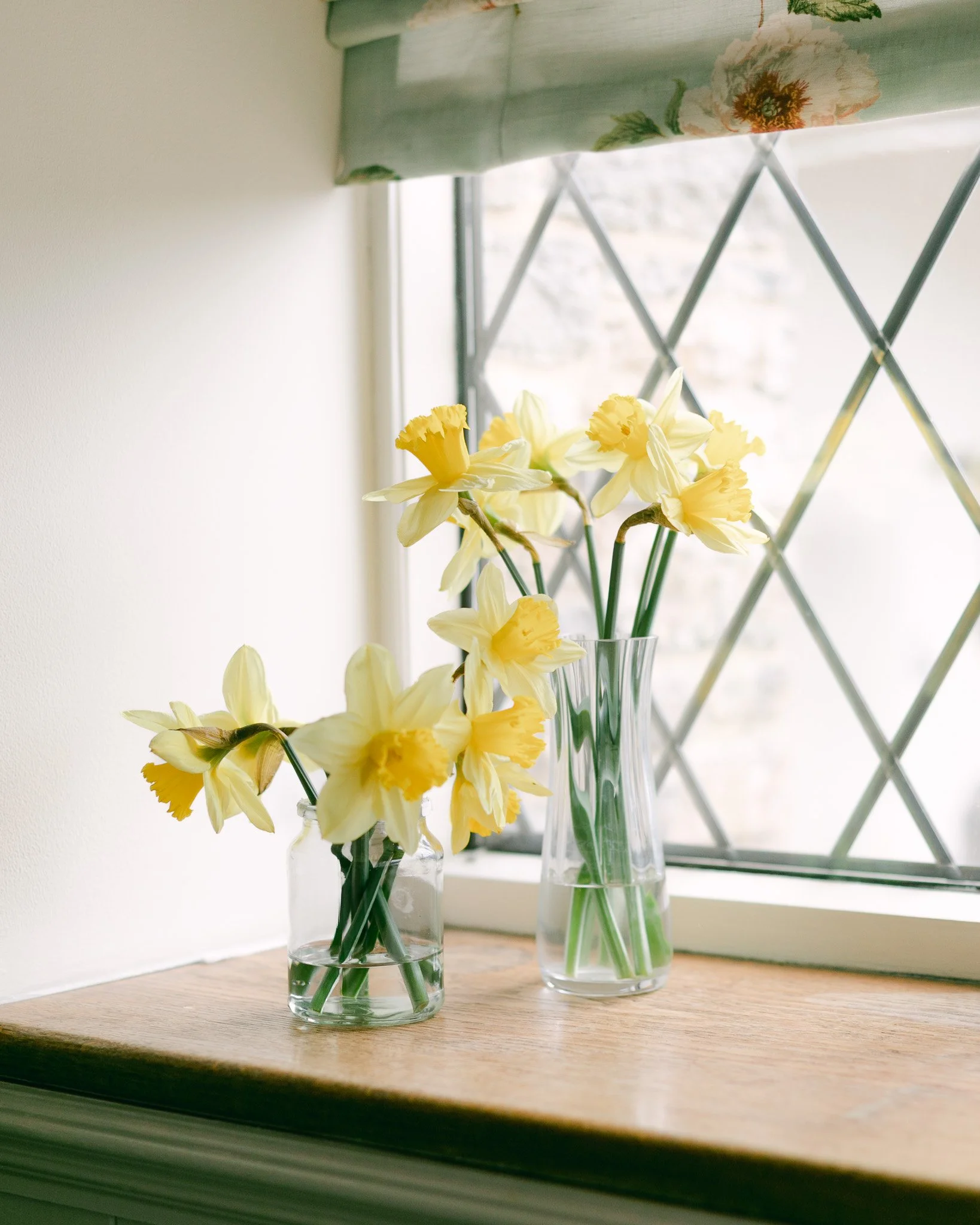
March has arrived, and with it the very first tentative daffodils leaning over the garden wall like nosy neighbours. The mornings smell different — less like wet wool and woodsmoke, more like damp earth and the faint promise of something. You notice it before your brain has caught up.
That's the thing about spring in Somerset. It doesn't make an announcement. It just quietly gets on with it.
Environmental psychology tells us that seasonal transitions influence mood and behaviour more than we tend to acknowledge. Light affects serotonin regulation. Changes in landscape and air quality cue subtle psychological shifts that are measurable and real. The body knows before the diary does.
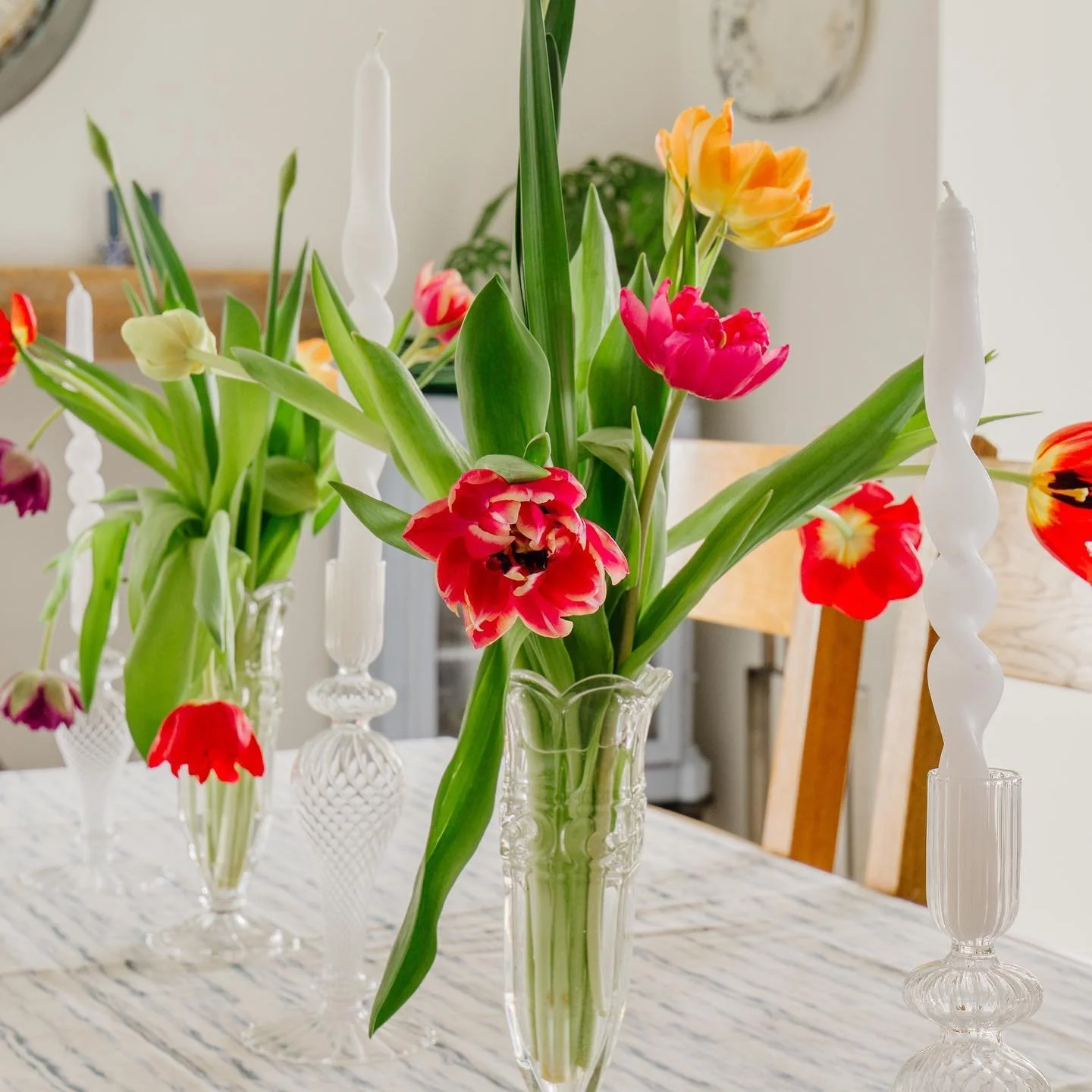
There's a reason cultures across centuries have marked equinoxes and harvests — not because they were whimsical, but because humans respond to rhythm. Thresholds want marking. In Somerset, that rhythm looks like daffodils in jam jars. Windows opened for exactly seven brave minutes. The first evening walk where you think: oh. The light has changed. Gingham returning quietly to the kitchen drawer.
There's something about a checked cloth and enamel mugs that signals: we're outside again. We're gathering again. The light is returning. It's optimism in cotton form. Not aesthetic. Embodied memory.
Rituals catch the moments we would otherwise rush past
Positive psychology research shows that intentionally noticing small positive moments — what researchers call savouring — strengthens the neural pathways associated with wellbeing. Savouring increases resilience. Repetition increases familiarity. Familiarity reduces the ambient, low-level anxiety that modern life generates almost continuously.
And here's the part I find most beautiful: you don't have to create new rituals from scratch. You can ritualise what you already have. The walk you already take. The bread you already make. The table you already sit around.
Attention is the only ingredient required.
Ritual Is Not Performance
Let's be clear. Ritual is not a 5am club. It's not a twelve-step morning routine. It's not a curated life you can't sustain past a fortnight. If anything, ritual is anti-performance. It is steady. Repeatable. Often entirely private.
It's peppermint tea outside once the children are settled — looking at the sky, not your phone. It's pizza Friday becoming so embedded in the fabric of family life that you dare suggest skipping it once and are met with collective, genuine horror.
They notice. Because predictability feels like love. Because consistency is a form of care, for others and for yourself. You don't need a new life. You need a moment that belongs to you.
And crucially — the research bears this out — you don't need anyone else to give you permission to create one.
A Small Experiment
If this has all sounded thoughtful but slightly abstract, here's what I'd actually like to offer you. Not a transformation. Not an overhaul. Just a tiny experiment.
Pick one thing you already do every day. One ordinary, unremarkable thing. This week, do it with your full attention, from start to finish, every single time.
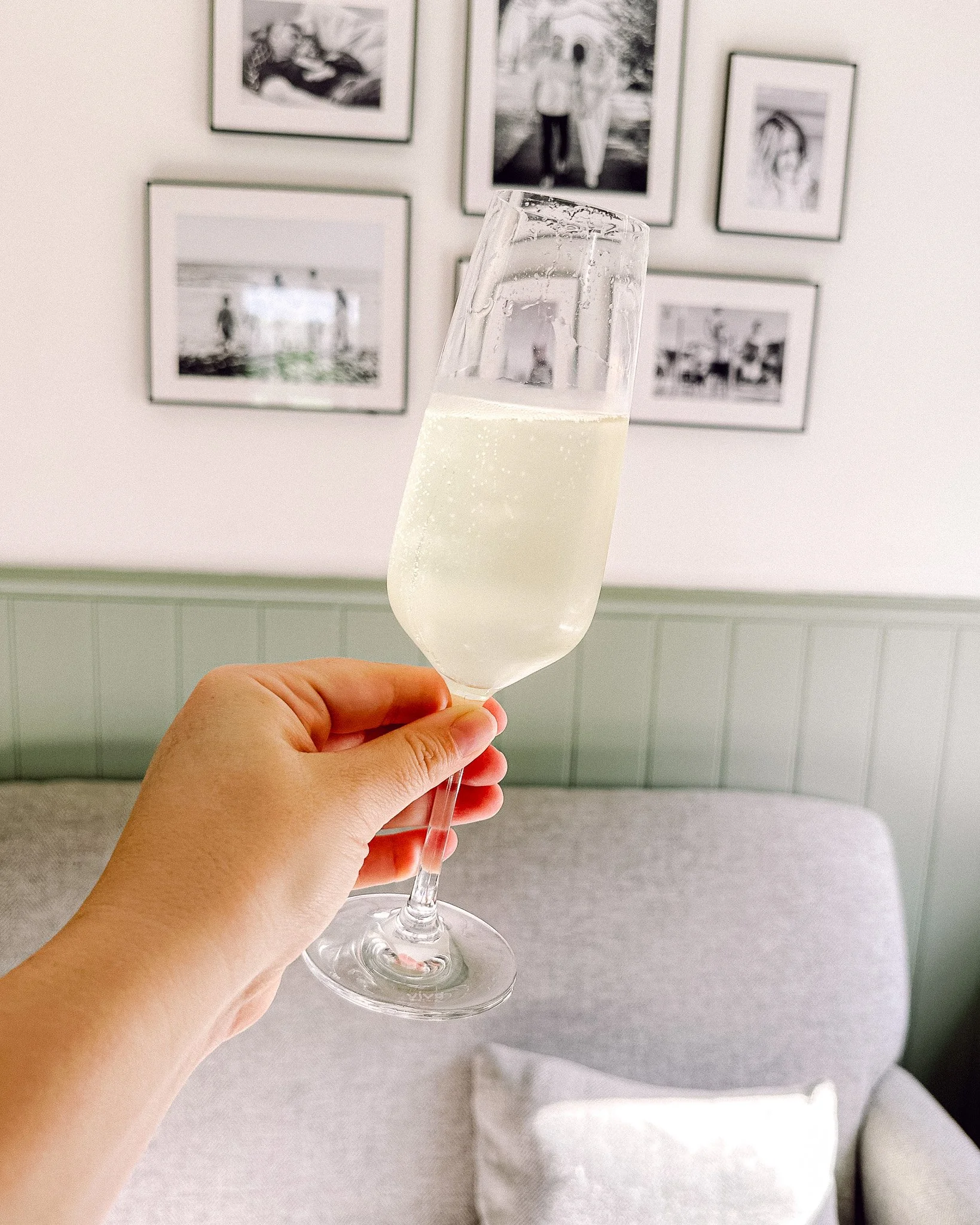
It might be making the first brew of the morning. It might be the school run. It might be lighting a candle when the afternoon light dips. It might be the moment you pour a glass on a Friday evening, and you pause before you pick it up, and you actually notice that you are here, the week is done, and this is good.
Design a two-minute ritual
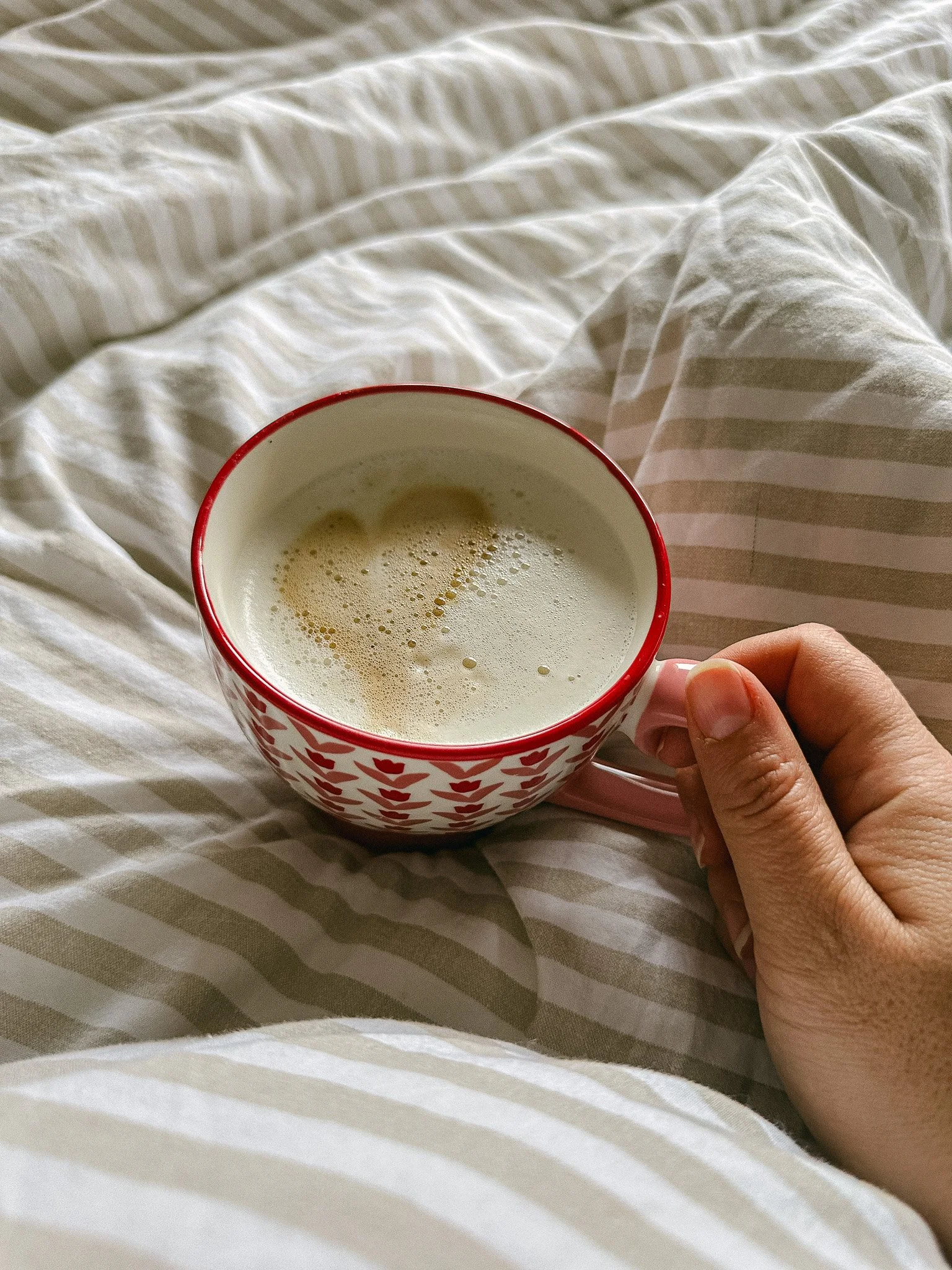
Open a window. Light a candle. Three slow breaths with both hands around a mug. Drink your tea without scrolling.
Or mark the start of the weekend properly — music on, different mug, table laid with something you love on it, even if it's just toast and a cloth napkin.
The key is repetition. Repetition builds familiarity. Familiarity builds safety. And safety, as it turns out, makes extraordinary space for joy.
"Ritual is awareness made visible. It is presence made practical. It is choosing steadiness over spectacle."
On Picnics, Obviously
I couldn't write this piece without telling you that the picnic is, in my genuinely held and professionally studied opinion, one of the most complete rituals available to us.
It has a threshold: the packing. It has a journey: the getting there. It has a ceremony: the laying of the cloth, the opening of the basket, the first pour. It has presence enforced by circumstance — you are outside, there is a slight wind, you are committed now, and there is nothing left to do but eat your cheese and notice the sky.
It is communal. It is seasonal. It is sensory. It is slightly absurd in the very best British way.
And it is, every single time, better than you thought it would be when you were packing it in the kitchen wondering why on earth you suggested this.
That, I think, is the ritual's greatest gift. Not that it makes life more beautiful — though it does — but that it makes us more capable of noticing how beautiful life already is.
You don't have to escape your life to make it joyful. You can mark it instead. Gently, repeatedly, season by season. And in the marking of it, you build something far stronger than excitement.
You build rhythm. You build safety. You build a life you actually want to return to.
Get outside this month. Lay something on the ground. Pour something warm.
Notice the daffodils.
With love, Gemma x
PS: Come over and hang out with me on Instagram where we can share in the small joys of life.
This piece is part of The Joy Edit — a series exploring the psychology and practice of joyful living.
Read the full series: Joy Is Not a Destination (January) · You Are Not Your Thoughts (February) · Joy Lives in Ritual, Not Routine (March) · The Smile Ripple Effect (April) · The Joy of Talking to Strangers (May) · Joy in Gathering & Connection (June)
Research & Further Reading
Lang, M., Krátký, J., Shaver, J. H., Jerotijević, D., & Xygalatas, D. (2015). Effects of Anxiety on Spontaneous Ritualized Behavior. Current Biology, 25(14), 1892–1897.
Rook, D. W. (1985). The Ritual Dimension of Consumer Behavior. Journal of Consumer Research, 12(3), 251–264.
Xygalatas, D. (2022). Ritual: How Seemingly Senseless Acts Make Life Worth Living. Profile Books.
Fiese, B. H. (2006). Family Routines and Rituals. Yale University Press.
Killingsworth, M. A. & Gilbert, D. T. (2010). A Wandering Mind Is an Unhappy Mind. Science, 330(6006), 932.
Kaplan, R. & Kaplan, S. (1989). The Experience of Nature: A Psychological Perspective. Cambridge University Press.
Gilbert, D. (2006). Stumbling on Happiness. Harper Press. [On miswanting and affective forecasting.]
Stay a while . . .