
National Picnic Week 2026
The Duchess of Picnics' Complete Guide (And Why One Week Is Nowhere Near Enough)
Somewhere in Britain right now, someone is looking out of a window at a sky that can't quite decide what it wants to do, thinking: maybe next week. Maybe next week I'll finally do the picnic. Maybe when it's warmer. Maybe when I've got the right basket. Maybe when the children are less feral, the grass isn't damp, and I've found a recipe that isn't just a sad bag of crisps and apology.
Here is what I want to say to that person, very gently, with deep affection: stop waiting.
National Picnic Week 2026 runs from 15th to 21st June, with International Picnic Day falling on Thursday 18th June. You have been given an entire week's official permission — from the universe, essentially — to take a blanket outside and eat something you didn't cook on a cooker. This is not a moment to squander.
But here's the thing. I've been researching, thinking, writing about, and obsessively studying picnics for years now. And what I've come to understand — from the history, the science, and a frankly embarrassing number of Saturday afternoons on damp Somerset grass — is this: one week is nowhere near enough. The picnic is not a seasonal activity. It is a human need. And National Picnic Week, brilliant as it is, is just the nudge.
Let me tell you everything you need to know. And then let me tell you why it matters far more than you think.
First: The Dates (Because the Internet Can't Agree) …
You may have seen 14th June floating around on some sites. The official National Picnic Week website confirms 15th June as the start date for 2026, running through to 21st June. I'd go with that. International Picnic Day — a separate, globally recognised occasion — sits inside the week on 18th June, which rather helpfully gives you a mid-week excuse if you needed one.
Mark both in the diary. Honestly, mark the whole week.
A Very Brief History of National Picnic Week (And the Rather Longer History Behind It)
National Picnic Week in the UK has been championed by various organisations over the years as a way to encourage people to get outdoors, eat together, and enjoy the British summer — which, to be fair, requires a certain amount of encouragement and a waterproof blanket.
But here's what the awareness week doesn't always tell you: the picnic itself is ancient. Genuinely, startlingly, four-thousand-years-of-documented-evidence ancient.
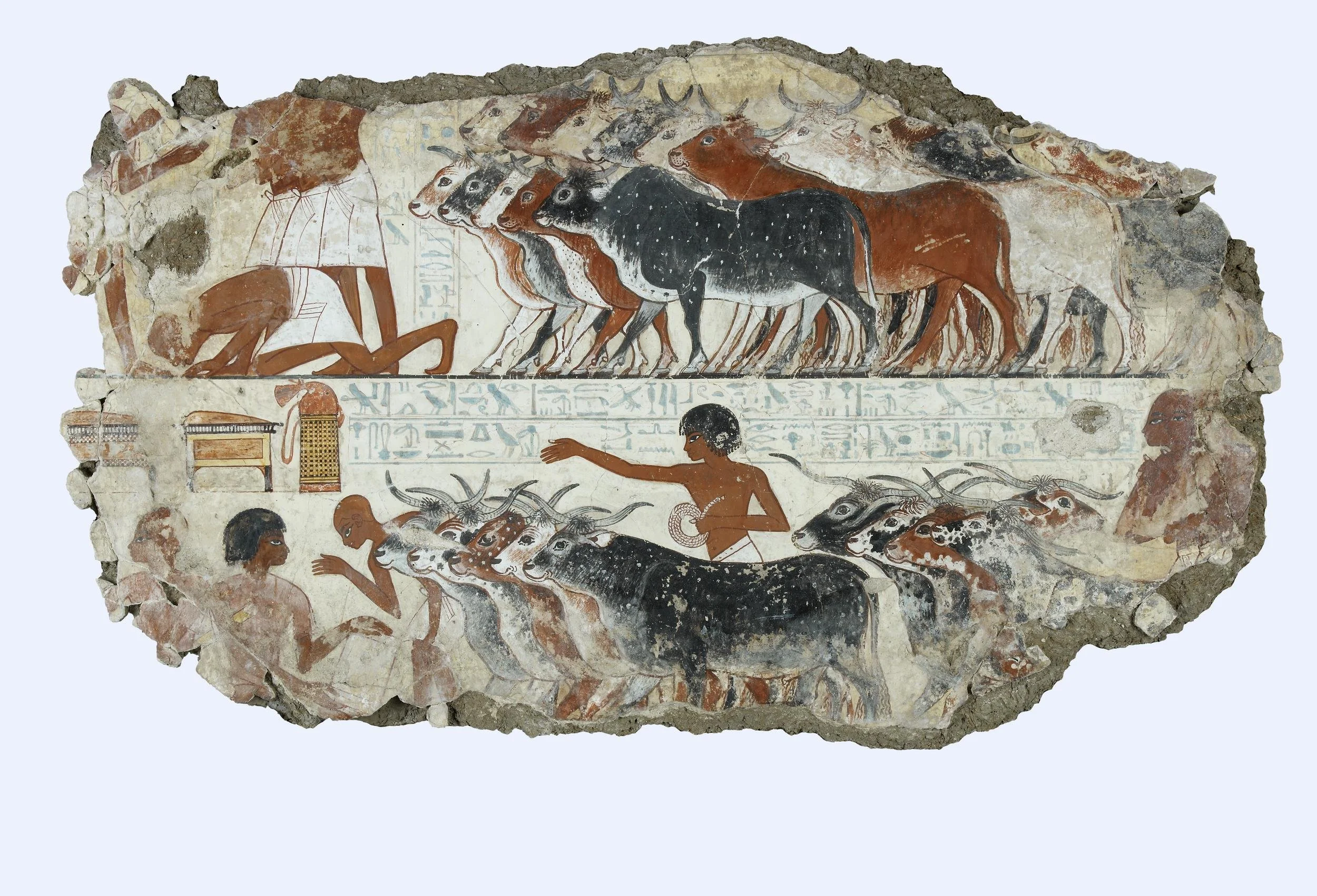
© The Trustees of the British Museum. Shared under a Creative Commons Attribution-NonCommercial-ShareAlike 4.0 International (CC BY-NC-SA 4.0) licence.
The earliest recorded outdoor feast we'd recognise as a picnic is painted on the walls of a tomb in Thebes. Around 1350 BCE, an Egyptian official called Nebamun is shown at a garden party — guests draped in white linen, food heaped high, lotus flowers in hand, musicians playing, and the whole glorious scene painted with the kind of detail that says: this moment mattered. That painting now lives in the British Museum, Room 61, and I encourage you to go and look at it. It will change the way you think about every picnic you've ever had.
The Ancient Romans ate outside so devotedly they built outdoor dining rooms — triclinia — into their villas, facing the best garden view. The French gave us the word in the 18th century: pique-nique, meaning roughly "pick a little, nip a little" — originally a subscription party where every guest brought a contribution to a communal meal. The Georgians adopted it enthusiastically, the Victorians turned it into a national sport (Mrs Beeton's picnic menu for forty people includes four roast ducks, two shoulders of lamb, and a cold roast beef — the woman did not do things by halves), and the Edwardians immortalised it in literature forever with Ratty's famous hamper in Wind in the Willows.
And then there's 2020. The pandemic picnic. The moment when a blanket in a park became the only legal gathering available to millions of people — and we discovered, urgently and unmistakably, that we needed it. That eating outside together was not a leisure choice. It was a lifeline.
That is the history sitting underneath National Picnic Week. That is what you're celebrating when you unpack a flask of tea in a field. You are doing the oldest thing humans do.
(Want to go deeper on the history? I've been writing The Picnic Chronicles — a complete history of the picnic from ancient Egypt to the present day. You can find it on the blog.)\
Why Picnicking Actually Matters (The Science Bit, Worn Lightly)
I know, I know — you came here for basket suggestions, not a research paper. I'll keep this brief. But it would feel wrong to write about National Picnic Week without mentioning why this all matters beyond the aesthetic.
Dr Vivek Murthy, former US Surgeon General, has described loneliness as a public health crisis as harmful as smoking fifteen cigarettes a day. That's not sentiment — that's peer-reviewed research published in a major medical study. What counteracts loneliness? Connection. Gathering. Being physically present with people you care about, eating something together, making eye contact, laughing at the same things.
A picnic, it turns out, is not frivolous. It is medicine.
There's also the outdoors element. Research from Kaplan & Kaplan's Attention Restoration Theory shows that time in natural environments restores directed attention, reduces mental fatigue, and elevates mood. Keltner and Haidt's work on awe — the feeling triggered by something larger than yourself, like an open sky or rolling countryside — shows it expands your sense of time, reduces self-focus, and increases your generosity towards other people. Even a modest picnic in a local park is, neurologically speaking, doing a great deal of work.
So when National Picnic Week tells you to get outside and eat together, they are — whether they know it or not — prescribing one of the most effective wellbeing interventions available to you. And it involves sausage rolls.
How to Actually Celebrate National Picnic Week 2026
Right. Here's the practical bit - Don't overcomplicate it.
This is the single most important thing I can tell you. The picnics that live in your memory forever are almost never the perfectly planned ones.
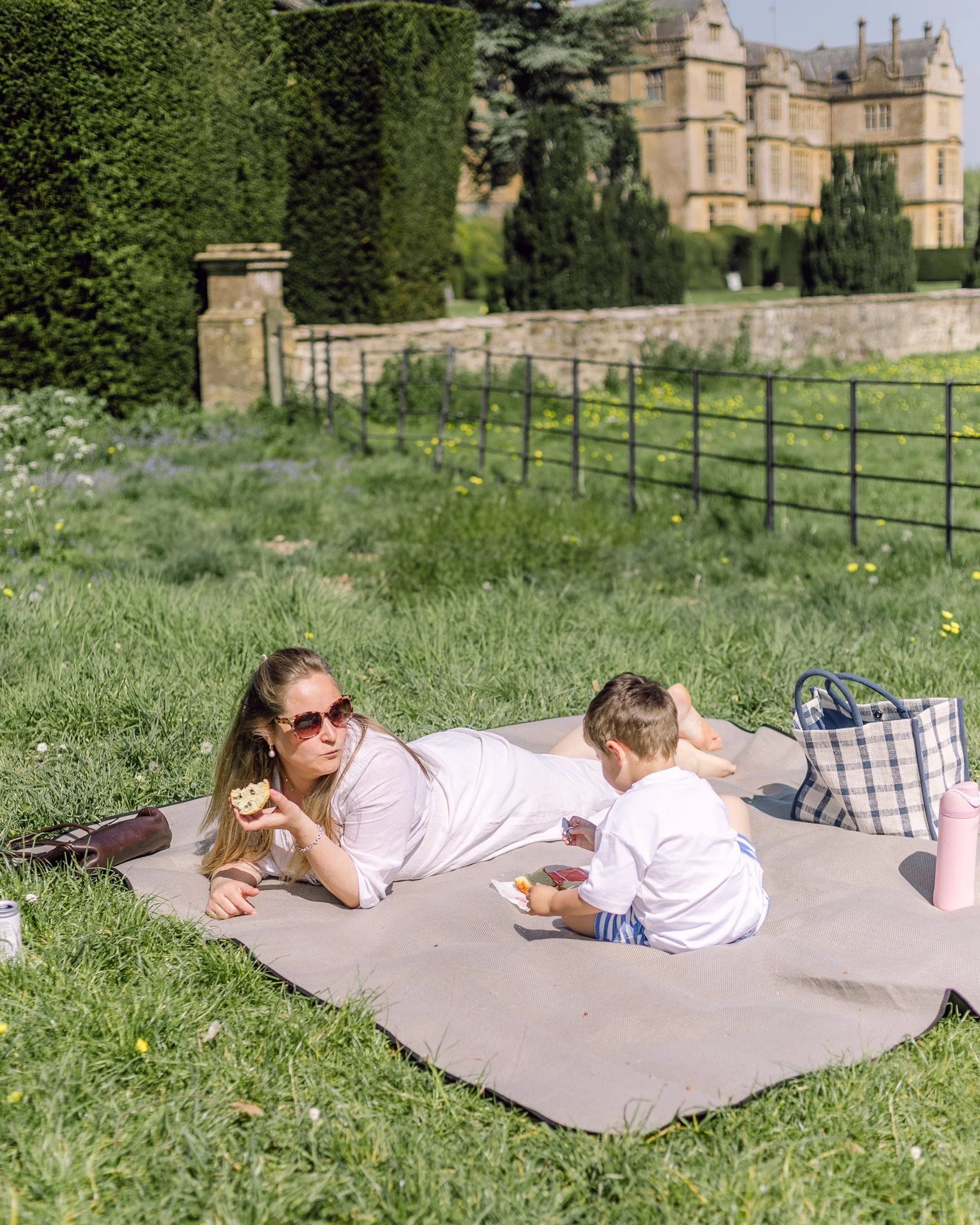
I'll give you an example. A while back — three small children, end of a long day, kitchen looking like a minor natural disaster, nobody with any energy left for anything involving the cooker — I just took everything outside. Blanket on the grass. Whatever was in the fridge arranged on it with approximately zero ceremony. The children, who had been thoroughly unimpressed by the day up to that point, acted as though I had personally organised the greatest evening of their lives. There were no special plates. There was no recipe. There was just: outside, together, food. That was the whole thing.
They still talk about it.
That is a picnic. The ones where someone throws a blanket down on a Tuesday, texts three people, and something small and unexpected happens. Start there.
Choose your cast of characters first, your location second.
Who do you want to be sitting on a blanket with? That is the question. Not: what should I bring, or where should I go, or what will it look like. Who. Start with the people and the rest becomes remarkably simple.
The food does not need to be complicated.
A good loaf of bread, something to put on it, something sweet for later, and a proper drink. That is a picnic. Anything beyond that is bonus. The most transcendent picnic I ever had involved a slightly squashed brie and a flask of tea in a Somerset orchard in October, and I am not even slightly embarrassed about that.
Make it seasonal.
June in Britain means strawberries, and you should absolutely lean into that. Strawberries with good cream. New potatoes in butter. Fresh herb frittata that travels beautifully. A cold glass of something fizzy. The season is doing all the work — let it.
Go somewhere that makes you feel something.
It doesn't have to be dramatic or far from home. But it should be somewhere you actually want to be. A meadow. A riverbank. Your own back garden with the gate shut. A hilltop with a view that reminds you how small you are in the best possible way.
For My Somerset Lot: Where to Picnic This June
If you're local — or if Somerset has been on your list — June is the month. Here are a few spots that feel made for it.
Glastonbury Tor — the view from the top will absolutely activate Keltner and Haidt's awe response, and there's a natural flat stretch just below the tower that catches the afternoon sun. Bring layers.
Cheddar Gorge — take the upper path rather than the tourist bit at the bottom. Find the spot where the limestone drops away and England goes on forever. Eat your lunch there.
Stourhead Gardens — one of the most beautiful designed landscapes in England. The lake, the temples, the reflected sky. Pack something worth the occasion.
Bruton — charming, local, independent food shops for a DIY picnic assembly. The land around At the Chapel has gorgeous walks attached.
Your nearest orchard or meadow — truly. Somerset in June needs no particular destination. Pull over at any gate in the right light and it will do.
The Only Preparation Checklist You Need
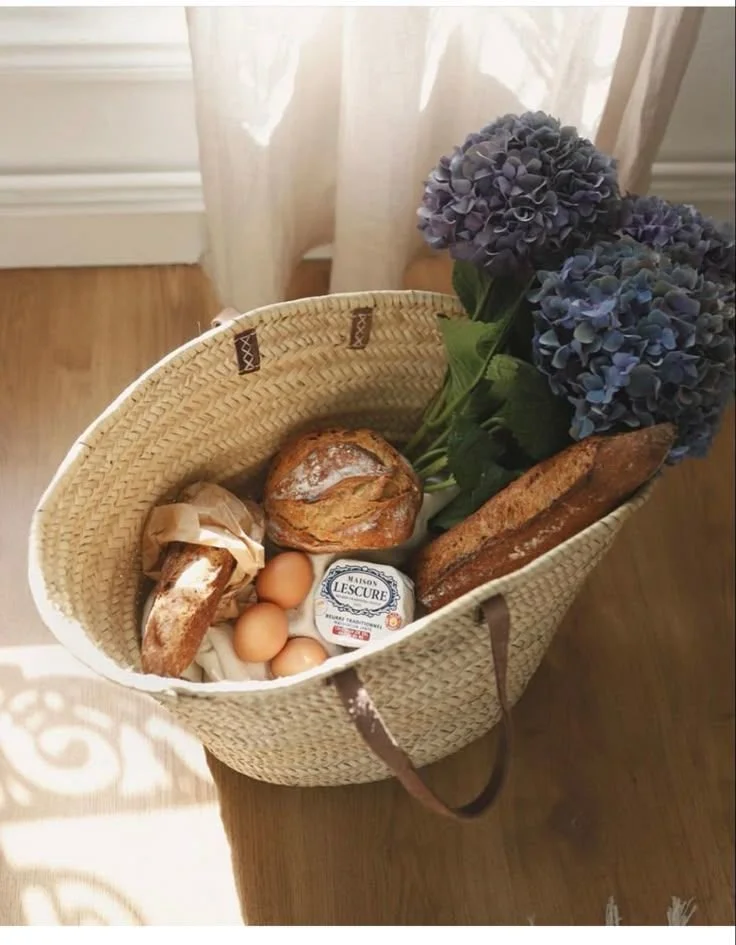
A blanket (waterproof-backed if you're sensible, which you're not, which is fine)
Something to eat that you're actually looking forward to
Something to drink
A flask of tea, regardless of weather or season, because you're British and this is non-negotiable
People you like
Possibly a book
Definitely sunscreen (optimism is free)
That's it. That is genuinely all you need.
A Note on Baskets (Because You Asked, Even If You Didn't)
You do not need a special basket. A tote bag works. A rucksack works. A cardboard box from the garage works, if we're being honest. The basket is lovely — I am absolutely a basket person — but the picnic is not the basket. The picnic is the decision to go outside and eat with someone you love. The container is merely the transport.
If you do want a basket, buy once and buy well. A good wicker hamper, properly cared for, will outlast you. That is a genuine inheritance proposition and I would like you to consider it accordingly.
Why One Week Isn't Enough (And What I Think You Should Do About It)
Here is my official position, as The Duchess of Picnics and someone who has read rather more academic research about this than is strictly normal: National Picnic Week is wonderful, but it is a starter, not the main course.
The picnic is not a summer activity. It is an all-year practice. The Victorians picnicked in autumn. The Edwardians wrapped up in coats and ate on riverbanks in March. The Egyptians, for four thousand years, ate their ceremonial outdoor meals in seasons governed by the flooding of the Nile — not by what the weather app said.
The British weather is not a reason not to picnic. It is, if anything, part of the point. There is something specifically and profoundly British about eating outside in conditions that are technically sub-optimal and deciding, cheerfully, that this was a good idea. It requires a particular kind of stubbornness that I find genuinely admirable.
So: celebrate National Picnic Week with everything you've got. Pack the strawberries. Text the people. Find the hilltop. Take the photograph. Eat slightly too much.
And then do it again in July. And September. And November with a thermos of soup and a very good attitude.
Because the science says connection matters. Because four thousand years of human history says we were built for this. And because there is something that happens on a blanket, outdoors, with people you love — a slowing down, a lightening up, a remembering of what actually matters — that cannot be replicated inside, at a table, on a schedule.
That is what National Picnic Week is really celebrating. And you, my darling, are already late for it.
Enjoyed this? You'd love The Picnic Chronicles — my ongoing deep-dive into the complete history of the human picnic, from ancient Egypt to the present day. Start with Volume I right here on the blog.
And if you want more of this — the joy research, the seasonal living, the picnic wisdom delivered straight to you — come and find me on Substack. I write there every week and it's, genuinely, my favourite thing I do. Link in bio.
With love (and a blanket),
Gemma x
The Piknic Club
Life is too short for boring picnics.
The Piknic Club is where the blanket-spreading, basket-packing, joy-seeking community lives. Seasonal boxes, curated picks, and the kind of picnic inspiration that makes you want to drop everything and go outside immediately.
Stay a while …
Come and be nosey …
The blanket is always out over on Instagram. Behind the scenes Picnicscapes, Somerset life as it actually happens, and the occasional opinion about gingham.


There's a particular kind of summer afternoon that Somerset does better than anywhere else. It starts in the mid-afternoon — later than you intended, as always — when someone finally says right, let's go, and you pack the blanket and the children and something cold to drink and you leave.