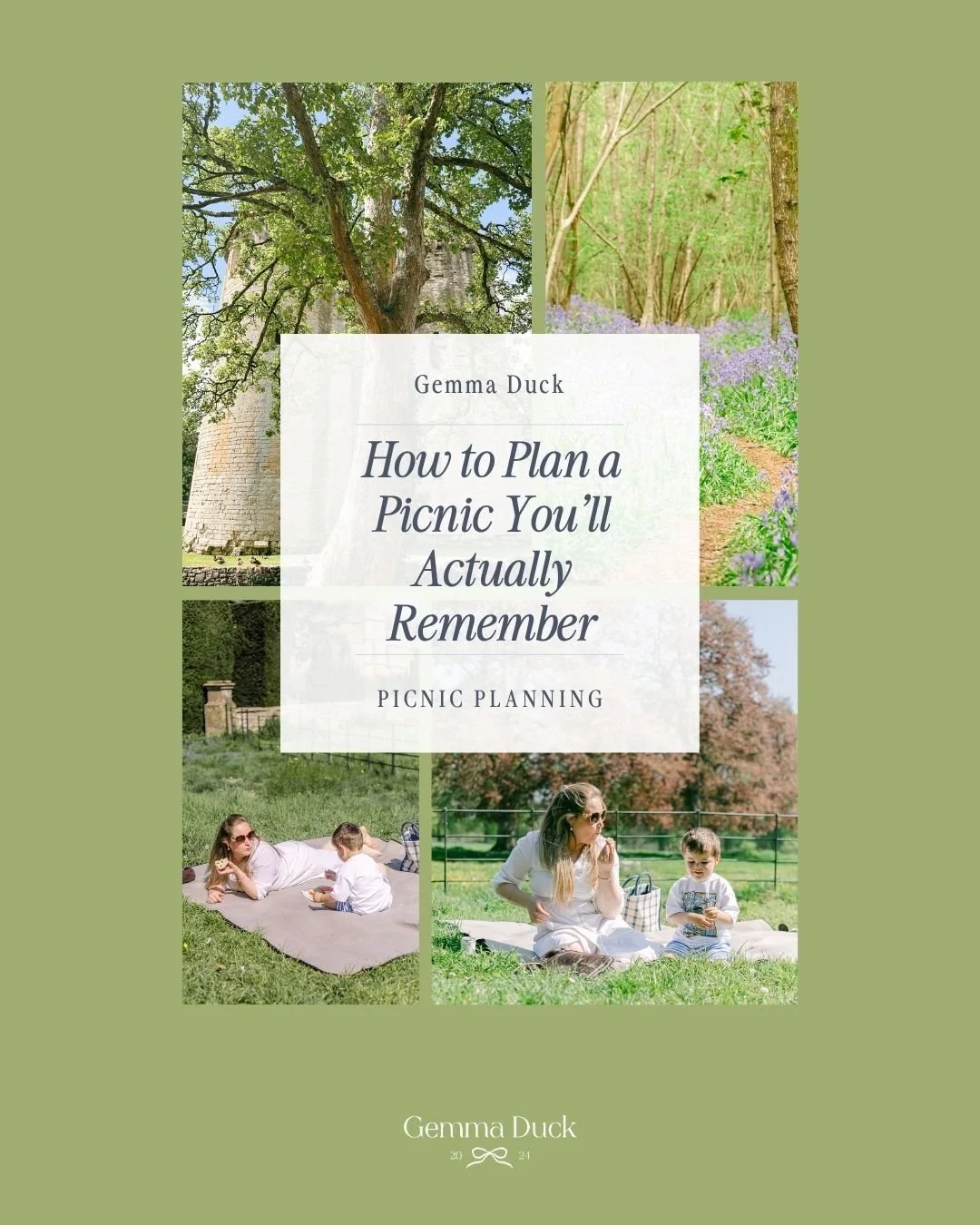
How to Plan a Picnic You'll Actually Remember
Seven things that reliably turn an ordinary afternoon outside into one of those days. From someone who has been doing this across Somerset for a very long time.
Most picnic advice will tell you to pack a cooler and find somewhere with parking.
Not wrong. Just not the point.
Here is what I know about the picnics you actually remember: they're never the ones where everything went to plan. They're the ones where someone said something worth keeping. Where the children did something you're still telling people about three years later. Where the light went golden at exactly the right moment and nobody could bring themselves to leave, so you all stayed until the sky told you it was time.
Most picnic planning advice won't help you have that picnic. It'll help you remember the cool bag. Useful. Not the point.
I've been picnicking across Somerset my whole life — through four children, a completely unreasonable number of blankets, and more cold flasks of tea than I care to count. What I've learned is this: the memorable picnic isn't the perfect one. It's the one you actually went on.
Here are the seven things — none of them complicated — that reliably make it one of those days.
The memorable picnic isn't the perfect one. It's the one you actually went on.
1. Start with the why, not the what
(The most important thing you pack isn't in your basket)
Before you think about what to bring or where to go — pause for a second on why you're doing this at all. Not in a grand, life-examined way. Just a small, honest question: what do you actually want from this afternoon?
Because the answer changes everything. A picnic with a friend you haven't seen properly in months is a completely different animal to a family Sunday with tired children and no agenda. A solo picnic with a book and a flask is different again. Each one is worth doing. Each one needs planning differently.
Priya Parker — whose book The Art of Gathering is the definitive guide to why bringing people together actually matters — makes the point that most gatherings fail not because of bad food or bad weather, but because nobody was clear on what they were for. Even a picnic. Even a simple Tuesday afternoon on a blanket in the garden.
The best gatherings have a clear purpose. Not a theme, not a plan — a purpose. What do I want everyone to feel when they leave?
The picnics I remember most clearly had a shape, even if I couldn't have named it at the time. A reunion picnic. A first-day-of-the-holidays picnic. A we-need-to-get-outside-before-someone-says-something-they'll-regret picnic. The purpose doesn't need to be grand. It just needs to be real.
The science: Harvard researcher Matt Killingsworth found we are least happy when our minds are wandering — and most present during ordinary activities when we have something to anchor to. A picnic with intention gives everyone exactly that.
So before you open the cool bag: who is this for? What do you want it to feel like? That answer is the most important thing you'll pack.
2. Invite fewer people than you think
(Counterintuitive. Completely true.)
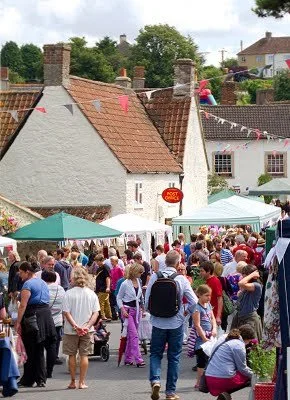
There is a version of the picnic that tries to be everything to everyone — the big group, all the cousins, the neighbourhood gathering on the village green. Those picnics are wonderful and they have their place.
But the ones that become the ones you remember? More often than not, they're small. Three or four people. Sometimes two. Sometimes just you.
There's a reason for this. The smaller the group, the easier it is for everyone to actually be present — to have the real conversation rather than circling it, to notice the light rather than managing the logistics.
Intimacy isn't about how many people are there. It's about how present everyone is.
The best picnics I've had felt almost private, even when they were in a public place. A small circle of people, a blanket, a reason to be there together.
The Duchess rule: If the guest list is longer than seven, it becomes a party. Parties are wonderful. But they need a different plan.
3. The spot — and the philosophy of finding one
(The best one is never the obvious one)
Most picnic advice tells you to find somewhere with good views, easy parking, and facilities nearby. Fine advice. It will also take you directly to every other person who read the same article.
The best spots are almost always the ones that require a small act of commitment to reach. Not a mountain — just ten minutes further than you planned, or a lane you've never turned down, or the same familiar park but arriving two hours later than usual, when the families have gone home and the light has turned golden and low.
Here's what a lifetime of looking has taught me:
Arrive late afternoon. The single most reliable upgrade available to any picnic. Crowds thin. Light changes everything. Car parks empty. Suddenly you're somewhere that feels almost private, even somewhere you've been a hundred times.
Go ten minutes further. The viewpoint at the top of the car park is always full. The field ten minutes down the lane is almost never occupied. The effort is minimal. The reward is disproportionate.
Follow the locals. The best spots in any county don't have a sign pointing to them. Ask someone who lives there. Look for the unmarked lay-by with a well-worn footpath leading away. Those paths go somewhere worth finding.
The perfect spot isn't on a map. It's the one you find by going a little further than you planned.
For anyone looking for somewhere specific in Somerset — across every season, every mood — I've put together a full seasonal guide that covers my favourite spots from January to December. Glastonbury Tor in winter mist. Stourhead at golden hour in July. The hidden ones too.
→ The Best Picnic Spots in Somerset: A Complete Seasonal Guide
4. The weather — a love letter to British acceptance
(The forecast is a suggestion, not a commitment)
I want to talk about the weather, because everyone else's picnic advice gets this completely wrong.
The standard advice: check the forecast, have a backup plan, reschedule if it looks uncertain. This is the advice of someone who has never lived in Somerset, never picnicked in Britain, and does not understand what they're asking you to give up.
If you wait for a guaranteed British summer day, you will picnic approximately twice before September.
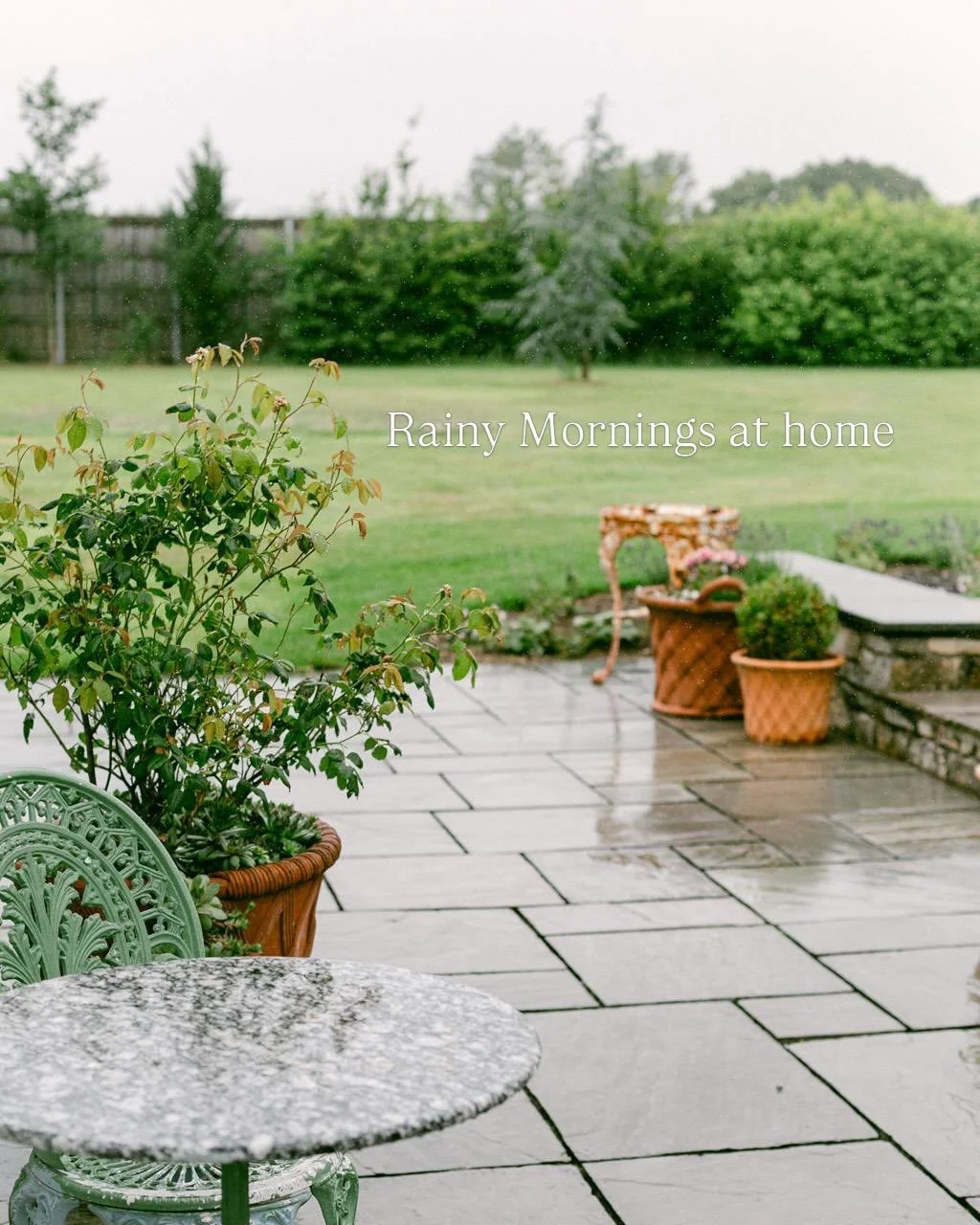
The best picnic I've had in years started under a sky the colour of an old pewter mug at Ham Hill in October. Wind with opinions. A flask and some scones anyway. By the time we'd eaten, the sky had turned extraordinary — the kind of pink and orange that makes you stop talking mid-sentence. The boys were asleep in the car before we reached the main road. We still talk about it.
The British weather is not a problem to solve. It's part of what makes being outside here feel like an achievement. Pack a layer, pack a groundsheet, pack the ability to find a cloud formation funny.
The practical version: if the forecast says thunderstorms, stay home. If it says overcast, uncertain, or 'sunny intervals' — go. The intervals will come. And if they don't, you've still been outside, which is almost always better than not.
The one thing that changes everything: A good groundsheet under your blanket. Not glamorous. Completely essential. Cold damp ground seeps through even the best blanket within twenty minutes. A waterproof layer underneath means you can stay as long as you like, in almost any conditions. This is the tip nobody tells you and everybody needs.
5. What to actually pack
(The edit, not the list)
Most picnic packing lists are the problem, not the solution. They tell you to bring everything, which means you bring too much, which means the basket weighs twelve kilograms and someone has a bad back before you've left the car park.
Different approach. Think in three categories:
The thing most people forget
A corkscrew. A proper knife. A small cutting board. These are the items that seem obvious until you're sitting on a blanket in a beautiful field holding an unopened bottle, staring at each other.
Also: wet wipes. Always wet wipes. This is non-negotiable and I say this as someone who has learned it the hard way more times than I'd like to admit.
The thing that turns a picnic into an occasion
This is the category nobody talks about — and it's the most important one.
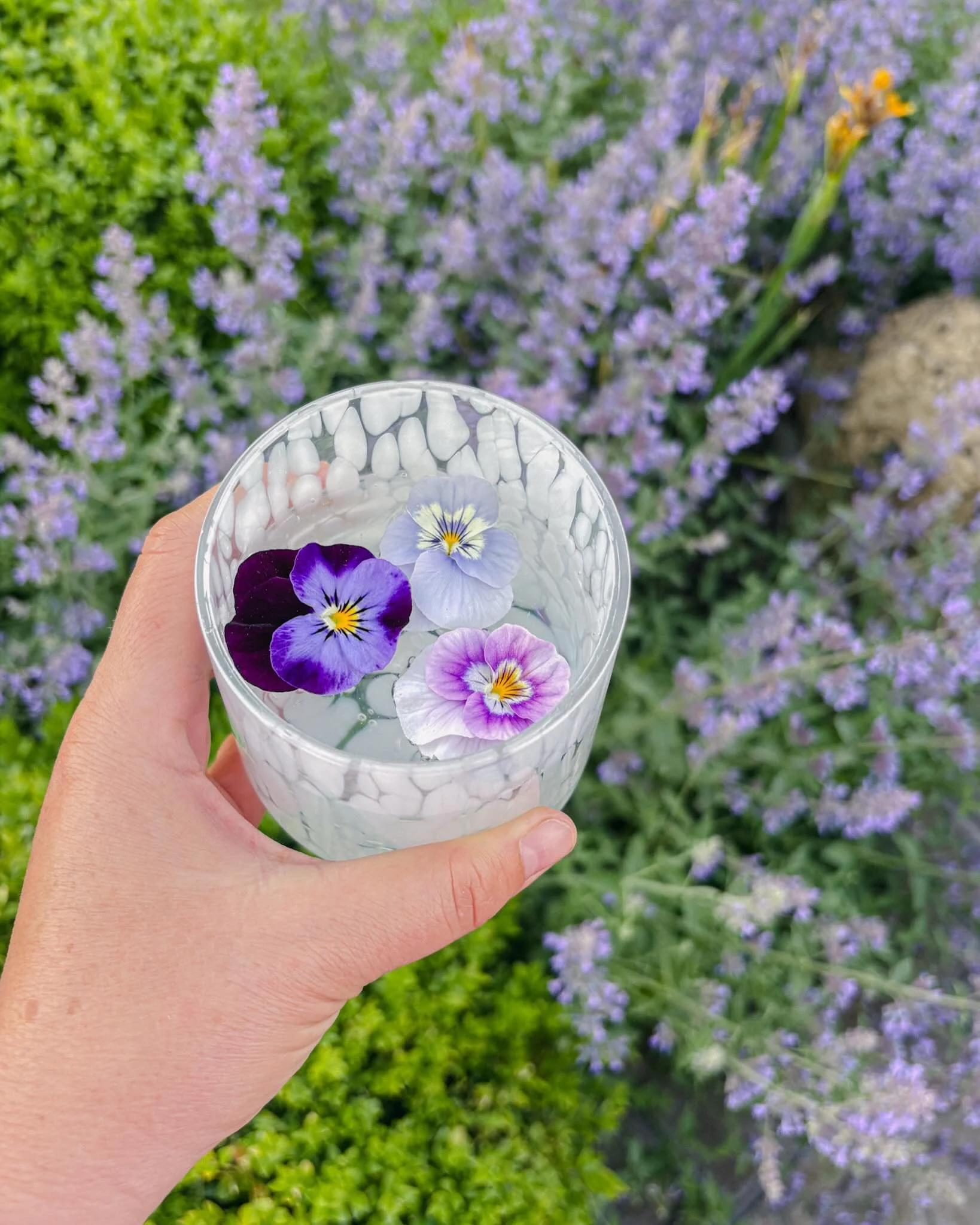
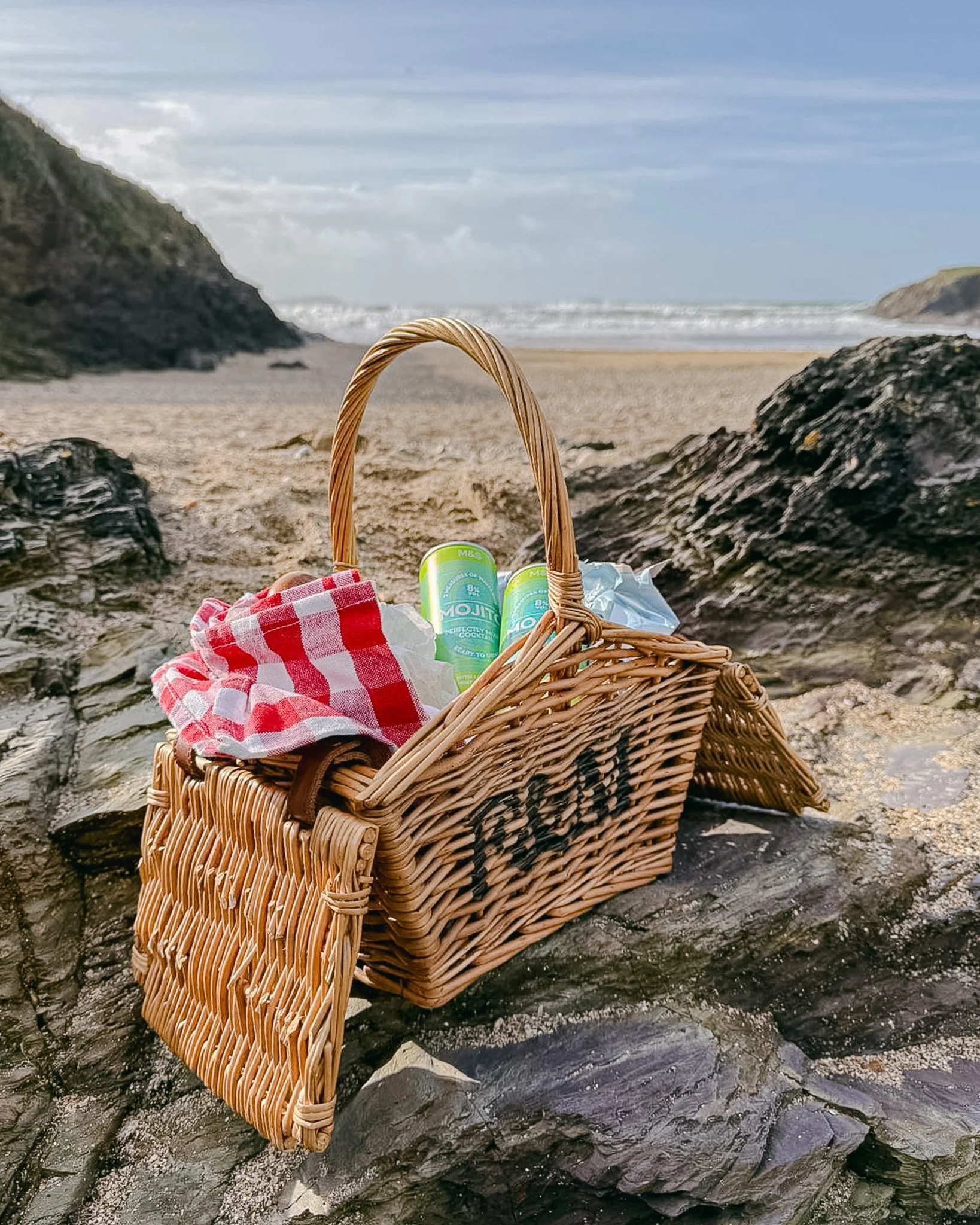
The good glasses, not the plastic ones. Drinking something nice from a proper glass in a field is a specific pleasure that cannot be replicated any other way. A small jar of flowers from the garden. A playlist made in advance — something warm and unhurried that nobody has to argue about. A candle if you're heading into the evening.
None of these are expensive. All of them signal that this afternoon matters. And that signal changes how everyone shows up to it.
The thing you always over-pack
Food. Specifically: too much of it. The best picnics are lighter than you think. One thing done really well will always beat a spread of mediocre things that nobody quite finishes.
You don't need a charcuterie board. You need one thing done really well and the time to eat it slowly.
The Duchess edit: Something to share — a whole cheese, a good loaf, something seasonal from a local farm shop that you'd feel pleased to put on the blanket. Something sweet — one excellent thing, not six mediocre ones. Something cold to drink — always better than you think it needs to be. And something warm in a flask. Even in July.
Somerset note: Godminster cheddar. Always Godminster cheddar. A wedge of it on a blanket in a Somerset field is close to perfect.
6. The food — simple, seasonal, worth eating
(The picnic that tastes of somewhere)
The best picnic food has a sense of place. Not in a precious way — not deconstructed anything or artisanal everything — just food that tastes of the season you're in and the county you're sitting in.
This is one of the things I love most about picnicking in Somerset. The county is extraordinarily good at producing exactly the kind of food that belongs on a blanket outdoors. Local apple juice. Proper farmhouse cheddar. Bread from a bakery that's been there since your grandmother was young. Strawberries in June that taste like strawberries actually should.
The rule I come back to every time: buy less, buy better, buy local. One excellent thing from a farm shop will do more for the experience than a boot full of supermarket options.
A few things that reliably work in any season:
✓ A whole loaf of good sourdough and a knife to tear it with
✓ A wedge of something excellent from a local cheesemaker — Godminster, White Lake, Westcombe
✓ Seasonal fruit — strawberries in summer, apples in autumn, the first forced rhubarb in early spring
✓ A jar of good chutney — local if you can find it, homemade if you're feeling organised
✓ Something homemade, even if it's just a handful of biscuits from the night before — it changes the feeling of the whole thing
✓ Something warm in a flask — even in July, the moment the sun goes behind a cloud you'll be grateful
7. The moment you can't plan for — and how to plan for it anyway
(This is what all of it is actually for)
Here's the thing about memorable picnics that nobody tells you.
The moment that makes it — the one you'll still be talking about in five years — is never the food, never the location, never whether the weather behaved. It's something that happened that you couldn't have scripted.
Someone said something that made everyone laugh until they cried. A child did something unexpectedly kind. A stranger walked past and said something perfect. The light did something extraordinary at exactly the moment everyone went quiet.
You cannot plan that moment.
What you can do is plan the conditions for it to happen.
Phones away — or at least face-down. Enough time so nobody feels rushed. A small enough group that everyone is actually present. Food good enough that eating it is a pleasure rather than a task. A spot good enough that people look up from it.
The science: Daniel Gilbert's research (Stumbling on Happiness) found that we dramatically overestimate how much external conditions affect our happiness. We dramatically underestimate the impact of presence — being genuinely here, with the people we're with, paying attention. The conditions matter less than you think. The presence matters more than you know.
The picnics you remember are the ones where everyone was actually there. Not scrolling, not managing the to-do list, not half-thinking about getting home.
Just: there. On a blanket, in the afternoon, with good people and something worth eating.
That's the whole thing. That's what all the planning is for.
The perfect picnic doesn't exist. The memorable one does. And it's the one you actually went on.
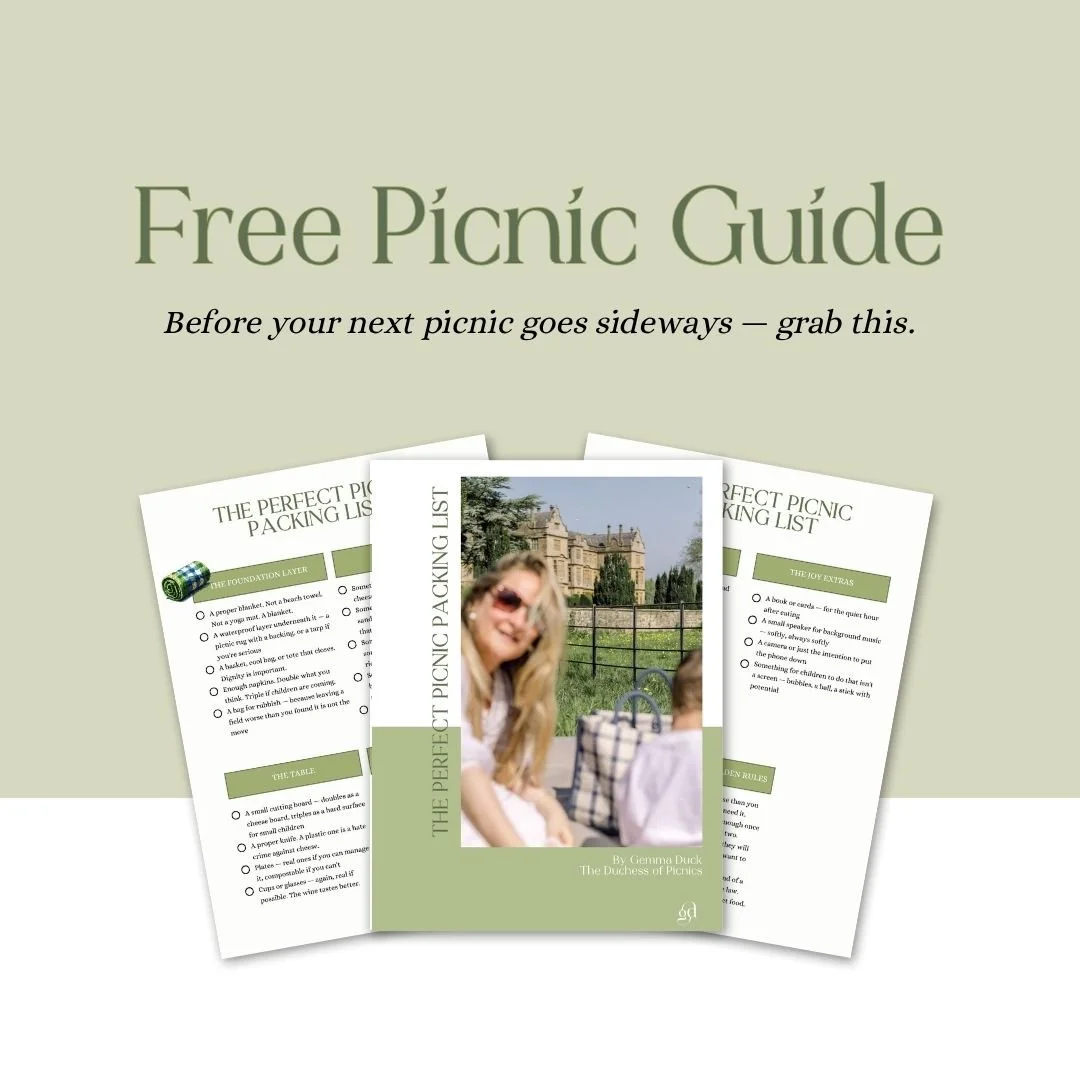
The Duchess Quick Guide — before you leave the house
Everything that actually matters, on one page.
— Know your why. Who is this for and what do you want everyone to feel when they leave?
— Go smaller than you think. The best picnics are intimate. Seven people maximum before it becomes a party.
— Arrive late afternoon. The light is better, the crowds are thinner, the whole thing feels more yours.
— Go ten minutes further. The obvious spot is full. The field down the lane is waiting.
— Check the forecast — then go anyway. Unless it says thunderstorms. British weather is part of the story.
— Pack a groundsheet under the blanket. The upgrade nobody tells you about. Do not skip this.
— Bring one thing done really well. Local cheese. Good bread. Seasonal fruit. Edit ruthlessly.
— Bring the good glasses. Not the plastic ones. This matters more than you think.
— Phone face-down. That's the whole secret, really. The memorable moment is waiting on the other side of the screen.
You don't need the perfect weather, the perfect basket, or the perfect occasion. You just need the blanket and the decision to go.
Right. Go.
I'm always asked; what the actual secret is. What makes a picnic truly worth having. Whether there's a formula.
The honest answer: yes. But it's simpler than any list.
The secret is going.
The picnic you keep planning for a better weather window, a less busy weekend, a time when the children are older and easier, the house is tidier, life has calmed down — that's the picnic you never have.
The one you have today, or this weekend, or next Tuesday after school on the way home with a bag of crisps and a flask of tea and nowhere particular to sit — that one is real. That's the one you'll remember.
Life is waiting. The blanket is in the cupboard. The flask needs two minutes.
with love Gemma x
The Piknic Club
Life is too short for boring picnics.
The Piknic Club is where the blanket-spreading, basket-packing, joy-seeking community lives. Seasonal boxes, curated picks, and the kind of picnic inspiration that makes you want to drop everything and go outside immediately.
Stay a while …

Come and be nosey …
The blanket is always out over on Instagram. Behind the scenes Picnicscapes, Somerset life as it actually happens, and the occasional opinion about gingham.