How the World Spreads Its Blanket
Ten cultures, ten ways of gathering outdoors — and the one thing they all have in common.
Here is something I find quietly extraordinary.
Somewhere right now — as you read this — a family in Japan is laying a mat under a cherry tree. A couple in Paris is unwrapping a baguette on the banks of the Seine. A group in Norway is pausing mid-hike on a rocky outcrop, reaching into a rucksack for a carefully wrapped sandwich. Children in Brazil are running toward a blanket on Ipanema beach. A grandmother in India is opening a steel tiffin box beside a river, and the smell of spices is mixing with the scent of the water.
All of them are doing the same thing.
They are spreading a blanket — literally or figuratively — and saying: we are staying here for a while. We are going to be present. We are going to eat something and be together and let the world carry on without us for an afternoon.
In Britain, we've been doing this since before we had a word for it. The wicker hamper, the damp Somerset grass, the Thermos flask, the slightly warm cheddar — this is our version. The version I know best. The version I will never stop being devoted to.
But the picnic — in all its forms, under all its names — is not ours alone. It belongs to the whole world. And the world does it brilliantly.
Here are ten of my favourite ways the world spreads its blanket.
Every culture, every country, every corner of the world has its version. A blanket. Some food. The people you love.
Japan: Hanami — the art of being present under a cherry tree
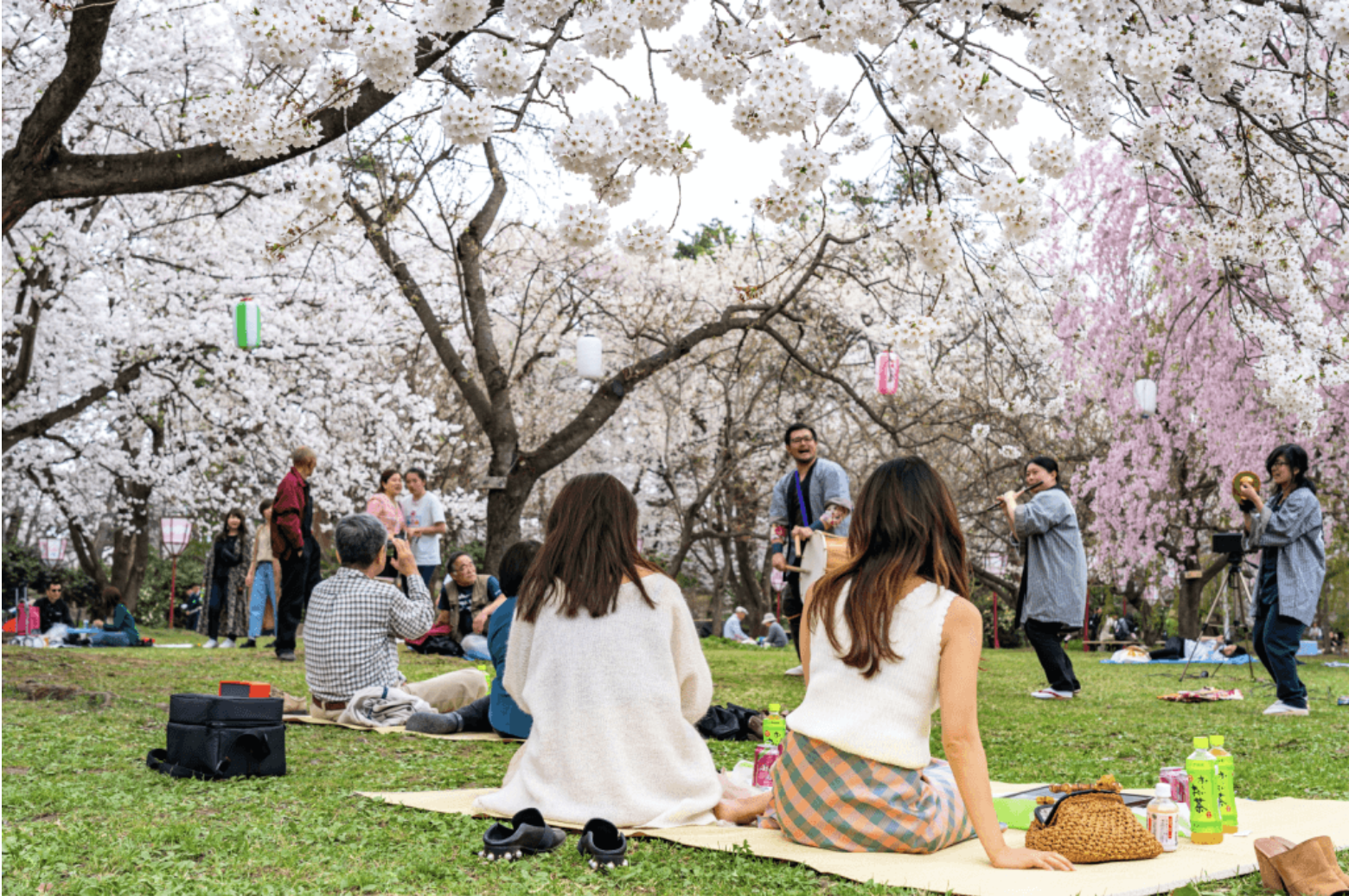
Every spring, something extraordinary happens in Japan. The cherry trees bloom — and the entire country stops.
Hanami literally translates as flower viewing, but it is so much more than that. It is a national act of collective presence. Parks fill with families and friends who have been planning their spot for weeks, laying out their picnic mats in the best position beneath the sakura, arriving early enough to claim the perfect patch of blossom-dappled ground.
The food is beautiful and considered: bento boxes filled with onigiri, tamagoyaki, and pickled vegetables. Sweet sakura mochi — rice cakes flavoured with cherry blossom. Sake or green tea. Everything portioned, arranged, brought with care.
But the food is almost beside the point. Hanami is about the mono no aware — the Japanese concept of the bittersweet beauty of impermanence. The cherry blossoms last about two weeks. Their fleeting nature is the entire lesson. You are not just picnicking under a tree. You are being reminded, gently and beautifully, that this moment is finite and therefore precious.
I think about this every time I'm tempted to postpone a picnic until a better day arrives.
The Duchess notes: The Japanese have been doing what the happiness researchers keep telling us to do — being present, noticing beauty, gathering around something that won't last. They've been doing it for over a thousand years. We just discovered it has a name.
Credit: TokyoTreat
Italy: The long lunch — when eating outside is a philosophy, not just a meal
In Italy, eating outdoors is not a casual decision. It is a commitment.
The Italian outdoor meal — whether it's a vineyard lunch in Tuscany, a Sunday spread in a Umbrian garden, or a simple piazza table with a glass of something cold — operates on Italian time, which is to say: it ends when everyone is ready for it to end, and not a moment before.
The food is local, seasonal, and treated with the reverence it deserves. Bread from the morning's bake. Cheese from the farm down the road. Prosciutto, olives, figs in season. A bottle of whatever the region does best. Nothing imported, nothing impressive for its own sake. Just the best version of what belongs here, eaten in the place it came from.
There is a word in Italian — convivialità — that means the warmth and pleasure of eating together. It has no direct English equivalent, which tells you something. The Italians didn't just invent a concept. They built an entire culture around it.
The Italian picnic understands something the rest of us are still learning: that the table — even when it's a blanket, even when it's a patch of grass between the olive trees — is where the real living happens.
The Duchess notes: Convivialità is the word I've been looking for my entire career. The Italian picnic is, essentially, the Joy of Gathering with better bread.
France: The pique-nique — where the picnic was practically invented
The French gave us the word. They might also have given us the soul of the thing.
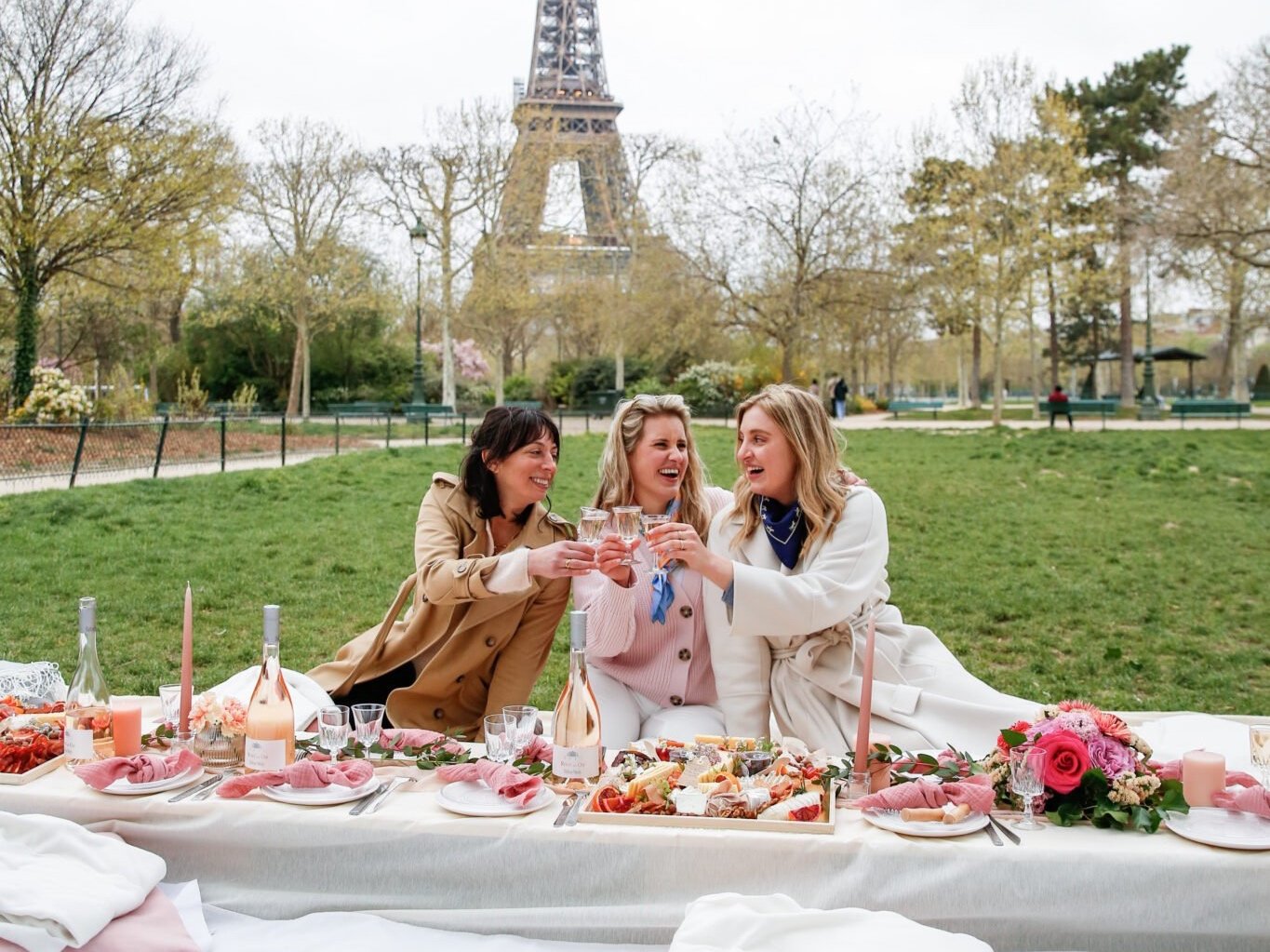
The pique-nique as the French practise it today is a particular art form. On a warm evening in Paris, the banks of the Seine fill with people who have stopped at a boulangerie for a baguette, a fromagerie for something worth eating, and a cave à vins for a bottle of something cold. They find a patch of grass or a stone ledge above the water, they lay out what they've brought, and they stay for hours.
No booking. No menu. No agenda beyond the conversation and the view.
The French approach to outdoor eating is rooted in a philosophy that the British quietly share but rarely articulate: that a meal eaten outside, with good ingredients and the right company, is one of the highest pleasures available to a person. The setting is not incidental. It is part of the dish.
What I love most about the French picnic is its refusal to be rushed. The pique-nique is not squeezed between activities. It is the activity. The afternoon is the point.
The Duchess notes: The French never apologise for taking two hours over a lunch on a riverbank. We could learn something from this.
Credit: Everyday Parisian
Scandinavia: Friluftsliv — the philosophy that being outside is a way of life
The Norwegians have a word — friluftsliv — that translates roughly as open air life. But translation doesn't quite capture it. Friluftsliv is not an activity. It is a philosophy. A deeply held belief that human beings belong outdoors, that time in nature is not a leisure pursuit but a fundamental right and necessity, and that the quality of your outdoor time is directly connected to the quality of your inner life.
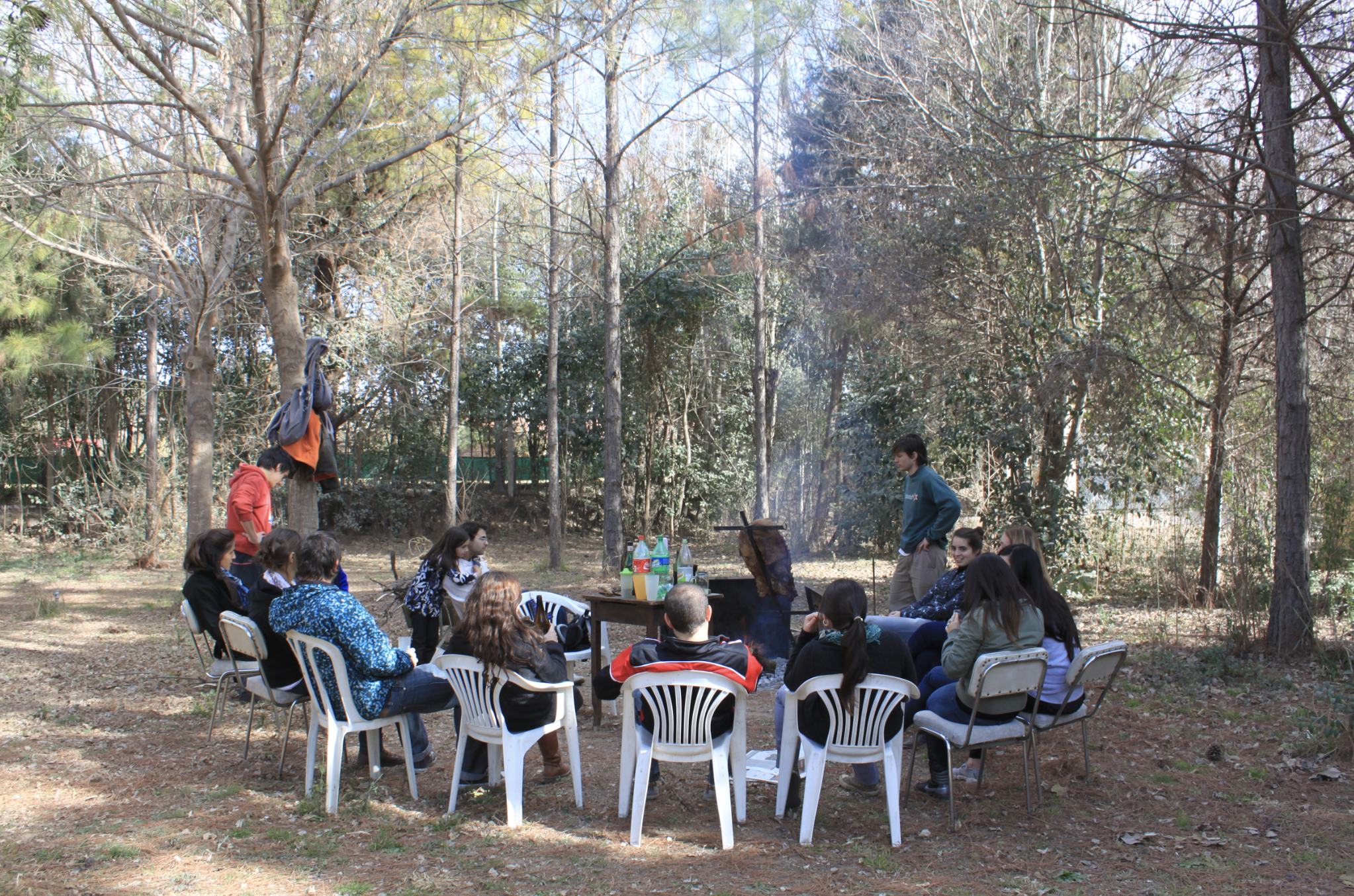
The Scandinavian outdoor meal reflects this completely. It is not elaborate. The matpakke — the Norwegian packed lunch — is a simple sandwich wrapped in greaseproof paper, often eaten mid-hike on a rocky outcrop or beside a fjord. No ceremony. No performance. Just food, eaten outside, in a place worth being.
What the Scandinavians understand better than almost anyone is that the outdoors is not a backdrop to your life. It is part of the fabric of it. You don't go outside when the weather is nice. You go outside because going outside is what you do — rain, snow, mist, or brilliant sunshine.
There is a related Norwegian concept: utepils — the first beer drunk outside in spring. An entire word for that specific joy. The Scandinavians have been naming the small outdoor pleasures that the rest of us felt but couldn't articulate.
The Duchess notes: Friluftsliv is the philosophical backbone of everything this brand is built on. The Norwegians just got there first and gave it a name.
Credit: passthecarne
India: The tiffin box and the riverbank — food as love, carried with care
The tiffin box is one of the great objects of the picnic world.
These stacked steel containers — each tier a different dish, sealed and carried with extraordinary precision by the dabbawalas of Mumbai or simply tucked into a bag for a family outing — represent something beautiful about Indian outdoor eating: that food is worth carrying carefully. That the effort of bringing something good to a beautiful place is itself an act of love.
Indian outdoor eating is tied to the landscape, the season, and the occasion. Families gather beside rivers for festivals, laying out spreads of biryani, pakoras, fresh chutneys, and sweet ladoos. The scent of spices mingles with earth and water. Children run. Elders sit. The food comes out in stages, unhurried.
What I find most moving about the Indian picnic tradition is its connection to the sacred. Outdoor gatherings in India are often tied to something larger than a meal — a festival, a ceremony, a seasonal celebration, a visit to a temple. The food and the place and the occasion are inseparable. Eating outdoors is not separate from the meaning of the day. It is the meaning of the day.
The Duchess notes: The tiffin box is genius design — portable, stackable, beautiful, and completely functional. The picnic world should have adopted it decades ago.

People picnic in a Mughal garden in Nishat, on the outskirts of Srinagar, in 2007. Credit: Fayaz Kabli/Reuters.
Australia: The barbie on the beach — where informality is an art form
Nobody does casual outdoor eating with more commitment than Australia.
The beach barbecue — a portable grill, fresh seafood, sausages that have been an ongoing national conversation since approximately 1972, cold drinks from a properly packed Esky — is an institution. It requires no occasion beyond the existence of a beach and a warm day, both of which Australia provides in abundance.
What I love about Australian outdoor eating is its complete lack of pretension. There is no performance here. No tablecloth. No sequence of courses. You cook it, you eat it, you sit on the sand, you swim, you come back and eat something else. The meal and the afternoon are the same thing.
Australia also has the great Australian salad — the kind made with whatever's in the fridge, dressed with something simple, transported in a bowl covered with clingfilm, and eaten from paper plates that may or may not survive the sea breeze. It is brilliant. It always works. Nobody asks for the recipe.
There is a generosity to the Australian outdoor table that I find genuinely joyful. Plates piled high, everyone welcome, the grill going for as long as anyone is hungry. Nobody is trying to impress you. They're just trying to feed you well.
The Duchess notes: The Australians have completely solved the problem of overthinking a picnic. Just get to the beach. Everything else sorts itself out.
USA: The lobster shack and the state park — a country that knows how to gather outdoors
America does outdoor eating at scale. And it does it across such a range of landscapes and cultures that to describe a single American picnic tradition would be like describing a single British one — impossible, and slightly missing the point.
But there are moments that feel definitively, specifically American in the best possible way.
The Maine lobster shack. Wooden benches on a dock. Lobster rolls — butter or mayo, I have opinions about this and they are the butter side — eaten with your hands, with the sea directly in front of you and the smell of the ocean absolutely everywhere. Coleslaw from a paper cup. A cold beer. The sun on the water. This is one of the great outdoor meals of the world and I think about it with a regularity that is probably disproportionate.
The state park picnic — a specifically American institution — brings its own particular joy. The designated picnic area with its wooden tables, the grill already installed, the forest or the canyon or the lake just beyond. Families with coolers the size of small appliances. Hot dogs and burgers, potato salad in quantities that suggest optimism about the number of guests, watermelon cut into wide slices and eaten directly over the grass because there is no other correct way.
And underneath all of it — the tailgate, the Fourth of July barbecue, the Thanksgiving table moved outside when the day is warm enough — a genuine American belief in the gathering itself. The occasion. The showing up. The flag and the food and the people, all together, outside.
The Duchess notes: Maine is on my list. The lobster shack, the wooden dock, the water. I will bring my blanket and my best appetite. I suspect it will be everything I'm imagining and then some.

Credit: Thriver Blog
New Zealand: Fish and chips on the sand — simple perfection beside extraordinary landscapes
New Zealand may have the most spectacular picnic backdrops on earth. Beaches with water so clear it looks invented. Forests of ancient kauri trees. Volcanic landscapes that seem to belong to a different planet. Mountains that make you stop walking and simply stand there.
And into all of this extraordinary scenery, the New Zealanders carry: fish and chips.
This is not a failure of imagination. It is, I would argue, the highest form of picnic intelligence — the understanding that when the landscape is this good, the food should get out of its way. A paper parcel of fresh fish and hot chips, eaten on the sand beside a harbour, with the salt air doing half the seasoning — that is not a humble meal. That is a perfect one.
The broader New Zealand picnic tradition is similarly honest and generous. Pavlova — that magnificent cloud of meringue and cream that both New Zealand and Australia claim as their own, a dispute I will not be entering — eaten at a family gathering in a garden. Hangi: a traditional Māori feast where food is slow-cooked in a pit oven in the earth, the steam rising, the flavours deep and extraordinary. Lamb chops on a portable grill at a campsite with the Southern Alps overhead.
New Zealand outdoor eating understands something essential: that the best meal is the one that fits the place. Don't fight the landscape. Let it be the plate.
The Duchess notes: Fish and chips on a New Zealand harbour is on my list. I will get there. With a blanket and a sense of occasion entirely inappropriate to the informality of the situation.

Credit: msvolendam
Morocco: Mint tea and medina courtyards — gathering as ceremony
In Morocco, the outdoor meal is inseparable from ritual.
The preparation of mint tea alone — the precise stacking of fresh mint, the measured pour of boiling water, the theatrical lift of the teapot to aerate the brew — is a ceremony performed with the seriousness it deserves. You do not rush Moroccan mint tea. You receive it. You accept the hospitality it represents.
Outdoor eating in Morocco ranges from the intimate — a family gathered in a riad courtyard, dishes of tagine and flatbread in the shade of an orange tree — to the spectacular: a spread in the Sahara Desert, cushions on sand, lanterns at dusk, the sky doing something unreasonable overhead.
The food is vivid and generous. Slow-cooked tagines fragrant with preserved lemon and spice. Fresh flatbreads pulled apart and shared. Bowls of olives and chermoula. Everything designed to be eaten communally, with hands, with conversation, without hurry.
What strikes me most about Moroccan outdoor gathering is its quality of welcome. The hospitality is not performative. It is genuine and complete. When you are invited to eat outdoors in Morocco, you are being given something real: time, attention, and the best of what the host has.
The Duchess notes: The Moroccan understanding of hospitality — that feeding someone is an act of profound care — is the Joy of Gathering distilled to its purest form.

Credit: Barbara Cameron Pix
Brazil: The beach, the boteco, and the Brazilian art of making anywhere feel like a celebration
Brazil might be the country that understands outdoor gathering most instinctively of all.
The beach in Brazil is not a destination. It is an extension of daily life — particularly in Rio de Janeiro, where Ipanema and Copacabana function as enormous outdoor living rooms. People arrive early, stake their spot, and stay. Vendors move through the crowds selling coconut water, mate, and grilled cheese on skewers (the magnificent queijo coalho — salted, slightly springy, charred at the edges — which is one of the finest beach snacks in the world).
The boteco — Brazil's beloved neighbourhood bar-cafe — takes the outdoor gathering indoors and back out again simultaneously. Tables spill onto pavements. Cold caipirinhas arrive. Plates of petiscos (small dishes — salt cod fritters, fried polenta, cheese puffs) are shared without ceremony. The conversation is loud and warm and the afternoon extends until nobody particularly wants it to end.
The churrasco — the Brazilian barbecue — is a different proposition entirely. This is not a casual affair. This is a serious undertaking, with specific cuts of meat, specific techniques, and a designated churrasqueiro who takes their role with the gravity it deserves. It is the Argentine asado's equally passionate cousin. It goes for hours. The guests arrive and stay and the fire burns until there is nothing left to cook.
Brazil's gift to outdoor eating is its infectious belief that any space — a beach, a pavement, a backyard, a patch of grass — can become a place worth celebrating. The backdrop is not what makes it special. The decision to gather is what makes it special.
The Duchess notes: The queijo coalho alone is reason enough to go to Brazil. The picnic philosophy is reason enough to stay.
What the Blanket Means - Ten countries. Ten completely different versions of the same essential act.
Different food, different landscapes, different rituals, different words for the same thing. Hanami. Pique-nique. Friluftsliv. Convivialità. Churrasco. The matpakke. The tiffin box. The barbie. The lobster shack. The beach in Rio.
But pull back far enough and you see the same shape in all of them.
Someone decided to go outside. Someone brought food. Someone else came too. A space — a riverbank, a cherry tree, a beach, a rocky outcrop, a vineyard, a desert — became, for an afternoon, a room. A temporary home. A place where the ordinary rules of the day were suspended and what remained was just: people, food, the world around them, and the time to notice it.
Every culture spreads a blanket differently. But they all spread the blanket.
In Britain, we do it with a Thermos flask and a slightly warm cheese and the particular stubborn optimism of a people who have decided that the weather is not a reason not to go outside.
In Japan, they do it with a reverence for the moment that I find genuinely moving.
In Norway, they do it because going outside is simply what you do. Because the outdoor life is not separate from the good life. It is the good life.
I believe that. I've always believed that. It's why I'm here, writing this, thinking about all the blankets in the world being spread on all the grass and all the sand and all the stone, and feeling — quite unreasonably, quite happily — like we're all in on something together.
Go spread your blanket. The world is already doing it without you.
Love
Gem xx
Stay a while …